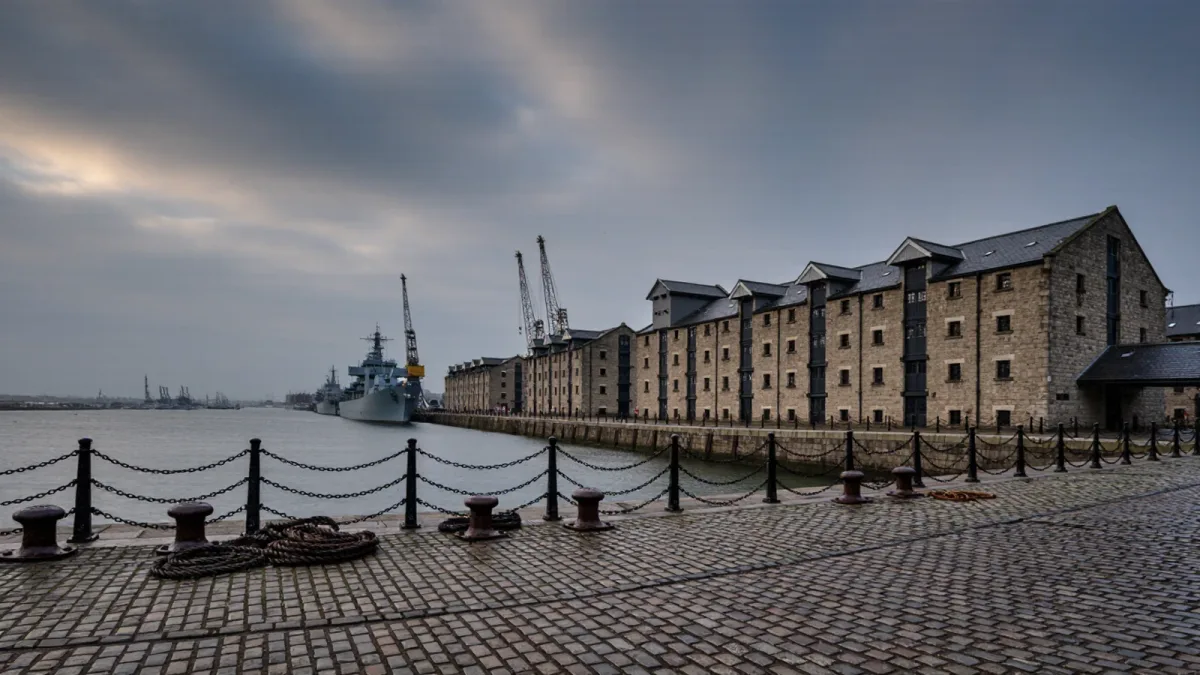
The Royal Navy in 2026 operates a fleet built around two large aircraft carriers, six Type 45 destroyers, a shrinking group of Type 23 frigates, four Vanguard-class ballistic-missile submarines, and a growing Astute-class attack submarine force, according to Royal Navy and UK Ministry of Defence publications as of 2024 and 2025. The force is in the middle of its largest generational change in decades: Type 23 frigates are retiring as the Type 26 and Type 31 programs build their replacements, the Dreadnought class is under construction to replace the Vanguard submarines, and amphibious shipping faces retirement decisions documented in UK defence announcements. This guide walks through the fleet category by category, with counts as of the latest published figures.
What aircraft carriers does the Royal Navy operate?
Two carriers of the Queen Elizabeth class are in service: HMS Queen Elizabeth (R08) and HMS Prince of Wales (R09), ships of roughly 65,000 tons and the largest warships ever built for the Royal Navy, according to UK Ministry of Defence documentation. Both carry the F-35B Lightning short-takeoff fighter and operate in the carrier strike group configuration the Navy deployed publicly in 2021 and again on the announced 2025 deployment to the Indo-Pacific. The class was built with two islands, no catapults or arresting gear, and an aviation-first design intended to operate F-35B and helicopters in large numbers. UK programme documents through 2024 describe the operational conversion of the class as continuing, with UK F-35B squadrons and Royal Navy aircrew integrating into the carrier air wing. Neither carrier has a conventional replacement program in definition; the class is planned to serve into the 2060s and 2070s.
What destroyers and frigates does the Royal Navy have?
The surface escort force as of 2024 comprised six Type 45 Daring-class destroyers and roughly eight Type 23 Duke-class frigates, according to Royal Navy fleet listings. The Type 45s, in service since 2009, carry the Sea Viper air-defence system with the SAMPSON radar and have been subject to a documented power and propulsion improvement program addressing the class's early reliability problems. The Type 23s, in service since the late 1980s and 1990s, are retiring progressively as replacements arrive under two programs. The Type 26 Global Combat Ship, led by HMS Glasgow at BAE Systems' Clyde yards, is the anti-submarine successor, with the first of eight ships planned to enter service in the late 2020s. The Type 31 Inspiration class, five ships under construction, provides the general-purpose frigate line. UK National Shipbuilding Strategy documents describe this two-line replacement as the core of the escort force's regeneration, with the Type 23 count declining ahead of new deliveries, a gap UK defence officials have acknowledged publicly.
What submarines does the Royal Navy operate?
The Royal Navy's submarine force is entirely nuclear-powered and divides into the deterrent and attack roles. Four Vanguard-class submarines, HMS Vanguard, Victorious, Vigilant, and Vengeance, maintain continuous at-sea deterrence armed with Trident II D5 missiles, according to UK Ministry of Defence publications. The Dreadnought class, twelve-tube boats under construction at Barrow-in-Furness, is planned to enter service in the early 2030s and sustain the deterrent into the 2060s, with the program documented as one of the UK's largest defence projects. In the attack role, the Astute class is in delivery: five boats were in service as of 2024, HMS Astute through HMS Anson, with HMS Agamemnon launched in the mid-2020s and a seventh, HMS Agincourt, in build, of a class originally planned at seven. Astute-class boats conduct anti-submarine warfare, strike with Tomahawk missiles, and intelligence missions, and under the AUKUS partnership Australian submarine crews and personnel are integrating into UK submarine operations, documented in AUKUS program publications through 2025.
What is happening to the Royal Navy's amphibious ships?
The amphibious force has been the fleet's most contested category in recent UK defence announcements. The two Albion-class landing platform docks, HMS Albion and HMS Bulwark, entered service in the early 2000s, and UK defence reviews and ministry statements in the 2020s identified them for early retirement as the Royal Navy shifts amphibious capability toward aviation-centered concepts and future programs, according to UK defence announcements and parliamentary reporting. The three Bay-class auxiliary landing ships continued in service through 2024 in the amphibious support and forward-based roles, including the long-standing forward presence in the Persian Gulf. The direction of travel documented in UK publications is a smaller amphibious shipping force sustained by helicopters, convertible platforms, and national flag shipping arrangements, a shift that UK parliamentary committees have examined and questioned in defence committee reports. As of the latest published figures, the Albion-class retirement remained the plan, with exact dates adjusted across successive announcements.
What support and specialist ships complete the fleet?
The Royal Fleet Auxiliary, the civilian-crewed support arm, operates the fleet's underway replenishment ships, including the four Tide-class fast fleet tankers delivered in the mid-2010s and the remaining older vessels, according to RFA and UK Ministry of Defence publications. The RFA entered a documented personnel and readiness crisis in 2023 and 2024, with industrial action over pay and several ships held at reduced readiness, issues examined in UK parliamentary reporting and addressed by ministry pay settlements announced in 2024. In mine warfare, the Royal Navy is mid-transition from the Hunt and Sandown-class minehunters, most of which have left or are leaving service, toward autonomous minehunting systems under the Mine Hunting Capability program, documented in UK defence equipment publications. The fleet also includes survey ships, ice patrol ship HMS Protector in the Antarctic role, and the aircraft carrier support arrangements documented in carrier programme publications.
How big is the Royal Navy, and where is it going?
The Royal Navy does not publish a single headline equivalent to the U.S. battle force count; UK publications typically describe the fleet in categories, with the escort force planned at 24 destroyers and frigates in the long term, a figure restated in UK defence documents while current counts remain well below it during the Type 23-to-Type 26 and 31 transition. The documented trajectory to the 2030s is consistent across UK publications: two carriers, six Type 45s transitioning toward the Type 83 future air-defence program in definition, Type 26 and Type 31 deliveries restoring the escort count, Dreadnought replacing Vanguard in the deterrent role, Astute completion followed by the AUKUS-related SSN-AUKUS design in build planning. For readers tracking the fleet in 2026, the reference points are the programs, not the totals: the escort gap closes only as Clyde and Rosyth deliveries accumulate, and the deterrent transition is fixed by the Dreadnought schedule rather than by annual decisions.