Policy
Policy follows the decisions that set fleet size: annual shipbuilding plans, appropriations, force-level goals, basing agreements and maritime treaty commitments. Articles quote the plan, compare it against delivery records and identify the gap. Written for legislative staff, industry planners and readers assessing whether stated naval ambitions are funded.
Shipbuilding budgets, force-level targets, legislation and treaties tracked against delivery reality, with documents quoted and arithmetic checked.

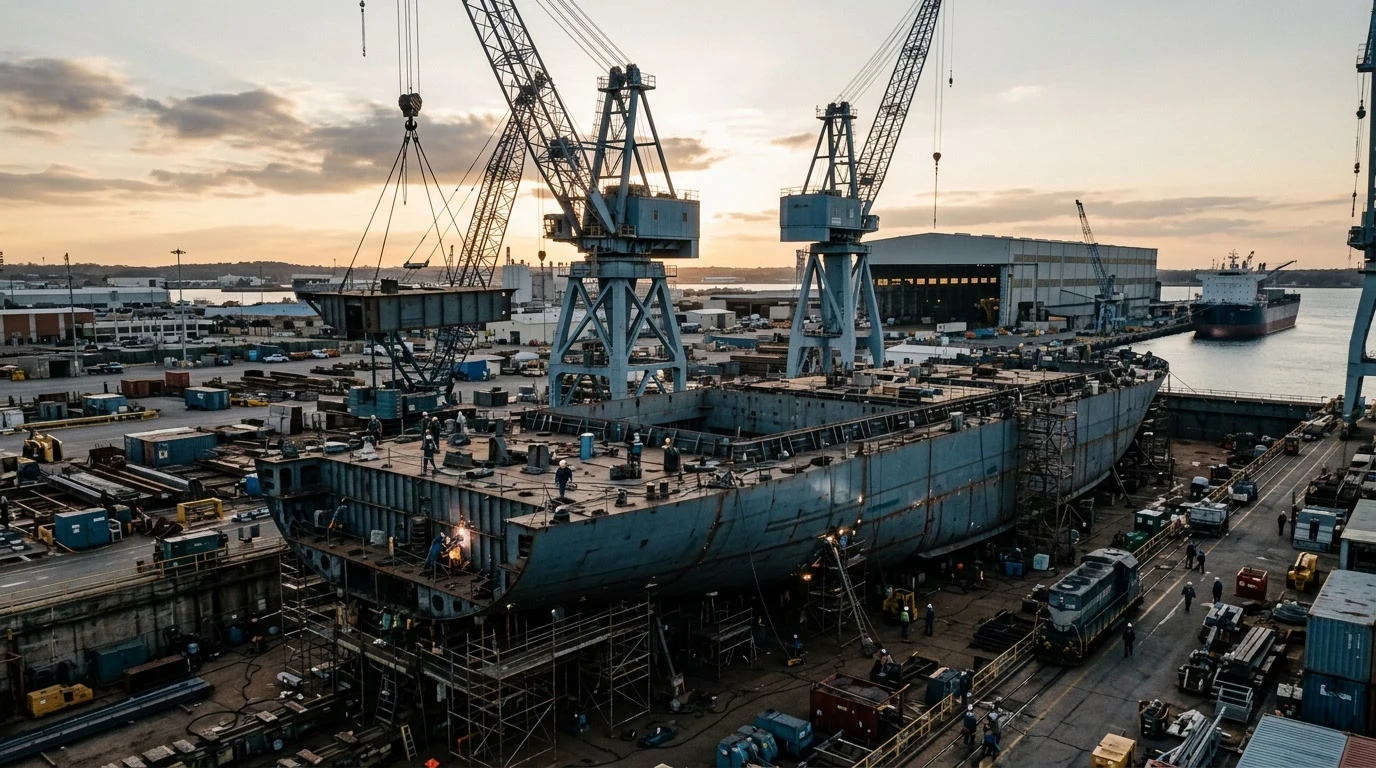
The Jones Act and the U.S. Naval Shipbuilding Base, Explained
The century-old cabotage law sets three conditions for domestic shipping and has become a fixture in debates over the health of the shipyards the Navy depends on.
Asha VenkataswamyHow the Navy Holds People Accountable for Collisions: The 2017 Precedents
The Navy's accountability system reaches from deckplates to fleet command: the 2017 Pacific Fleet collisions produced relief of commanding officers, a fleet commander, and staff admirals, alongside nonjudicial punishment for dozens of sailors.
Asha VenkataswamyPrize Law Explained: When and How a Navy May Seize Ships at Sea in War
The law of naval warfare has governed the capture of merchant ships for centuries, and its machinery of prizes, prize courts, and prize money is dormant in American practice but never repealed in principle.
Asha VenkataswamySealift and Merchant Marine Readiness: How America Moves a War Through Commercial Ships
Nearly all U.S. military equipment moves to a contested theater by sea, and the policy architecture that makes that possible rests on a shrinking commercial fleet, a government surge fleet, and a mariner workforce that watchdogs say is too small.
Asha VenkataswamyHow the Navy Investigates Collisions: A Primer on Boards, Reviews, and Reports
When a U.S. warship collides with another vessel, at least three parallel investigations begin within days, and their findings move on separate administrative, safety, and civil tracks.
Asha VenkataswamyCoast Guard vs Navy Explained: Two Sea Services, Different Missions, One Wartime Chain
The United States keeps two military sea services with sharply different peacetime jobs, and statute moves the Coast Guard into the Department of the Navy when the President or Congress sends the country to war.
Asha VenkataswamyExcess Defense Articles Explained: How the United States Gives Old Warships to Allies
When a warship no longer fits U.S. needs, the Excess Defense Articles program can hand it to an allied navy at grant cost or a nominal price, turning a pending scrapyard visit into a partner fleet capability.
Asha VenkataswamyUNCLOS and U.S. Navy Operations: Why Washington Has Not Ratified the Law of the Sea Convention
The United States observes the maritime rules set out in the 1982 Law of the Sea Convention as customary international law but has never joined the treaty, leaving the Navy to operate under a mix of custom, executive policy, and domestic law.
Asha VenkataswamyThe Posse Comitatus Act and the U.S. Navy: What Sailors Can and Cannot Do on Shore
A Reconstruction-era statute limits the use of federal troops to enforce civilian law, and although the law names only the Army and Air Force, Navy personnel are covered in practice by Department of Defense regulation.
Asha Venkataswamy