The Department of the Navy requested $292.2 billion for fiscal year 2026 in its budget submission released in June 2025, including $20.8 billion for base shipbuilding that would fund three battle force ships, according to the Navy's June 2025 announcement. The base request deliberately excluded additional destroyers and submarines, which the department proposed to buy instead through a multiyear reconciliation package worth roughly $26.5 billion for ship construction. The structure drew immediate pushback on Capitol Hill, where the House Appropriations defense subcommittee called the shipbuilding request insufficient in its June 10, 2025 draft bill and added about $1.6 billion for ships, including funding for the two destroyers the request omitted.
What did the base request actually buy?
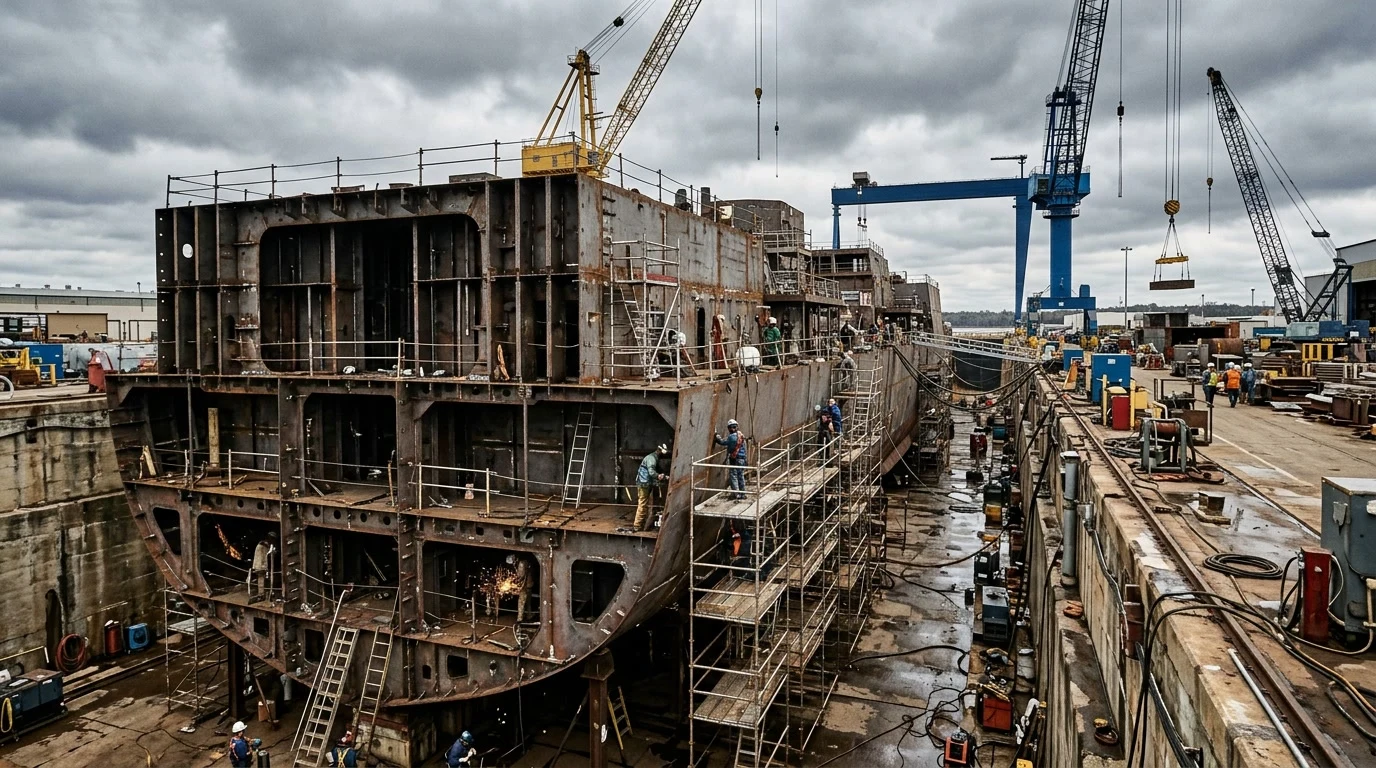
The $20.8 billion base shipbuilding account supported three battle force ships: one Virginia-class submarine, one Arleigh Burke-class destroyer, and one fleet replenishment oiler, according to the Navy's June 2025 budget materials. Department officials framed the split as a timing question rather than a retreat from fleet growth, arguing that reconciliation funding would deliver ships on faster schedules than annual appropriations allowed. The department's overall topline of $292.2 billion combined a $248.9 billion base budget with mandatory reconciliation proposals, a structure that made the annual request harder to compare with prior years.
Why did Congress object?
The House defense appropriators' markup, released June 10, 2025, described the $20.8 billion shipbuilding request as insufficient and restored funding for two destroyers that the base request had left out. Members of both chambers had spent the spring signaling that hull count mattered more than budget architecture, and the subcommittee's action put the House position on record months before the full appropriations process concluded. The Senate Armed Services Committee and the House Armed Services Committee took up the same question in their fiscal 2026 policy bill, which advanced through June 2025 with additional shipbuilding provisions of its own.
What happens next in the budget process?
Appropriations and reconciliation moved on separate tracks. The reconciliation package, passed as law in July 2025, carried the bulk of the department's planned ship purchases, including additional Virginia-class submarines and destroyers. The annual defense appropriations bill, which funds the base budget, remained in negotiation through the fall of 2025. Until both were enacted, the department operated under continuing resolution authority, which limits new-start programs and can slow contract awards across the shipbuilding industrial base.
Why the FY2026 request matters
The June 2025 submission was the first full budget of the new administration and set the funding trajectory for every major surface and undersea program now in production. The reliance on reconciliation means that most fleet growth in the coming decade depends on multiyear money already appropriated, while the base request shapes the industrial base's steady-state workload. Observers watching the fiscal 2027 request will look for whether the department returns to a conventional single-track budget or repeats the two-track structure.