A continuing resolution holds Navy money at prior-year rates. The freeze lasts until Congress passes full-year appropriations. The documented cost lands on ship maintenance awards and facility contracts. Navy maintenance officials described repeated disruption through fiscal year 2025. Federal auditors put hard numbers on the delays and higher prices.
Related: Navy facility shipyard award news.
Congress enacted 49 continuing resolutions affecting the Department of Defense. The count covers fiscal years 2011 through 2025. Their durations ran from 1 to 176 days. The average total length was about 123 days. The count comes from the January 2026 report of the Government Accountability Office (GAO). The same report records delayed maintenance awards across ship upkeep accounts. The Government News section tracks the appropriations cycle behind those numbers.
What Does a Continuing Resolution Freeze in Place?
A resolution funds most accounts at a rate for operations. The rate is set from the previous fiscal year. It bars new starts. New starts are projects that lacked funds in the prior year. It can also carry anomalies. Anomalies are exceptions written for specific accounts. The mechanics come from a February 2018 report by the Congressional Research Service (CRS) on defense spending under interim resolutions.
The new-start bar reaches large programs. Before fiscal year 2018, the Pentagon listed about 75 weapons programs for delay. The cause was the new-start prohibition. Nearly 40 more faced a restriction on production quantity, per the CRS report. The constraints apply to the Navy alongside the other services.
How Do Funding Delays Reach Ship Maintenance?
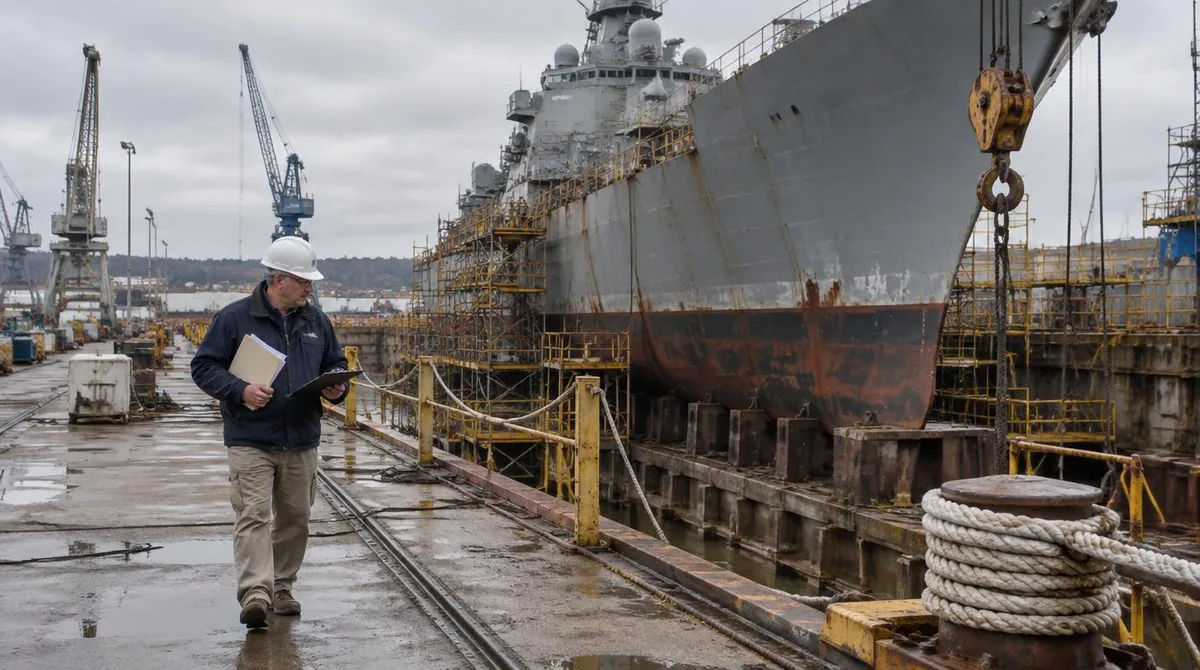
The path runs through contract awards. Navy officials said continuing resolutions disrupt ship maintenance execution. Awards of surface ship depot-level contracts may wait. Amounts available under a resolution may not cover them, the January 2026 GAO report states. Officials then triage the fleet. Funds go to ships already in maintenance or closer to deployment. Readers following this should also see Navy's FY2026 Budget Request Puts $20.8 Billion Into Base Shipbuilding, With Reconciliation Funds to Follow.
Ships outside that group wait. Their equipment purchases and planning and design efforts face delays. Work resumes after full-year appropriations arrive, according to the report. The waiting compounds an existing problem. A May 2022 GAO report placed the deferred maintenance backlog at nearly $1.8 billion. Unchecked deferral brings more expensive repairs and shorter service life.
What Do Delayed Contracts Actually Cost?
The clearest cost record comes from fiscal year 2024 examples in the GAO report. Joint Base San Antonio officials reported delayed facilities sustainment projects. Contract costs rose by an average of 66 percent. Some projects cost more than double the original estimate. One contract was estimated at $579,000. The rebid quote came in at $1,445,000 after full-year funding passed.
Other programs booked similar bills. Marine Corps Amphibious Combat Vehicle officials reported an added bill of $17.7 million. The cause was splitting annual buys into smaller sublots to fit resolution limits. About half of the acquisition programs GAO surveyed, 36 of 74, reported schedule effects.
How Does the Navy Work Around the Freeze?
The fleet found a partial workaround. From fiscal years 2020 to 2025, the Navy awarded private shipyard contracts early. The awards covered small planning efforts, with options for the work itself. The approach allowed awards during a resolution. Officials still reported negative effects on operations, according to GAO.
The replanning itself consumes staff. One service estimated that budget staff spend about 20 percent of their time on resolution replans. The estimate appears in the January 2026 report. Program officials noted further waits after an appropriation. Funding can take 4 to 6 weeks to reach program offices. Officials then need about 30 days to approve new obligations.
Conclusion: Costs Booked in Delays and Higher Prices
The pattern holds across the record. Resolutions hold funding at old rates and bar new starts. Ship maintenance awards wait or split into pieces. Replans consume staff time, and rebid contracts return with higher prices. As of January 2026, GAO counted 49 resolutions across 15 fiscal years. The average stretch ran about 123 days. The fleet’s continuing resolution Navy cost is not a single invoice. It is a queue of delayed awards. It is a backlog measured in billions, and higher prices when work moves.