The Navy's littoral combat ship fleet stood at more than thirty commissioned hulls as of 2024, split between the Freedom variant built on the Great Lakes and the Independence variant built in Alabama and Mississippi, according to Naval Vessel Register data and Navy delivery announcements. The fleet's defining feature in 2026 is divergence: the newest ships continue to commission into the mid-2020s while a documented wave of early retirements, concentrated in the first block of Freedom-variant ships, has already removed some of the youngest surface combatants the Navy ever retired. This guide explains the two variants, the retirement record, the mission modules that define LCS employment, and what the fleet looks like as deliveries end.
How many LCS ships does the Navy have, and how is the class split?
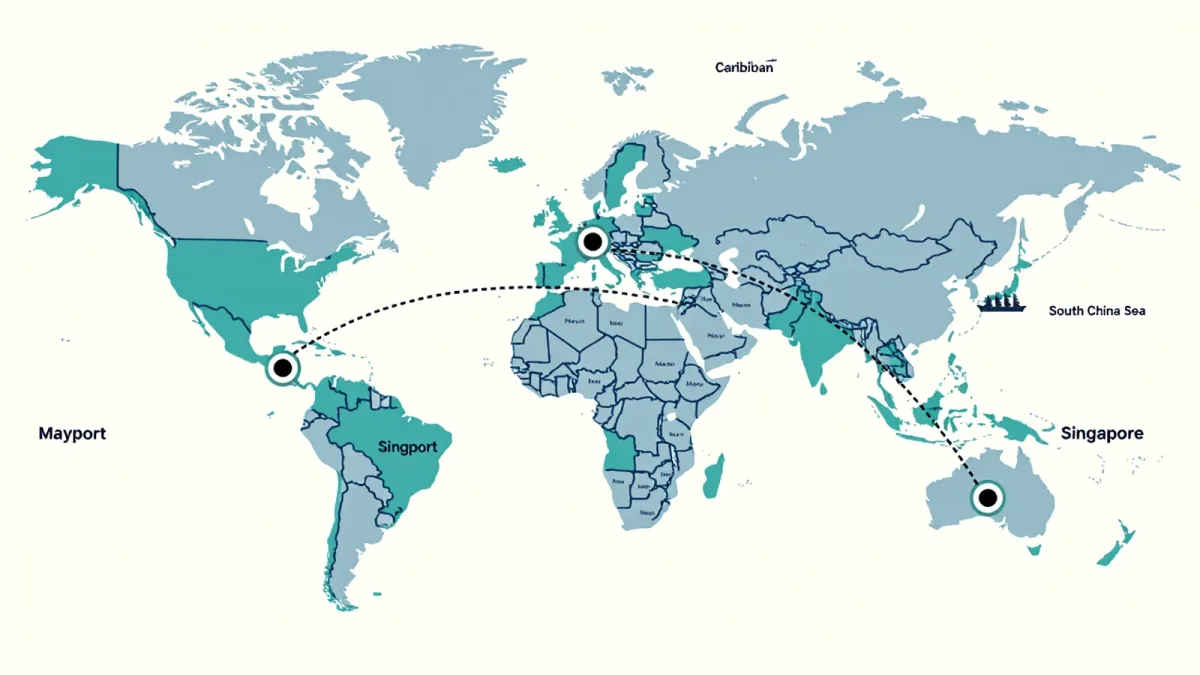
The LCS program produced two distinct ship designs procured to a common mission specification. The Freedom variant, a steel semi-planing hull built at Marinette Marine in Wisconsin, and the Independence variant, an aluminum trimaran built at Austal USA in Mobile, Alabama, each displace around 3,000 tons, operate with smaller crews than conventional surface combatants, and carry interchangeable mission modules, according to Navy fact files. Commissioned hulls numbered in the mid-thirties as of 2024, with delivery announcements through 2024 adding final ships of both variants under contracts that brought the program to roughly thirty-five to forty hulls. The Navy's force-structure documents of the early 2020s, including the 2016 force structure assessment that first cut the class, settled on about thirty-two to thirty-five LCS as the steady-state size. Freedom-variant ships concentrate at Naval Station Mayport, Florida, and Independence-variant ships at San Diego, California, giving the class a two-coast footprint matching its two designs.
Why is the Navy retiring LCS ships so early?
The documented record begins with the 2020 budget submission, in which the Navy proposed retiring the earliest Freedom-variant hulls, ships less than a decade old, citing the cost of upgrading their combat systems and propulsion to current standards. Congress challenged the plan, and the Government Accountability Office and the Navy's own reviews documented the ships' specific problems: combining gear failures in the Freedom variant's propulsion train, and early hull cracking and corrosion issues in the aluminum Independence variant, all described inpublic testimony and audit reports across the early 2020s. Four ships, USS Freedom (LCS-1), USS Independence (LCS-2), USS Fort Worth (LCS-3), and USS Coronado (LCS-4), were decommissioned in 2021, and additional early hulls left service in 2022 and 2023 as budget submissions added them to retirement lists. The Navy's stated logic was consistent: the modernization cost per early hull exceeded its remaining value relative to newer ships of the same class already in service.
What do LCS ships actually do?
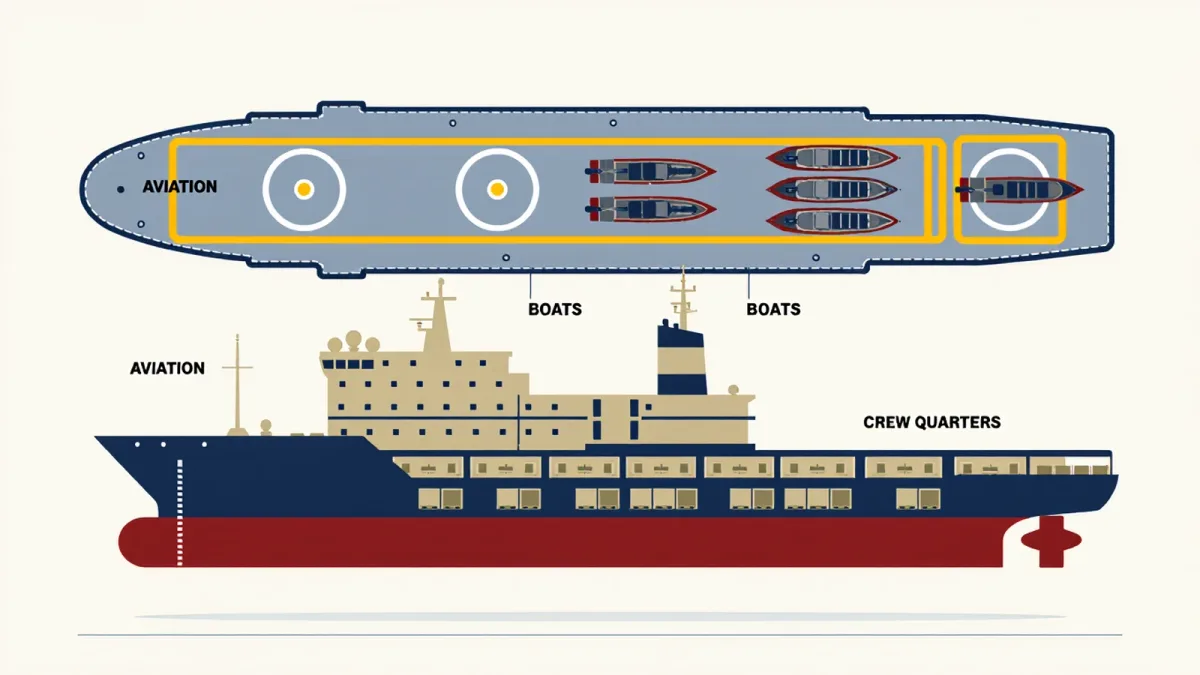
The class was designed around three interchangeable mission packages: surface warfare, mine countermeasures, and anti-submarine warfare, with the ship's aviation facilities, mission bay, and off-board systems reconfigured between packages, according to Navy program documentation. In practice the documented employment has narrowed. The mine countermeasures package, centered on the unmanned systems carried by Independence-variant ships, is the program's successor mission, replacing the retiring Avenger-class mine countermeasures ships, and the Navy designated Independence-variant hulls for MCM duty in the 2020s. Surface warfare employment dominates West Coast and Mayport schedules, including the class's documented contribution to counter-narcotics and countering illicit maritime activity patrols under U.S. Southern Command, a mission LCS ships have performed continuously since the class's first years. The anti-submarine warfare package was descoped in program documentation of the early 2020s, a decision Navy officials attributed to its development cost relative to other fleet priorities.
How does the LCS fleet compare to what the Navy originally planned?
The original 2000s-era plan called for fifty-five hulls, later reduced to the low forties, then to the low thirties in the 2016 force structure assessment, according to successive Navy force-structure documents. The class also lost its planned place in the surface combatant line: the Navy's 2020s shipbuilding plans replaced further LCS procurement with the Constellation-class frigate, a design covered in separate program reporting, and LCS production ends as frigate construction begins. What remains is a class with a documented role narrower than its original name implies: fast, shallow-draft ships for near-land patrol, special operations support, counter-narcotics work, and mine countermeasures, crewed by rotational core crews with the mission-module crews separate, a manning model unique in the surface fleet and documented in Navy personnel descriptions since the first deployments.
How is an LCS crewed, and why does it matter for fleet status?
The class introduced a crewing model unlike the rest of the surface force: core crews of roughly seventy to one hundred sailors, far smaller than a destroyer crew, rotate between hulls of the same variant while the mission-module crews are organized separately and fly in when a package is installed, according to Navy personnel documentation from the class's first deployments. The Navy later moved toward longer, traditional deployments for some hulls after early rotation schemes proved hard to sustain, a shift documented in fleet reports of the late 2010s. This manning structure is central to fleet status because it shapes availability: the number of ships a given number of crews can keep underway, and the pace at which hulls can shift between missions, both depend on the crew-hull ratio rather than on hull count alone. Fleet status in 2026 therefore reads two ways, and Navy testimony describes both: ships in commission, and ships a fixed crew pool can actually put to sea, with the second number the binding constraint the Navy manages through crew assignments.
What is the fleet's trajectory into the late 2020s?
The documented trajectory has two components. First, deliveries finish: final Freedom-variant and Independence-variant ships were delivered and commissioned through 2024 and into the mid-2020s under existing contracts, after which no new hulls are funded. Second, the fleet stabilizes around the ships the Navy chose to keep: the later Freedom-variant block with corrected propulsion components, and the Independence variant carrying the mine countermeasures mission. Navy testimony through the mid-2020s described the class as maturing into steady employment after a difficult first decade, and the ships' deployment patterns, covered in a separate guide on this site, support that description: continuous Southern Command presence, mine countermeasures transition, and rotational forward stationing. For 2026, the fleet's defining numbers are documented and simple: roughly thirty ships in the operational force, no new construction beyond funded contracts, and a retirement wave that stopped with the early hulls.