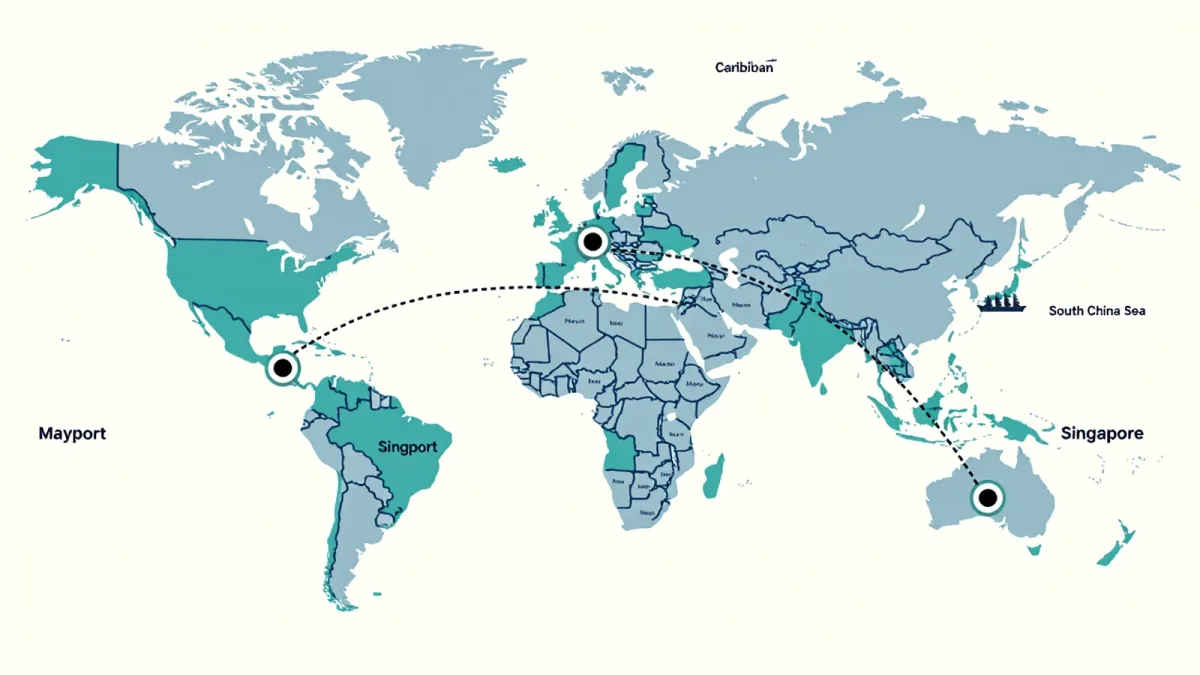
Littoral combat ships deploy under two distinct documented patterns: Independence-variant hulls forward-stationed in Singapore for Western Pacific missions since 2013, and Freedom-variant hulls sailing from Naval Station Mayport, Florida, chiefly on counter-narcotics and security-cooperation patrols under U.S. Southern Command, according to Navy announcements and fleet records through 2024. The class was designed for exactly these near-land missions, and its deployment record over the past decade is concentrated in a small number of theaters, each with its own hull rotation, mission module, and crewing arrangement. In 2024 the Navy announced a significant change to the Singapore arrangement, adding a transition element to the picture. This guide explains where LCS ships go, what they do there, and how the deployment model works.
Why does the Navy forward-station LCS ships in Singapore?
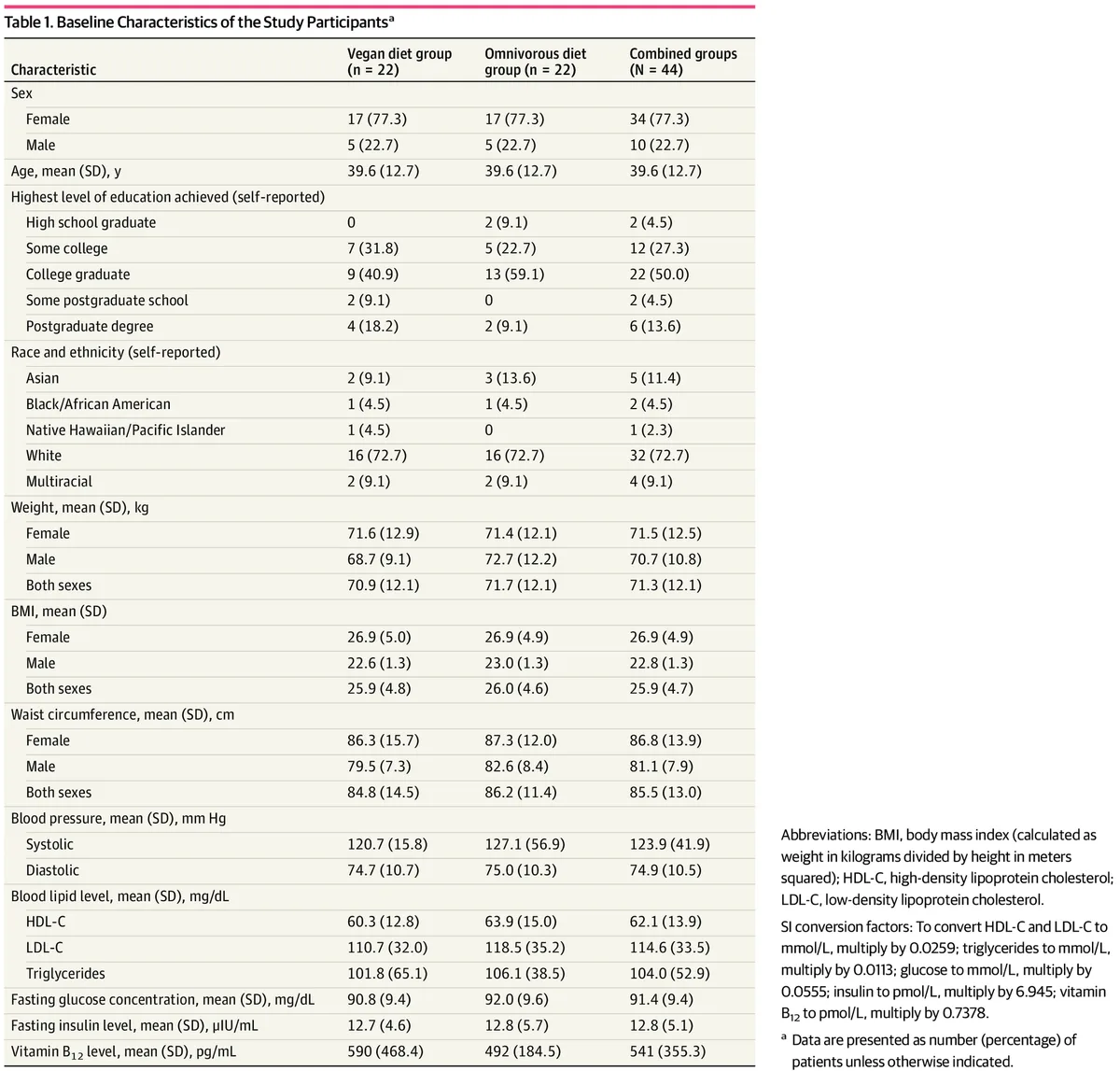
Singapore has been the Navy's LCS forward station since April 2013, when USS Freedom (LCS-1) began the first rotation at Changi Naval Base, according to Navy announcements at the time. The logic documented in Navy posture statements is proximity: a ship based in Singapore reaches the South China Sea and the Malacca Strait in days rather than the weeks a West Coast ship requires, and the Independence variant's shallow draft and large flight deck suit the region's littoral geography. Successive Independence-variant hulls rotated through the station over the following decade, conducting surface-surveillance patrols, maritime cooperation with Southeast Asian navies, and, on documented occasions, mine countermeasures operations. Crews rotate to the ships while the hulls remain forward, allowing a small number of ships to maintain presence year-round, a pattern the Navy describes in its forward-deployed naval force publications. In 2024, Navy officials announced that the Singapore LCS rotation would end in the following years as the ships transition to other employment, a documented shift whose final implementation was still in progress through 2025.
What do Mayport-based LCS ships do on deployment?
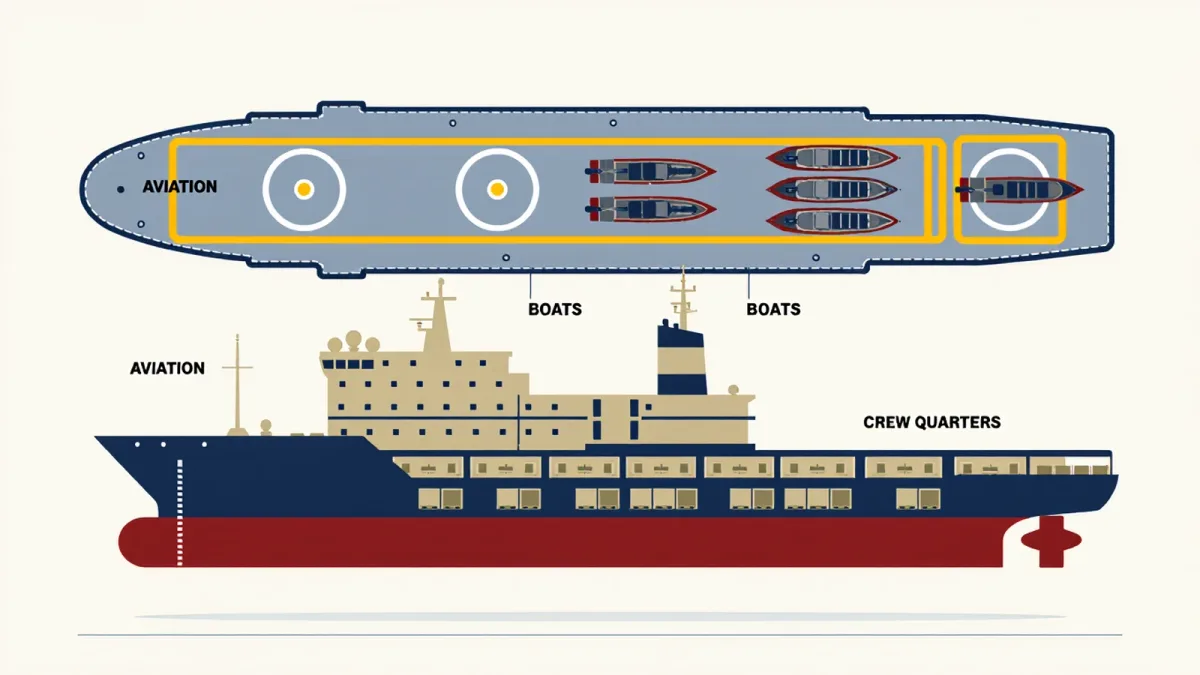
The Freedom-variant ships homeported at Naval Station Mayport deploy primarily to the Caribbean and Eastern Pacific under U.S. Southern Command, where the Navy's documented mission for more than a decade has been detection and monitoring of illicit trafficking, carried out with U.S. Coast Guard law-enforcement detachments embarked, according to Navy and Coast Guard statements. Deployments typically run several months, and the class has been the Southern Command maritime force's most consistent surface contribution since the mid-2010s, credited in joint announcements with interdictions of contraband and with the rescue of mariners in distress during the same patrols. Secondary employment documented for Mayport hulls includes operations in the Atlantic and Mediterranean under U.S. Sixth Fleet, including security-cooperation port visits and exercises with European partners. The surface warfare mission package, with its 30mm guns, mission bay boats, and helicopter detachment, is the standard configuration for these deployments.
How does LCS crewing work on deployment?
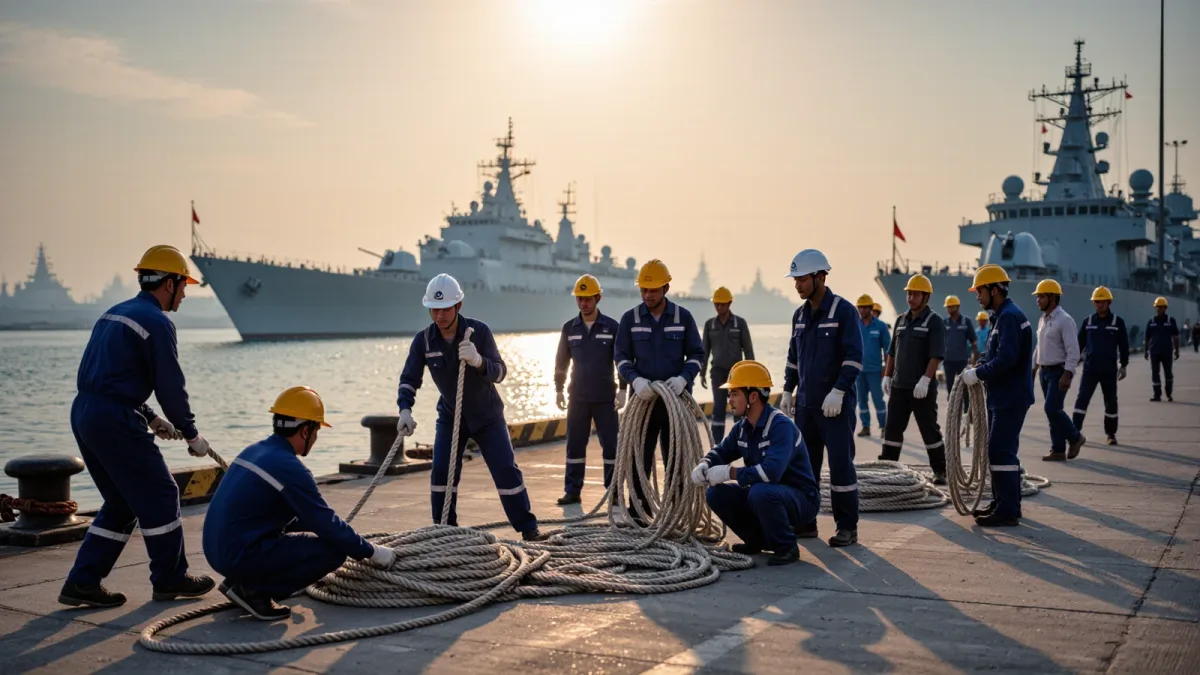
The class introduced the surface fleet's rotational crewing model: core crews of roughly seventy to one hundred sailors rotate between hulls of the same variant, while mission-module crews arrive with their equipment when a package is installed, according to Navy personnel documentation. In practice the Navy documented adjustments over the class's first decade: longer crew assignments and more traditional deployment cycles for some hulls after early rotation schemes strained training continuity, a shift recorded in fleet reports of the late 2010s. Aviation detachments, typically a helicopter sea combat squadron detachment with an MH-60S helicopter and unmanned aerial vehicle team, deploy with the ship and cross-deck between hulls of the same station. The model's documented purpose is to decouple ship presence from crew count, and the Singapore station is its clearest expression: several crews sustain a handful of hulls on year-round station.
What mission modules do deployed LCS ships carry?
Deployed LCS configurations follow the class's three mission packages, and the documented distribution is stable. Surface-warfare packages dominate both coasts' deployment schedules, configured for the counter-narcotics and presence missions described above. Mine-countermeasures packages concentrate in the Independence variant, whose hulls are replacing the retiring Avenger-class ships, with documented deployments and exercises demonstrating the package's unmanned surface and helicopter-borne minehunting systems in the Middle East and Western Pacific. The anti-submarine package, as documented in Navy program reports of the early 2020s, was descoped and has not fielded to deployed ships, leaving two live configurations in the deployment record. Package installation takes place at the ships' homeports and at the forward station, and the time required to reconfigure between packages, documented in test reports as a constraint, is the reason the Navy assigns hulls to a single package for extended periods rather than switching mid-deployment.
What does the deployment record say about the class overall?
A decade and a half of documented deployments supports several summary observations grounded in the record itself. First, the class sustains presence at low cost relative to destroyers: the Southern Command patrols and the Singapore station both continued through budget cycles in which larger surface combatants were stretched, which Navy officials cited in testimony as the class's measured contribution. Second, the deployment record is geographically narrow: aside from the two anchor missions and occasional Sixth Fleet cooperation, deployed LCS employment has been limited, and the class has not been documented in high-threat environments since its earliest years. Third, the operational lessons are documented as much in what changed as in what continued: the crewing model was adjusted, the anti-submarine package was descoped, the Singapore station was announced for wind-down, and mine countermeasures employment grew as the Avenger class retired. Read together, these entries describe a fleet that found its documented employment envelope and settled into it, with the 2020s representing consolidation rather than expansion.
What changed with the 2024 announcement, and what stays the same?
The documented changes are concentrated at the Singapore station: the Navy announced in 2024 that forward-stationed LCS operations there would wind down, with hulls shifting to West Coast homeports and to other employment as crews and maintenance resources move with them, according to Navy statements and reporting on the announcement. The counter-narcotics deployment pattern from Mayport was not part of the change and continues as the class's steady-state mission in the Atlantic fleet. What remains constant in both variants' employment, per the documented record through 2025, is the class's specialization: presence, patrol, cooperation, and mine countermeasures in permissive waters, rather than the high-intensity roles that later fleet reviews assigned to frigates and destroyers. For readers tracking deployments in 2026, the official reference points are the Navy's deployment announcements, the Southern Command maritime force statements, and the Naval Vessel Register's homeport listings, which together record where the class sails and why.