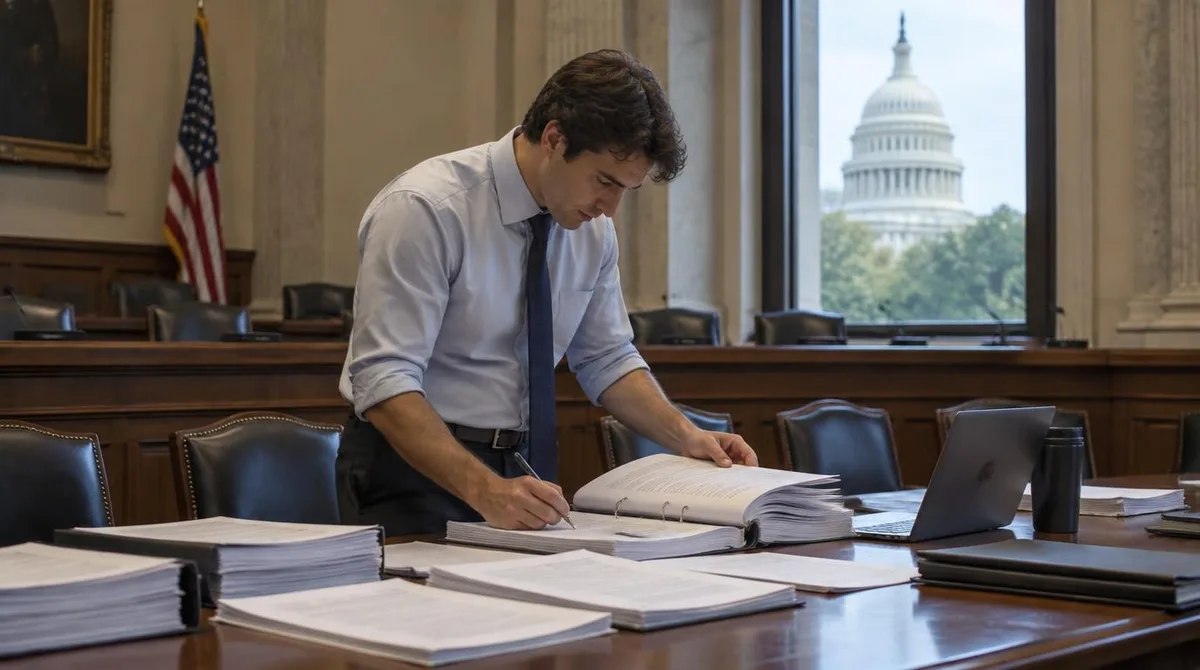
Several offices audit United States defense programs. Each one reports up a different chain. The Government Accountability Office is the audit arm of Congress. According to its 2025 annual assessment, the Defense Department plans to invest nearly $2.4 trillion in its costliest weapon programs. The Pentagon's own Office of Inspector General audits the department from inside. Congress adds a third layer through law. The Nunn-McCurdy Act forces the department to report major cost overruns to its oversight committees.
The machinery matters beyond the budget tables. New warships pass through this same oversight stack on the way to the fleet. The site's christening and delivery news follows that path. This guide to government audits of defense programs sits in the wider Government News section, beside the site's coverage of fleet events.
Who Audits Defense Programs?
Three auditors dominate the field. The GAO works for Congress. It publishes evidence reports at the request of lawmakers. The department's Office of Inspector General audits Pentagon programs from within, under the Inspector General Act of 1978. Congress itself holds the statutory lever. Program offices must disclose cost breaches on a fixed schedule, even before an auditor arrives. Each body publishes its work. The paper trail stays public.
What Do the Annual Assessments Track?
Every year the Government Accountability Office reviews the Pentagon's costliest acquisition portfolios. Its 2025 review was the 23rd in the series. The count found that combined estimates for 30 major programs rose by $49.3 billion in a year, according to the report. One program drove most of that growth. The Air Force's Sentinel missile program accounted for more than $36 billion, about 73 percent of the rise. These defense program audits carry weight because each year's numbers sit next to the year before. The same review tracked the Pentagon's faster middle tier. The department plans to spend $44.5 billion across 20 of its most expensive rapid programs. Combined costs there rose by about 3 percent for 14 programs checked the year before.
How Does the Nunn-McCurdy Act Work?
Congress wrote the reporting rule in 1982. It carries the names of Senator Sam Nunn and Representative David McCurdy. Under the law, a major defense acquisition program that breaches a unit-cost threshold must be reported to Congress. A significant breach means unit-cost growth of 15 percent or more over the current baseline estimate. A critical breach means growth of 25 percent or more. A program with a critical breach is presumed for termination. It survives only if the Secretary of Defense certifies in writing that it must continue. The rule comes from the Congressional Research Service's 2016 report on the act. That report also counts nine amendments to the law since its passage.
What Do Inspectors General Add?
The department's inspector general works from the inside. Its audits run under the Inspector General Act of 1978, according to the office's site, as of October 2026. One October 2026 report examined the Army's long-term storage and maintenance complex in Powidz, Poland. The office states that the complex holds unit equipment sets for United States and allied forces. Its storage mission supports rapid crisis response. Findings of this kind feed the office's periodic reports to Congress. Lawmakers thus see interior detail between the annual assessments.
Conclusion: Findings With Consequences
The three layers give defense money its paper trail. The GAO supplies independent measurement. The inspector general adds interior detail. Nunn-McCurdy turns cost growth into a formal event that Congress must see. The Pentagon's $2.4 trillion plan now sits inside that paper trail. The 2025 review shows why the counts matter: $49.3 billion of new growth in a single year, most of it one missile program. As of October 2026, the system still runs on documents, not impressions. This connects to our earlier piece, FY2026 NDAA Becomes Law With $26 Billion Shipbuilding Package and Third Columbia-Class Submarine.