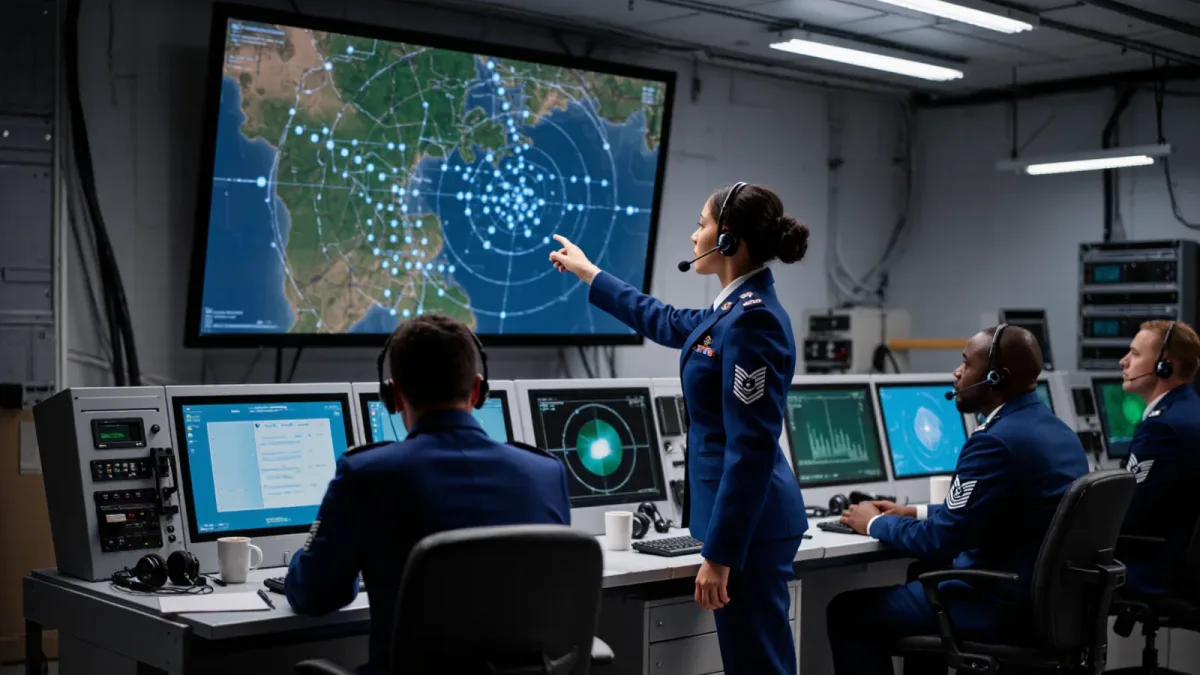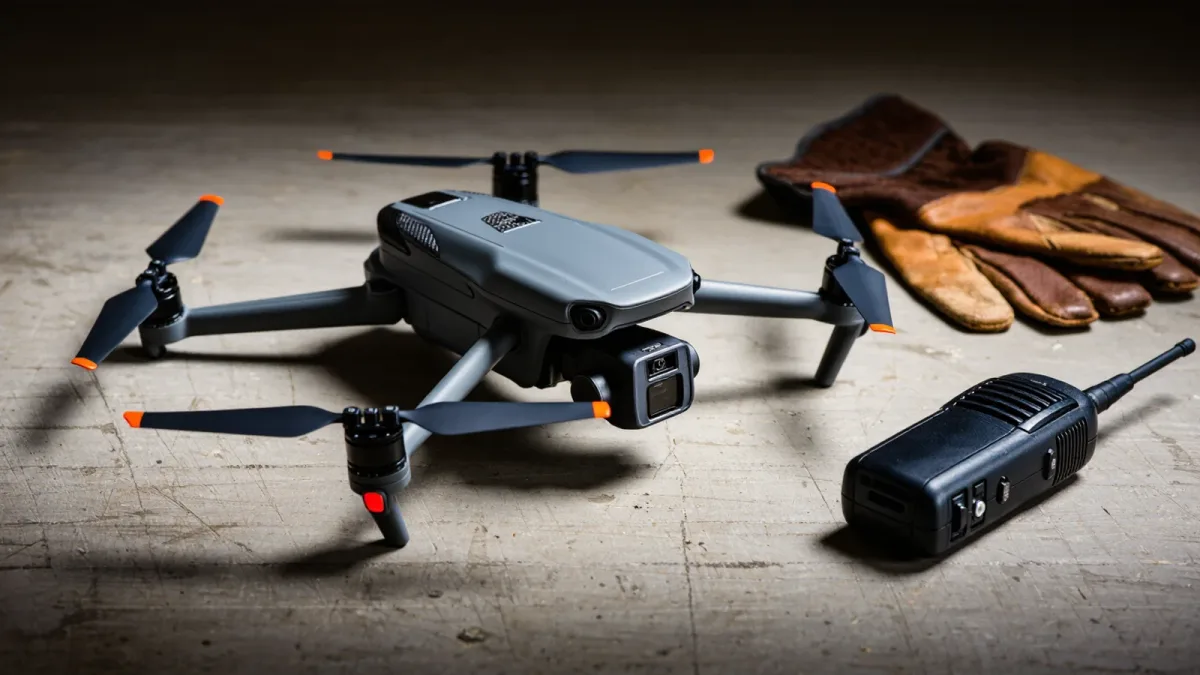
The counter-small UAS fly-away kit fielded by U.S. Northern Command attained operational certification after a deployment to Minot Air Force Base, North Dakota, from October 21 to October 27, 2025, during which an 11-person team engaged more than 100 drone targets, according to USNORTHCOM's October 2025 announcement. The mobile system is designed to deploy to any military installation in the United States and establish a counter-drone screen within hours of a request, a capability the command built in response to years of unauthorized drone flights over sensitive bases, including Navy installations in the Hampton Roads area.
Why the certification matters for base security
Unauthorized small drone flights have become a recurring security problem at American military installations. The Pentagon confirmed unauthorized drone activity over Langley Air Force Base and other sensitive sites in the Hampton Roads region adjacent to Naval Station Norfolk, and investigations reported drone swarms crossing the Chesapeake Bay toward military facilities on repeated nights. Navy bases treat drone sightings as reportable security events; Naval Base San Diego, for example, maintains standing instructions directing personnel to report any unmanned aircraft observed over the base to security dispatch. Until recently, however, commanders at many installations lacked a rapidly deployable system to detect and defeat such aircraft.
What the fly-away kit contains
The kit combines detection and defeat components packed for rapid movement: reporting on the program describes a sensor trailer carrying 360-degree radar and thermal imaging, linked to command displays that let a small team cue defeat systems against individual targets. The 11-person team that deployed to Minot operated the system through a week of live engagements, and the command stated that the validation and certification of its counter-UAS capability was completed during that period. NORTHCOM has described a goal of fielding kits that can be positioned near a threatened base within roughly 24 hours of a request for assistance.
How the certification changes the response picture
Before certification, counter-drone responses at domestic bases depended on ad hoc arrangements among the installation, its parent service, and federal partners, since military counter-UAS authority on U.S. soil is constrained by statute. Certification gives NORTHCOM a repeatable, trained-team capability that can move to whichever installation reports an incursion, rather than leaving each base to improvise. For Navy bases that share airspace with busy civilian corridors, such as Norfolk and San Diego, the ability to bring a certified screen in quickly addresses the gap identified in repeated reports of drone activity over piers where the fleet is moored.
What to watch
The command had not published the number of kits fielded or a standing deployment schedule as of the October 2025 announcement. Follow-on reporting through 2026 will show how often the teams deploy in response to real incursions and whether the Navy pursues permanent, base-fixed counter-UAS systems at its largest homeports.