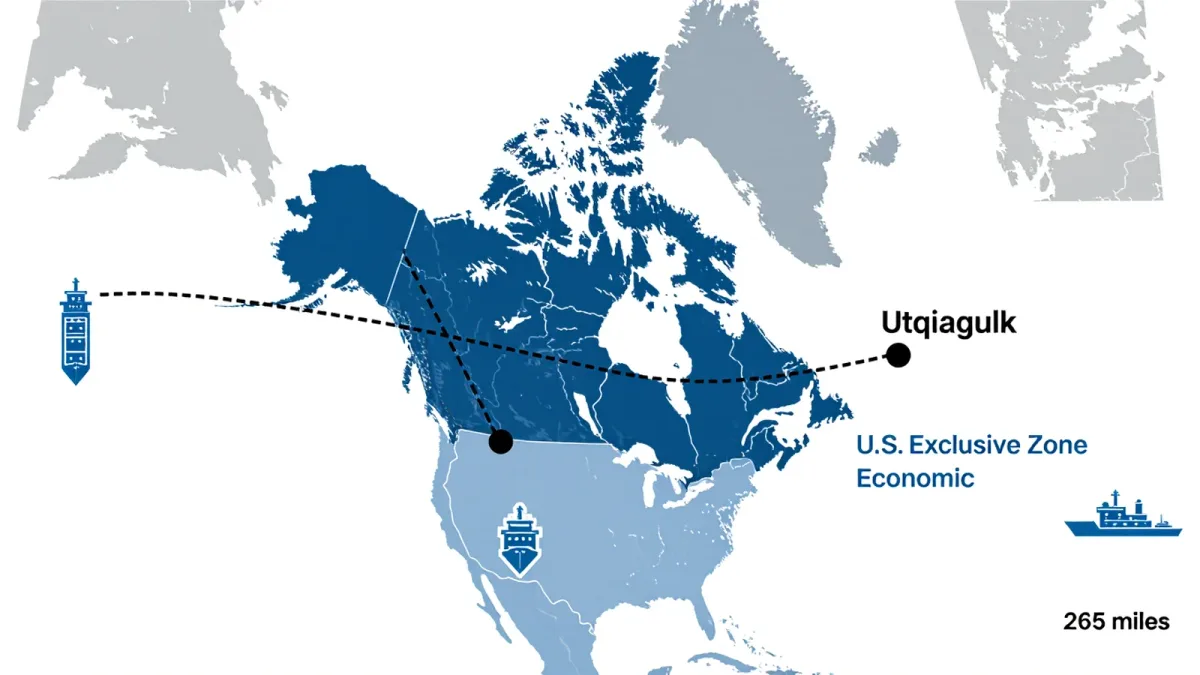
The U.S. Coast Guard icebreaker USCGC Healy was dispatched on September 2, 2025, to query the China-flagged research vessel JIDI, detected approximately 265 miles northwest of Utqiagvik, Alaska, in waters the Coast Guard described as part of the U.S. exclusive economic zone, per the Coast Guard's September 2025 statement. A second Chinese vessel, XUE LONG 2, was also operating in the area, and the encounters became the focal point of a summer-long response to Chinese survey activity off Alaska.
What happened on September 2, 2025?
The Coast Guard detected the research vessel JIDI about 265 miles northwest of Utqiagvik and sent Healy to query it, per the service's statement. The Chinese crew responded by radio that they were conducting scientific research in the U.S. exclusive economic zone, research the United States had not consented to, per the same statement. A second China-flagged vessel, XUE LONG 2, was also present. The Coast Guard said it would continue to monitor Chinese activity in the Arctic to protect U.S. sovereignty and maritime safety, and the encounter prompted an announced bolstering of the service's Arctic surface presence under Operation Frontier Sentinel.
How sustained was the Chinese presence?
The September 2 encounter was not isolated. From July through September 2025, crews aboard the cutters Healy, Waesche, and Storis intercepted and challenged five Chinese research vessels operating off Alaska, per the Coast Guard's statement. The pattern followed earlier summer appearances by Chinese research and naval vessels in the region and coincided with growing commercial interest in Arctic transit routes. The Coast Guard's response, pairing its only operating polar icebreaker with national security cutters far north of their usual patrol grounds, illustrated the reach problem that Arctic advocates in Congress have cited in pushing for a larger icebreaker fleet.
Why does foreign survey activity in the EEZ matter?
Research vessels collect bathymetry, current, and acoustic data that has direct military value, which is why coastal states regulate foreign marine scientific research inside their exclusive economic zones under the consent regime described in the law of the sea. The Coast Guard's September 2025 statement framed the encounters in exactly those terms: the Chinese crews asserted a scientific purpose, while the United States had not consented to the research in its waters, per the statement. The same period saw growing attention to Arctic transit routes as seasonal ice retreat lengthens the navigation window along the northern coasts. The service's answer, announced alongside the September 2025 encounters, was a bolstered surface presence built around Healy and the national security cutters, per the announcement.