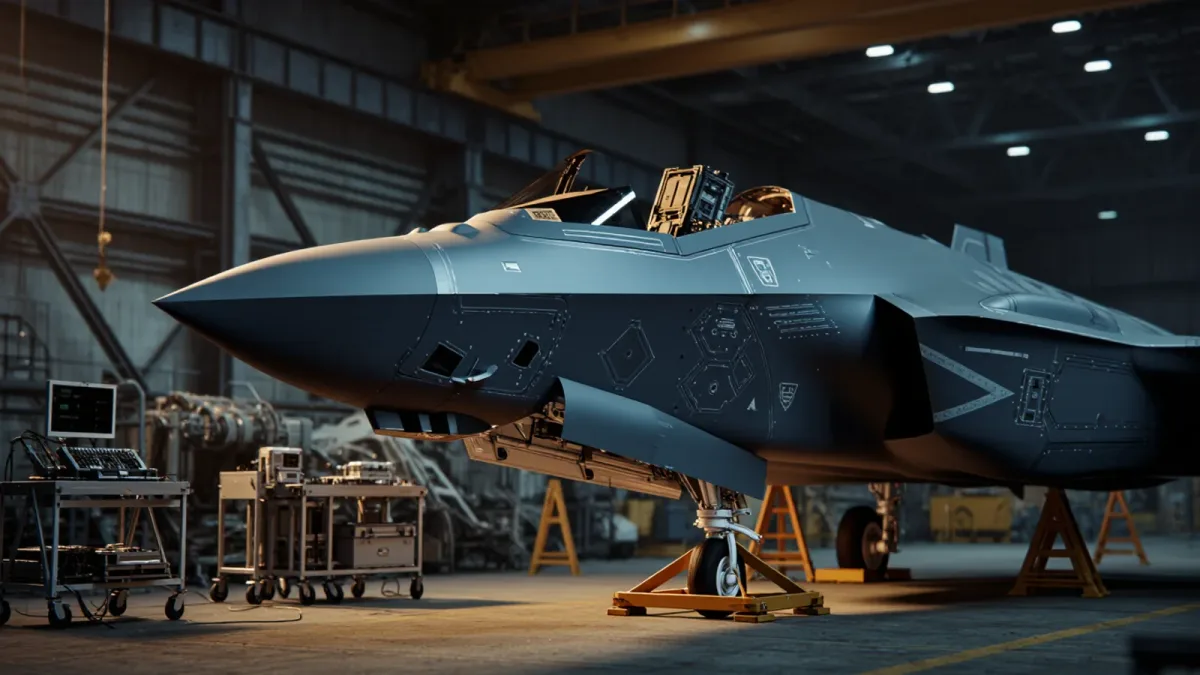
An electromagnetic railgun accelerates a conductive projectile to hypersonic speed by passing a massive electric current between two parallel rails, replacing the explosive propellant of a conventional gun with stored electrical energy. The U.S. Navy's program, run through the Office of Naval Research from the mid-2000s, built laboratory and prototype systems that fired projectiles at muzzle velocities reported above Mach 6 at the Naval Support Facility Dahlgren test range, but per budget documents and reporting through 2021 and subsequent fiscal years, the Navy stopped funding weapon development, redirecting resources to hypersonic missiles and leaving the railgun as a technology demonstration without a shipboard future as of July 2026.
How does a railgun work?
The physics is a simple circuit. Two parallel conducting rails form the barrel; a conducting armature holding the projectile closes the circuit between them. When a pulsed power supply discharges millions of amperes through the loop, the magnetic field between the rails drives the armature forward by Lorentz force, accelerating it down the bore over a few milliseconds. Velocity is set by current, pulse length, and barrel length, not by a chemical charge, so in principle the projectile can reach any speed the hardware survives.
The engineering is anything but simple. Per ONR descriptions of the program, the system needs a pulsed power store, capacitor banks in the demonstrators, charged from the ship's electrical plant between shots; rails that survive repeated shots at temperatures and currents far beyond conventional gun steel; and a projectile that guides itself through hypersonic flight to a moving target without propellant. Each of those pushed the state of the art, and each contributed to the program's cost and schedule growth.
What did the Navy actually build and test?
The program's milestones, per ONR and test reporting, ran as follows.
- 2005 onward. ONR's Electromagnetic Railgun innovative naval prototype program begins, contracting competing industrial demonstrators from BAE Systems and General Atomics.
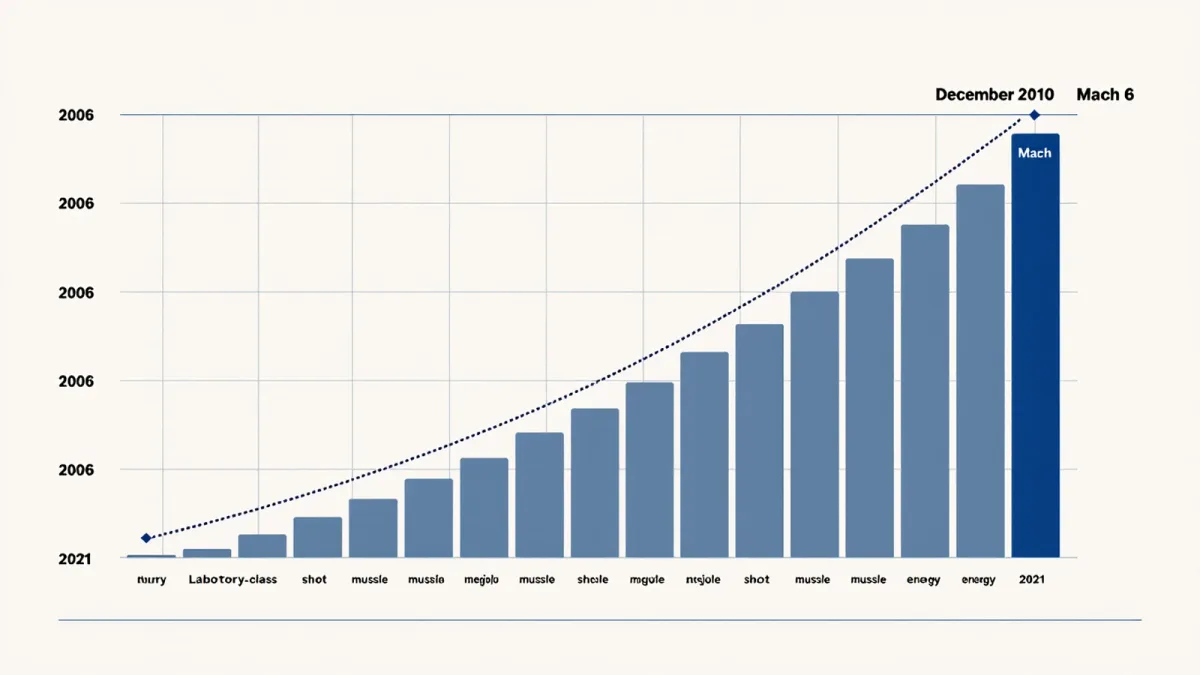
- 2008-2010. Laboratory-scale shots at Dahlgren reach muzzle energies reported at 10 megajoules and, in December 2010, the 32-megajoule demonstrator fires, the energy class cited as roughly equivalent to a battleship gun's muzzle energy.
- 2012-2017. Full-scale prototype launchers and the guided flight projectile are tested at Dahlgren, with repeated reported muzzle velocities above Mach 6 and projectile guidance demonstrated against representative targets. Repetitive firing, several shots per minute sustained, remained the hardest goal.
- 2017-2018. Industry prototypes are evaluated, and program documents describe progress toward barrel life and thermal management goals without announcing a ship installation decision.
Throughout, the Navy framed the pitch as cost per engagement: per ONR statements in the 2010s, a railgun projectile carried no propellant and no explosive warhead, so its cost was projected at a fraction of a guided missile, while its hypersonic impact delivered destructive energy kinetically.
Why was the railgun shelved?
Three converging reasons appear in budget documents and program reporting from fiscal years 2018 through 2022. First, range fell short of emerging requirements: the Navy's surface strike and air defense concepts moved toward stand-off ranges of hundreds of nautical miles, beyond what a railgun barrel of practical shipboard length could deliver. Second, cost expectations inverted: hypersonic missile programs attracted the investment, and the railgun's own unit-cost advantage eroded as its supporting infrastructure, power conditioning, launcher replacement, guidance rounds, proved expensive.
Third, defense priorities shifted. Per reporting in mid-2021 on the fiscal year 2022 budget request, the Navy zeroed railgun research funding, redirecting the line toward hypersonic weapons and electromagnetic launch technology in other applications. The program was never formally terminated with a public final report; it was defunded, and its technical results, pulsed power, launch physics, guidance through hypersonic flight, were folded into the programs that replaced it. As of July 2026, no railgun installation is planned for any U.S. Navy ship, and no allied navy has fielded one operationally, though published reporting indicates continued electromagnetic launch research in China whose operational status remains unverified.
What did the program leave behind?
The railgun's legacy is indirect but real. Pulsed power work fed the navy's broader interest in high-energy systems, including the electrical architecture that laser weapon development requires. The guided hypersonic projectile work informed, per program reporting, the Navy's understanding of flight control at Mach 5 and above, a domain now central to its hypersonic missile efforts. And the program stands as a case study in defense technology risk: a concept validated in physics, demonstrated at scale, and still defeated by systems engineering, range requirements, and the arrival of a better-funded rival. That sequence, not the hardware, is the durable lesson for naval future-weapons programs.
Could the railgun return?
The concept retains advantages that a future program could resurrect, and the hardware lessons remain in the literature. A railgun's projectile needs no propellant or warhead, so magazine depth is limited only by stowage; its velocity compresses engagement timelines against fast targets; and its range scales with electrical power, which the Navy's newest ships generate in quantities the 2005 program could not assume. Per published analyses, a railgun mounted on a ship designed electrically for it, with modern capacitors and thermal management, would face none of the power constraints that shaped the prototypes.
The counterweights are equally durable. Guidance rounds remain the cost driver, since an unguided hypersonic projectile cannot hit a maneuvering ship, and a guided round begins to resemble the missile the railgun was meant to undercut. Barrel life, measured in shots between rail refurbishment, never reached fleet-acceptable rates in reported testing, and powder guns and missiles keep improving. Per defense research reporting through 2025, the technology base survives in laboratories and in electromagnetic launch work for other applications, which means a revived program would start far ahead of 2005. Whether it starts depends on a threat the existing inventory cannot reach, not on the physics, which was never in doubt.
Program history suggests the likeliest path back is not a fleet weapon but an enabling role. The same pulsed-power and rail technology that accelerates projectiles can, per ONR descriptions, drive launchers for unmanned aircraft or serve as research instruments for hypervelocity impact studies, missions with tolerances that fleet combat does not impose. If such niches keep the industrial and intellectual base alive, a renewed weapon effort would inherit working hardware rather than empty binders. That, more than any technical breakthrough, is what the railgun's successors will need: not a new idea, but a fleet case strong enough to survive the budget cycle that its predecessor did not.