An aircraft carrier is a warship that operates as a mobile airbase, allowing a navy to launch and recover combat aircraft far from any shore. That single function is why the flattop anchors most modern fleet planning: it turns the open ocean into a place from which air power can be applied, sustained, and defended. As of publication, no other surface ship combines that role with the scale of command, logistics, and self-defense that carrier operations require.
This guide explains what an aircraft carrier does, how its air wing is built, and why the ship's survivability has become one of the most discussed questions in naval policy. It draws on open-source material only, and it states what the sources establish rather than what analysts project.
What does an aircraft carrier actually do?
The core mission is power projection from the sea. A carrier carries its own aircraft, fuel, magazines, and maintenance staff, so it can hold a strike fighter force on station without asking any nation for a runway. That independence is the reason carriers lead humanitarian relief, evacuation, and deterrence patrols alike: the ship arrives with its own air support already aboard.
The second function is command at sea. A carrier operates with an escort group of destroyers and cruisers, and the grouping gives a fleet commander a self-contained formation with sensors, missiles, and aircraft under one umbrella. Readers who want the escort side of that picture can see how a shipboard combat system turns a radar return into an intercept, since the escorts exist in large part to keep the carrier's defensive ring intact.
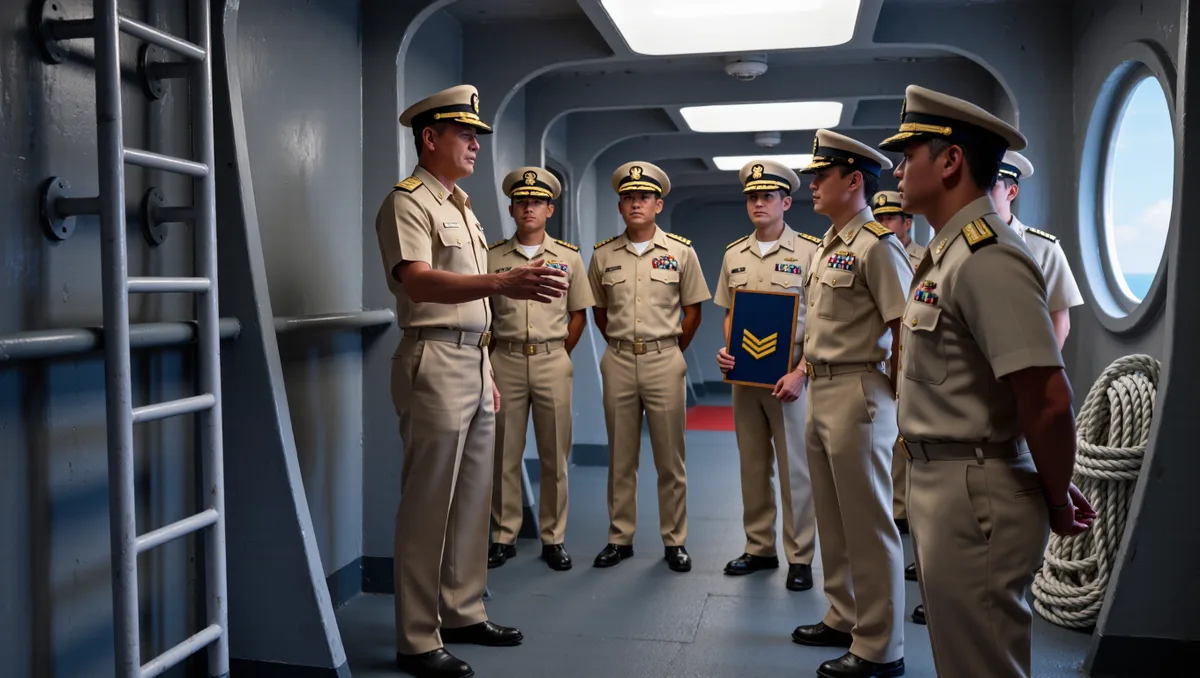
A third function is less visible but equally important: training and doctrine. Carrier aviation forces navies to master night flight, deck operations, and joint command, and those skills transfer to the rest of the fleet. The ship is, in practice, the schoolhouse for modern naval air operations.
Which aircraft fly from a carrier's deck?
A carrier's air wing is a mixed force, and the mix is what gives the ship its reach. Strike fighters handle air combat and precision attack. Supporting types cover airborne early warning, electronic warfare, logistics delivery, and search and rescue. The composition varies by navy, but the pattern of a fighter core plus specialized support aircraft is consistent across every carrier force. Readers following this should also see Virginia-Class Attack Submarines: The Navy's Fast-Attack Fleet, As of 2026.
The fighter core is easy to identify in the open record. According to Aero Corner's 2026 aircraft-type guide, the F-35 Lightning II and the F/A-18 Super Hornet are the defining examples of the fighter jet category, and both types fly from carrier decks. Their presence on the list matters for naval readers because it shows how carrier aviation and the broader military aircraft inventory overlap: the same airframe families that dominate land-based air power are the ones a flattop embarks.
Unmanned aircraft are the newest layer. Military drones in the surveillance and strike categories are now standard subjects of fleet planning, and carrier-based unmanned systems are the logical extension of that trend. The same shift is visible on the surface force, where unmanned surface vessels such as Sea Hunter point toward a fleet that mixes crewed and uncrewed hulls. Neither development replaces the carrier; both change what flies and sails around it. We covered a connected angle in Naval Unmanned Surface Vessels Explained: Sea Hunter, Ghost Fleet, and the Road to LUSV.
How does a carrier launch and recover aircraft?
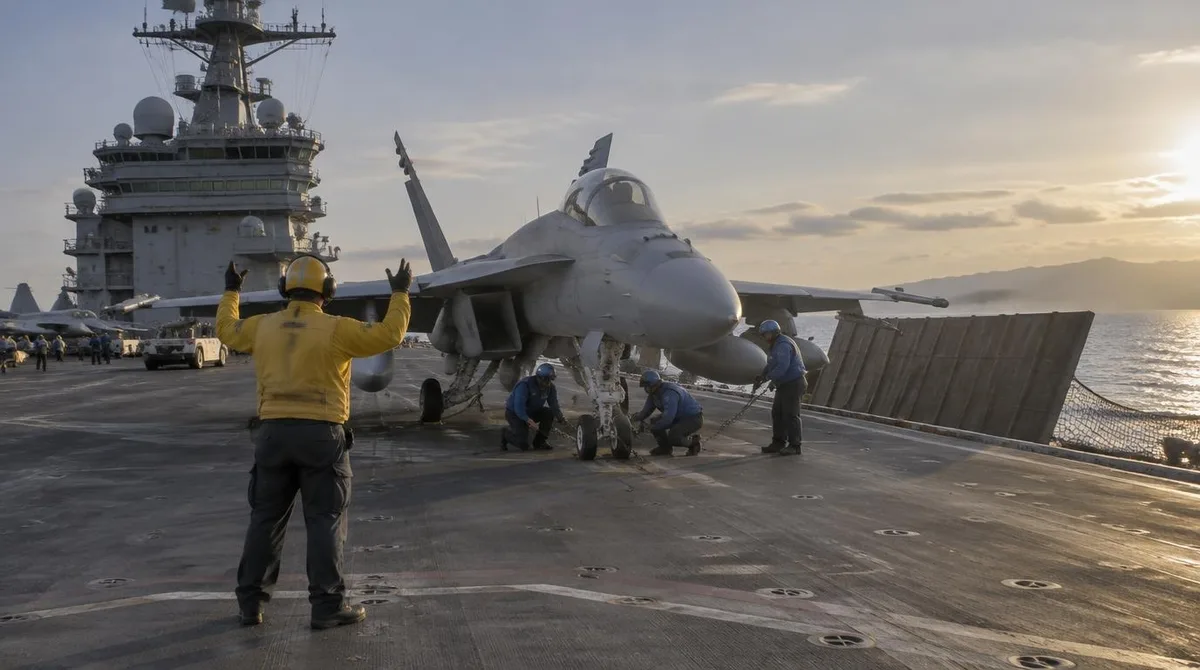
Two methods dominate. Catapult launch uses external power to accelerate an aircraft to flying speed over a few hundred feet of deck. Ski-jump launch uses an upward-curved ramp and the aircraft's own thrust, a simpler fit for short-takeoff designs. Recovery is either arrested landing, in which a hook catches a cable across the deck, or vertical landing for aircraft designed to hover.
The launch method shapes the whole ship. Steam catapults drew their power from the propulsion plant; electromagnetic catapults draw it from the electrical grid and can be tuned to the weight of each aircraft. Naval Pages has covered how electromagnetic aircraft launch replaced steam on the newest carrier class, and the change illustrates a broader point: carrier design advances arrive as integrated systems, not as single upgrades.
Deck operations are also a human system. Launch and recovery cycle crews through tightly rehearsed roles, and the pace of flight operations is set by the deck, not by the aircraft. A carrier that can sustain a high sortie rate is expressing an organizational achievement as much as a mechanical one.
Are aircraft carriers still survivable?
This is the central debate, and the honest answer is that the sources frame it rather than resolve it. The concern rests on three developments: long-range anti-ship missiles, submarines, and massed drone attacks. Each threatens the defensive ring that escorts and carrier aircraft maintain. None of the open-source material retrieved for this article quantifies a specific threat to a specific ship, and this article will not speculate where the record does not.
The published counterargument is structural. A carrier does not operate alone. Its escorts carry area air defense, its own aircraft extend the sensor horizon, and its submarine escort complicates any undersea approach. Distributed fleet concepts add unmanned hulls to that ring, which is one reason the road toward large unmanned surface vessels is discussed in the same policy conversations as carrier survivability rather than as a replacement for it.
What this means for readers is straightforward: the survivability question is a systems question. Assessing the carrier means assessing the escorts, the sensors, the undersea force, and the magazine depth of the whole formation. A flattop evaluated in isolation will always look more vulnerable than the same ship inside its group.
What should a reader watch next?
Three signals are worth tracking in open sources. First, air wing composition: which unmanned aircraft move from test programs to routine embarkation. Second, launch and recovery technology: whether electromagnetic systems spread beyond the newest hulls. Third, escort force structure: how navies size and arm the ships that sail with the carrier. Each is documented in budgets, shipbuilder statements, and service testimony, and each changes the carrier's role without changing its name.
The personnel side matters just as much. Carrier aviation depends on a pipeline of trained pilots and deck crews, and FLYING Magazine's military aviation coverage, including its guidance on becoming a Navy pilot, tracks the training and fleet-news side of that pipeline. A carrier force is only as strong as the people its flight decks certify, and that is a measurable, publicly reported quantity over time.
The conclusion the evidence supports is modest and precise. The aircraft carrier remains the only surface platform that carries a complete air wing to sea, and every fleet that can afford one keeps building or planning them. The open questions concern the escort ring, the unmanned mix, and the survivability math, and those questions will be answered in budgets and shipbuilding programs, not in headlines.