Congress funds Navy shipbuilding through an annual cycle that begins when the Department of the Navy submits its budget request in early spring and ends when the President signs an appropriations bill, typically by the start of the fiscal year on October 1. Battle force ships are bought almost entirely through the Shipbuilding and Conversion, Navy (SCN) appropriation account, which in recent fiscal years has carried a topline above $30 billion according to Department of the Navy budget submission documents. No construction contract for a large combatant can be signed without money first appropriated in law.
This is a policy explainer, not legal guidance: naval-pages.com publishes information, not legal advice, and readers with procurement or appropriations questions should consult the statutes and regulations themselves.
Where does the shipbuilding money request originate?
The cycle starts inside the Department of the Navy, which builds its budget request as part of the wider Department of Defense submission. Under the modern timeline established by successive defense budget guidance, the Navy releases its detailed budget materials in March of each year, laying out proposed SCN spending by ship class and by cost element. The Office of the Secretary of Defense reviews the service's wish list first, because the department's total falls under a defense-wide topline set by the White House Office of Management and Budget. Navy officials testify before the House and Senate appropriations subcommittees on defense after the request is transmitted, usually within days of the release.
What role do authorizations play, distinct from appropriations?
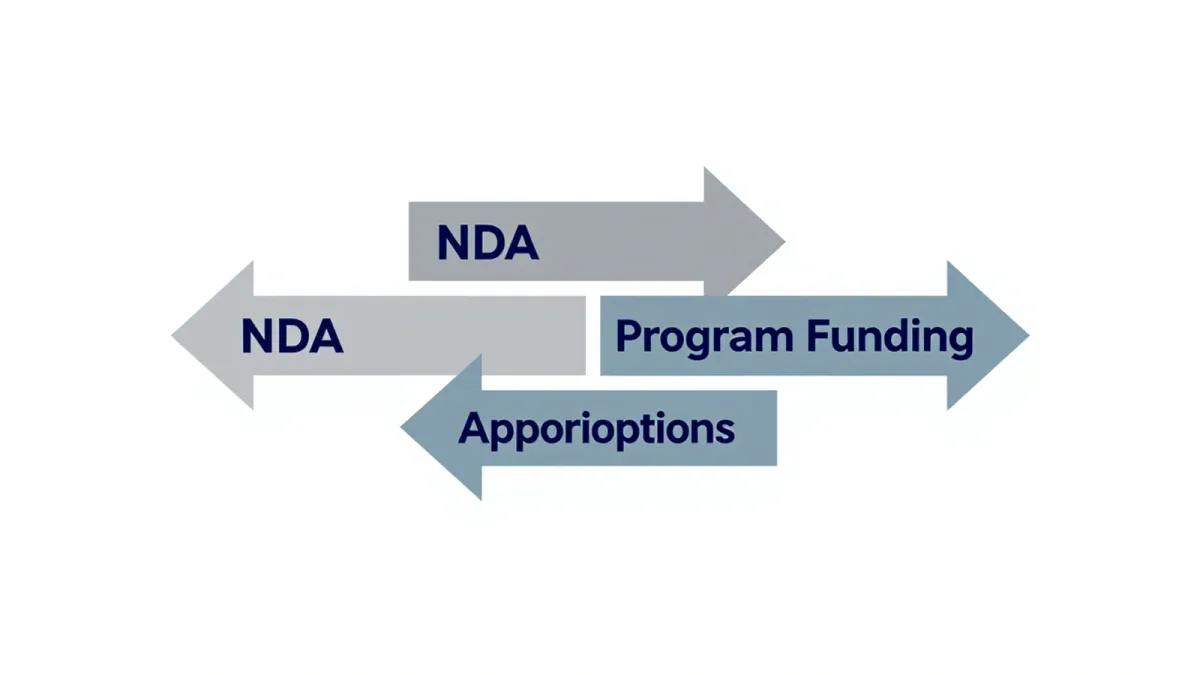
Congress funds shipbuilding through two parallel pieces of legislation each year. The National Defense Authorization Act (NDAA) sets policy, authorizes procurement quantities, and often directs reports or restrictions, but it does not itself provide money. The Department of Defense Appropriations Act provides the actual cash, and under the Constitution appropriations must originate in the House. In practice the authorization bill is signed into law in December most years, while appropriations may arrive on time or months late under a continuing resolution. CRS reports prepared for Congress, which are public on the CRS website, document this two-bill structure and its consequences for shipbuilding programs in detail.
What is a continuing resolution, and why does the Navy hate it?
When Congress cannot agree on a full-year appropriations bill by October 1, it passes a continuing resolution (CR) that funds most programs at existing rates, typically until a fixed date in November or later. CRs restrict the Navy from starting new ship programs or increasing production rates on existing ones, because a CR generally prohibits new starts and rate increments unless Congress writes a specific anomaly into the resolution. Navy acquisition officials have testified repeatedly, including in statements on Capitol Hill in recent years, that repeated CRs delay industrial base hiring and long-lead material orders for hulls such as Virginia-class submarines. A full-year CR, which Congress has avoided for defense so far, would be more disruptive still.
Which appropriation accounts pay for ships?
SCN is the headline account, but it is not the only one. The following accounts matter for understanding where hull money actually sits.
- Shipbuilding and Conversion, Navy (SCN): new construction, conversions, and outfitting of battle force ships.
- Procurement, Marine Corps and Other Procurement, Navy (OPN): craft, boats, and equipment that fall outside SCN's battle force definition.
- Research, Development, Test and Evaluation (RDT&E): design work, prototype efforts, and ship design studies such as those that preceded recent destroyer programs.
- Operations and Maintenance, Navy (O&N): not construction at all, but the account Congress taps for refueling overhauls' support activities and for repair work outside SCN.
Long-lead-time material, the shipyard purchases made roughly a year before a hull is funded for construction, is carried inside SCN itself as a separate line item in the budget justification books.
How do earmarks and markups change the request?
Both chambers' appropriations subcommittees mark up the request, and the resulting bills frequently add money to shipbuilding above the request, restore hulls the Navy proposed to end early, or direct the Navy to buy a second amphibious ship in a given year. The NDAA performs similar work on the authorization side: Section-by-section, recent authorizations have capped retirements of specific hull classes and conditioned decommissioning on the Navy certifying operational risk. According to the enacted NDAA texts for fiscal years 2023 through 2025, Congress used retirement restrictions repeatedly to shape the size of the battle force, a lever unavailable to the executive branch alone.
What happens after the money is signed into law?
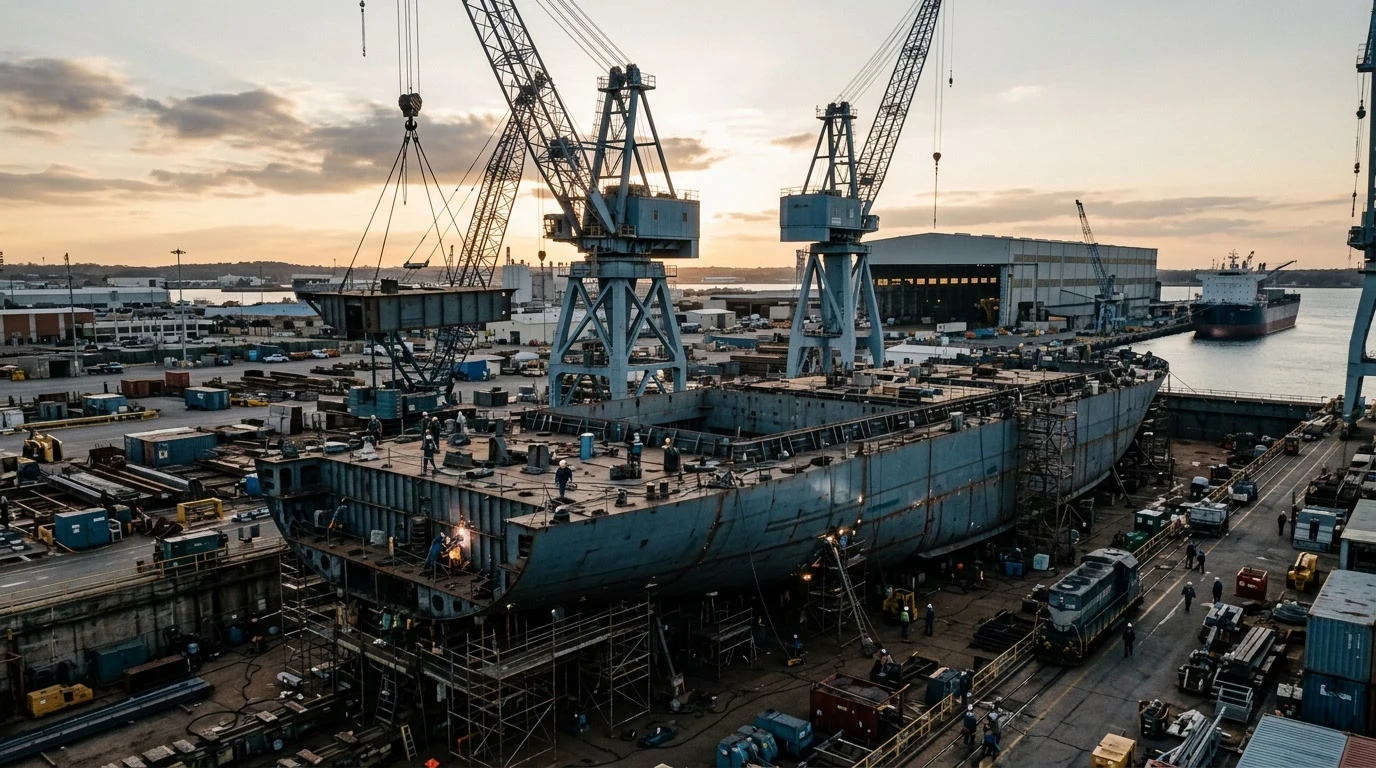
Once appropriations are enacted, the Department of the Navy issues contract awards through Naval Sea Systems Command, and the shipyard begins construction under the funded cost type. The Government Accountability Office publishes annual assessments of Navy shipbuilding, available through gao.gov, that track cost growth and schedule slip on major programs; those reports note that appropriations are usually received incrementally, with advance procurement funding spread across years for carriers and submarines. Oversight does not end at award: the GAO, the Navy's own program executive offices, and congressional committees follow each hull through delivery and into the post-delivery availability period.