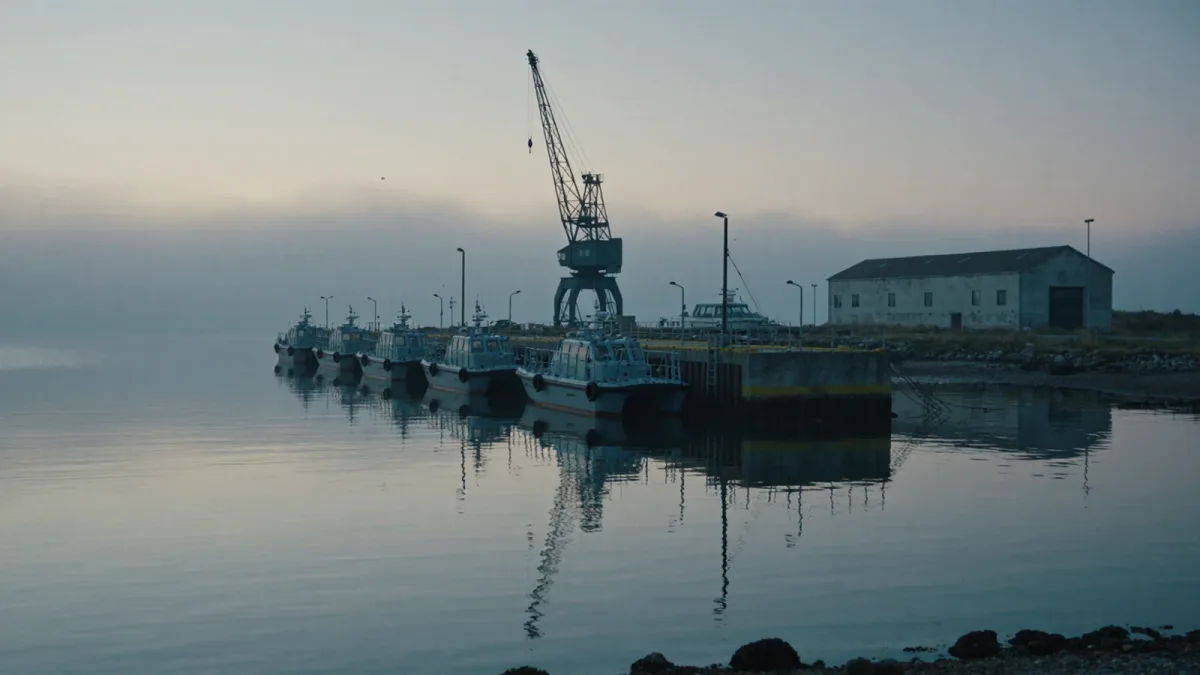
The Navy moved to modernize its mine countermeasure unmanned fleet in April 2025, when NAVSEA awarded Textron Systems a contract worth up to 100 million dollars over three years for software development updates and payload integration on the mine countermeasure unmanned surface vessel, per the April 2025 award announcement. The MCM USV, based on Textron's Common Unmanned Surface Vessel, tows the AQS-20 sonar and carries the Unmanned Influence Sweep System, and the service declared initial operational capability for the system in July 2022, per the Navy's fact sheet.
What did the April 2025 award cover?
The April 2025 award from the Naval Sea Systems Command funded software development updates and payload integration on the MCM USV, valued at up to 100 million dollars over three years, per the award announcement. The work sustains the craft that performs mine hunting and sweeping as part of the littoral combat ship mine countermeasure mission package, replacing dedicated MCM ships retired from the fleet. The same package fields the Knifefish, a medium-class mine countermeasure unmanned undersea vehicle built by General Dynamics Mission Systems that detects and classifies volume, bottom, and buried mines in high-clutter environments, per the manufacturer's specifications.
How many unmanned countermeasure systems are planned?
The Navy plans to procure thirty Knifefish systems, twenty-four for littoral combat ship mine countermeasure mission packages and six for other deployments, per NAVSEA's program announcement when the program achieved Milestone C. Knifefish achieved that milestone in 2018, and a later upgrade effort improved deep-water operation and classification performance, per program statements. Together with the MCM USV and the MH-60S helicopter, these systems form the core of the Navy's shift from crewed minesweepers to distributed, unmanned mine countermeasures, a transition documented in Navy budget submissions through the mid-2020s.
What does an LCS mine countermeasure package contain?
The mission package pairs the MH-60S Sea Hawk helicopter with the Airborne Laser Mine Detection System for spotting mines from the air, the Knifefish undersea vehicle for volume and buried mine search, and the MCM USV towing the AQS-20 variable-depth sonar, per Navy program documentation. Neutralization falls to the helicopter and to the Unmanned Influence Sweep System towed by the same surface craft, which triggers magnetic and acoustic influence mines without exposing a crewed hull. The design intent, stated in program documents since the mission packages entered service, is to keep sailors out of the minefield entirely: detection, classification, and sweeping all run from offboard systems controlled at range from the littoral combat ship. The April 2025 award sustains exactly that software and payload stack, which is why it functions as the program's maintenance-of-relevance measure.