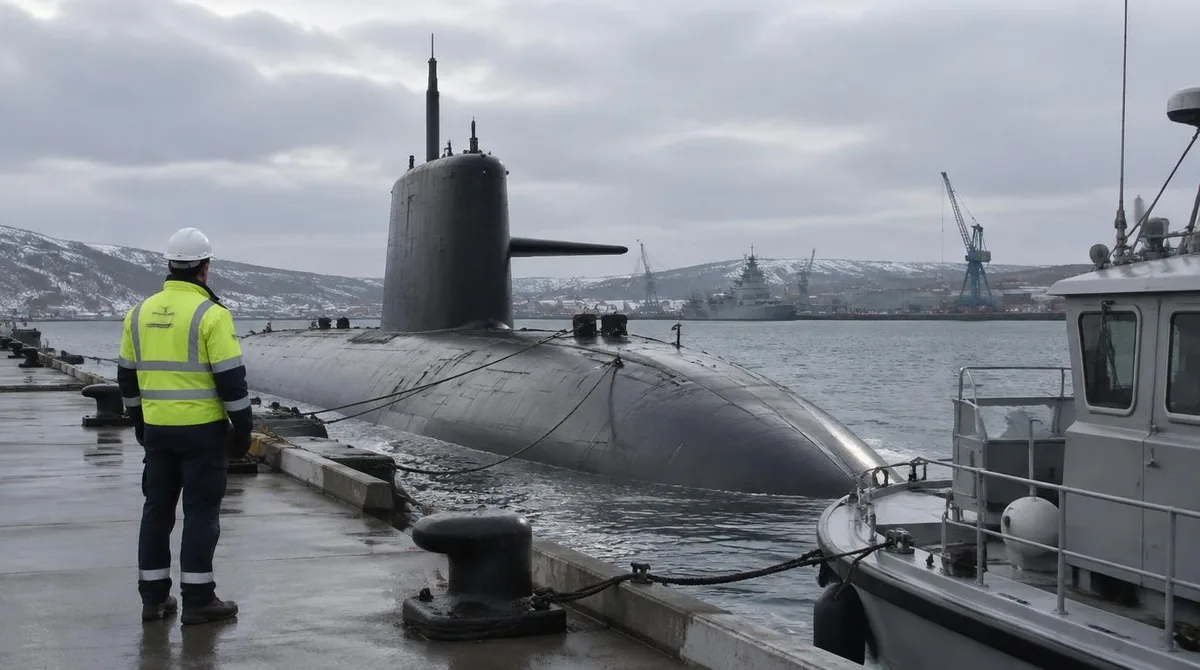
Submarine news covers any reported development involving boats that operate underwater: new classes entering service, procurement and budget decisions, patrol activity that governments choose to disclose, and incidents that surface in official statements. As of this writing, no dated fleet movements or procurement announcements are attached to this roundup; what follows is a guide to the beat itself, built on the documented record of what submarines are and how their story is reported.
The subject is older, and broader, than most readers assume. According to Wikipedia's entry on submarines, the first submersible of whose construction reliable information exists was built in 1620 by the Dutch inventor Cornelis Drebbel. The United States Navy commissioned USS Nautilus (SSN-571), its first nuclear-powered submarine, in 1954, and USS George Washington (SSBN-598), its first ballistic missile submarine, in 1959. Those two dates frame most of the submarine news written since.
This guide explains what the undersea beat actually reports, why the reporting is thin by design, and how a reader can tell a solid story from speculation. Readers new to the wider coverage can start with the site's maritime news section, where submarine items sit alongside surface-fleet and shipping coverage.
What counts as submarine news?
Four story types dominate. The first is procurement: a navy decides to build a class, awards a contract, or changes a budget line. The second is fleet events: a keel laying, a delivery, a commissioning, a decommissioning. The third is disclosed operations, such as a deterrence patrol a service announces or a port visit it confirms. The fourth is incidents, where the reporting usually follows an official investigation rather than leading it.
Each type rests on a different kind of evidence. Procurement stories trace to budget documents and contract awards. Fleet events trace to service statements and shipbuilder announcements. Incident coverage traces to investigation reports. A story without one of those anchors is a rumor, and this publication labels it as such.
Readers who want the procurement trail in context can follow how a vessel moves through the process in How U.S. Navy Ships Move From Keel to Commissioning. The same sequence, with local variations, governs most submarine programs.
Why is so much submarine activity unreported?
Submarines derive much of their military value from not being found. Navies therefore publish less about them than about surface ships, and the gap is deliberate. A destroyer's deployment is often a press release; a submarine's patrol may be acknowledged only in general terms, months later, or not at all.
That asymmetry shapes the beat. What reaches the public record tends to be what a service chooses to confirm: a new boat's name, a class's size, a program's cost, a mishap once investigated. Everything else is inference, and careful reporting keeps the two apart. The Wikipedia entry cited above notes that submarines are used for stealth operations in denied areas when gathering intelligence and doing reconnaissance, which is precisely the work no service describes in detail.
For the reader, the practical test is simple. A submarine story that names its document, dates its claim, and quotes a service statement is on solid ground. A story that attributes a movement to unnamed observers is not, whatever its source's reputation.
Which navies drive the undersea headlines?
Submarine news concentrates where the fleets are. The United States Navy, the Royal Navy, the French Navy, the Russian Navy, and the People's Liberation Army Navy account for most nuclear-powered boats and most strategic deterrence coverage. Conventional diesel-electric boats, which run quieter logistics and smaller budgets, spread the story across dozens of other navies.
The trend line matters as much as the names. Wikipedia's entry states that more countries are building and operating submarines today than ever before in modern history, and that China is leading the construction surge. That single documented fact explains why undersea warfare now appears in budget hearings and alliance meetings as often as in shipyard announcements.
Submarines are also referred to as boats rather than ships regardless of their size, a naval tradition the entry records explicitly. Newcomers to the beat should expect that usage in every serious report.
What do submarines actually do?
The documented mission list is long. Wikipedia's entry groups the military uses as attacking enemy surface ships or other submarines, aircraft carrier protection, blockade running, nuclear deterrence, intelligence gathering and reconnaissance in denied areas, denying or influencing enemy movements, conventional land attacks such as cruise missile launches, and covert insertion of special forces. Civilian uses include marine science, salvage, exploration, and the inspection and maintenance of undersea facilities.
Those missions explain the story types above. Deterrence drives the strategic programs that dominate procurement news. Anti-submarine warfare drives the escort and sensor investments that surface in fleet coverage. The civilian roles surface less often, but cable repair and deep-sea work occasionally produce their own headlines, especially when undersea infrastructure is in the news.
Capability claims deserve the same scrutiny as movement claims. A builder's stated displacement, diving depth, or endurance is the builder's own figure. It is reported as such, with a date, and not treated as independent verification.
How should a reader judge a submarine story?
Start with the source. The strongest submarine reporting names an official document, a legislative testimony transcript, or a service statement, and dates it. Next, check the identification. A credible story identifies every boat by name, hull number, and class on first mention, because that is how the services themselves keep the record.
Then check the claim's age. Fleet facts age quickly. A class count true at commissioning can be wrong within a year, so dated reporting beats confident vagueness. Finally, watch for the two classic failures: breathless framing of a routine event, and speculation about submarine movements that no named source supports.
Readers who want a general method can apply the same checklist used across the shipping beat in Maritime News Websites: How to Read Maritime News Like an Industry Analyst. The discipline transfers directly to the undersea beat. We covered a connected angle in Maritime News Websites: How to Read Maritime News Like an Industry Analyst.
What this means for following the beat
The evidence establishes the frame: submarines are a mature, documented technology with a 400-year history, a mission list that spans deterrence to salvage, and a reporting environment where services disclose selectively. What remains unknown at any moment is most of what the boats are doing, and honest submarine news says so.
For readers tracking the field, the durable habit is to anchor every claim to a named source and a date, treat builder figures as builder claims, and expect the biggest stories to arrive as budget lines and commissioning announcements rather than as drama. Broader fleet and policy coverage sits in the site's naval section, and budget-driven programs appear in policy coverage as decisions move from document to shipyard.