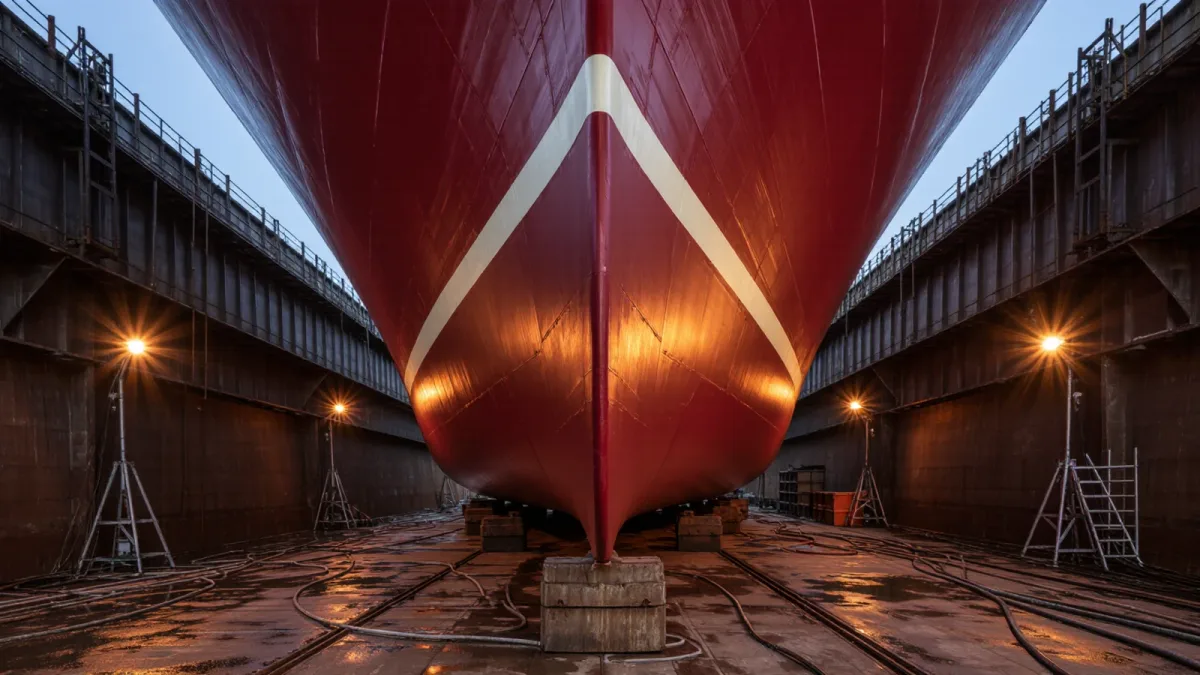
Hull coatings are the paints and polymer layers applied to a ship's underwater body to stop marine organisms from attaching, and their performance is measured in fuel: per International Maritime Organization guidance, heavy biofouling can raise a vessel's fuel consumption by as much as 40 percent, which is why navies treat coating selection, cleaning, and dry-dock intervals as an engineering discipline rather than routine maintenance. As of June 2026, the two dominant technologies are copper-based antifouling paints, which slowly poison the settlement of larvae, and silicone foul-release coatings, which let growth attach weakly so that water flow or cleaning removes it.
What actually grows on a ship's hull?
Biofouling proceeds in stages. Within hours of immersion, bacteria and diatoms form a conditioning slime film. Within days, soft fouling appears: algae, hydroids, and tunicates. Over months in warm water, hard fouling follows, barnacles, mussels, and tube worms, which cement themselves to the surface and cannot be washed off. Per published naval architecture assessments, even a thin slime measurably increases frictional drag, while hard fouling can reduce speed by knots at constant power or burn thousands of extra gallons of fuel on a long transit.
Fouling is also a regulatory and ecological problem, because organisms carried on hulls invade new waters. The IMO's biofouling guidance, first issued in 2011 and updated in 2023, presses operators on hull cleanliness for that reason as well as fuel, and several port states have moved toward inspection regimes that treat a dirty hull as a biosecurity risk.
How do antifouling paints work?
Classic antifouling paint is a matrix loaded with biocide, historically copper oxide, that leaches or wears at a controlled rate. Modern self-polishing copolymer paints go further: the binder itself reacts with seawater and hydrolyzes layer by layer, carrying biocide outward while renewing a smooth surface, so the paint's protection and its polish rate are matched to the ship's activity. A warship that sits pierside in a warm harbor needs a different chemistry from a container ship on a steady schedule, and paint suppliers rate their products in active-service months per coat, per manufacturer technical sheets cited in Navy specifications.
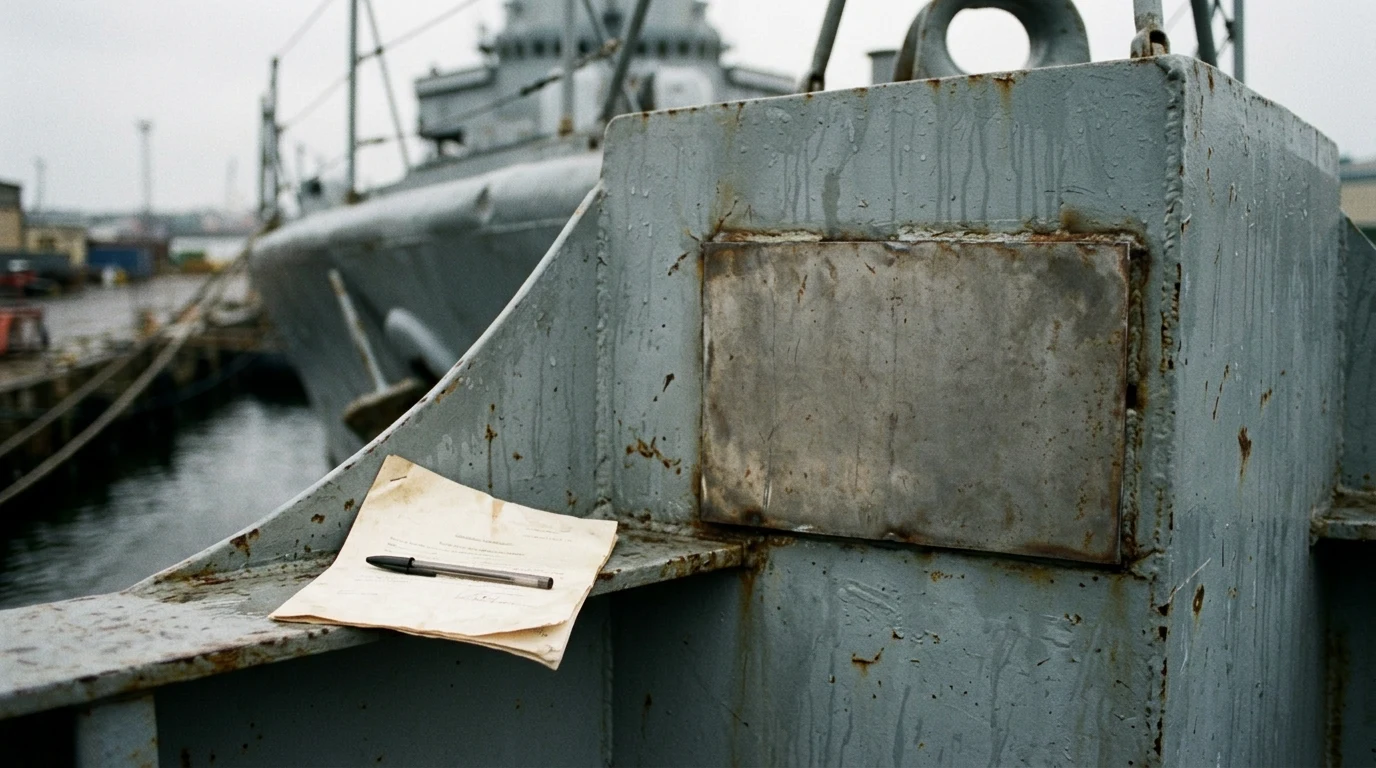
The regime is layered. Beneath the antifouling sits anticorrosive primer over the hull steel or, on many naval hulls, over sound-damping and, in submarine practice, anechoic coatings. The system's lifetime is set by the weakest layer, which is why dockings begin with gauging the old coating's thickness rather than blindly blasting it off.
What are foul-release coatings, and why are navies interested?
Foul-release coatings take the opposite approach: a silicone elastomer presents a surface so slick and low-energy that organisms attach poorly and release under the shear of underway flow or a soft brush. They contain no biocide to deplete, so their life is set by mechanical wear rather than chemical exhaustion, and per Navy and ONR-supported studies of commercial applications they have shown the largest fuel savings on vessels that spend much time underway at moderate speed.
Their drawbacks shape where they fit. Silicone is soft, damages under heavy contact, and adheres to almost nothing, so repairs require removing the entire coating system. Foul-release surfaces also underperform when a ship sits still for months, since biofilms that do establish are not scoured off. That profile matches warships poorly at the pier and well underway, and per Navy public descriptions the service has run foul-release trials on hulls including carriers to weigh the fuel gain against the maintenance burden.
How often is a hull recoated?
The cycle follows the docking schedule. Per Navy maintenance practice, surface ships enter dry dock for underwater work at intervals set by class, commonly on the order of five to ten years between major availabilities, with intermediate cleanings conducted waterborne. Between dockings, fleets use hull cleaning divers and robotic brushes to strip slime before it matures into hard fouling, a practice that per ONR-cited commercial studies preserves most of a hull's original friction performance at a small fraction of the cost of a docking.
Navies measure the payoff directly. Per Navy energy program reporting in the 2010s, hull cleanliness initiatives were among the highest-return fuel measures in the fleet, since a fouled hull is effectively a permanently open throttle. The Navy has also used aircraft-carrier trials of foul-release coatings, publicly reported in the 2010s, to quantify fuel saved per hull per year, figures that vary with operating tempo and are not standardized across classes.
What is next for hull protection?
Research, per ONR program descriptions, pushes three directions: non-biocidal surfaces engineered at the microstructure level so larvae find nothing to grip, data-driven hull hygiene in which sensors and drag models schedule cleaning precisely rather than by calendar, and longer-life elastomer systems that survive the dockings a warship's armor-like coating stack endures. None replaces the basic economics: a hull is a friction machine, and any square meter of barnacle is a tax paid in fuel on every mile the ship steams.
How does waterborne hull cleaning work, and why does it matter environmentally?
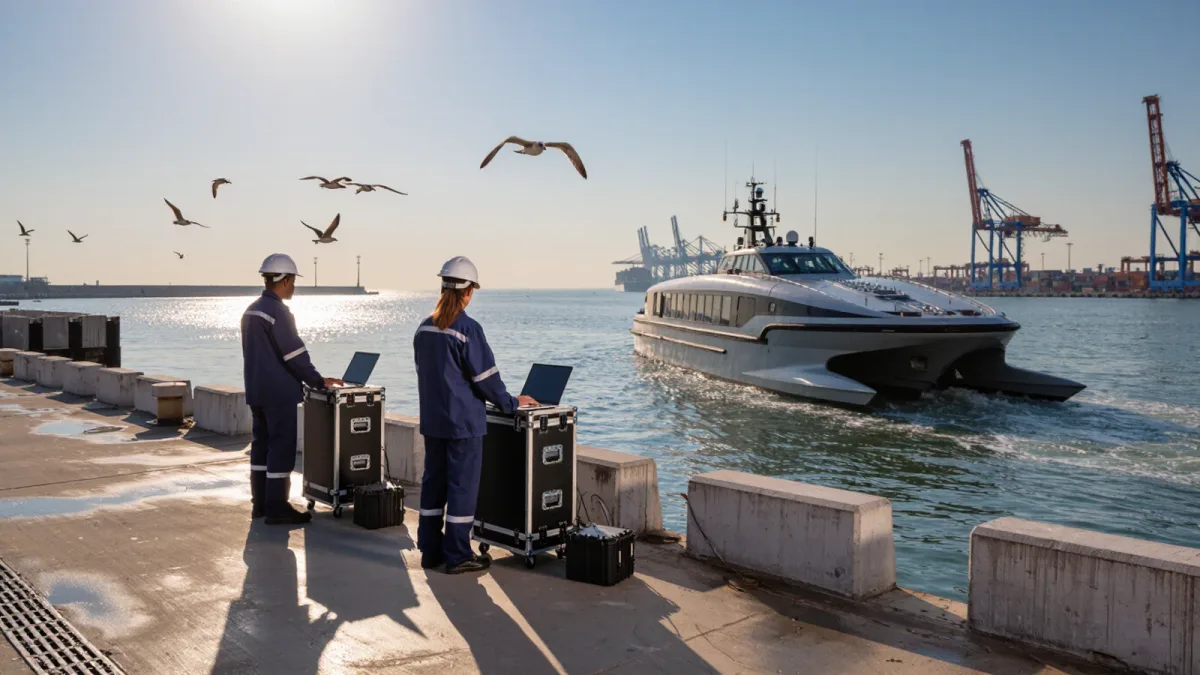
Between dockings, fleets clean hulls in the water using diver-operated or robotic brush and cavitation systems that strip slime and soft fouling without damaging the underlying coating. Per Navy and commercial cleaning descriptions, the operator selects brush pressure and pass speed to the coating type: aggressive enough to remove growth, gentle enough to leave a self-polishing paint's active surface intact, and far gentler on the soft silicone of foul-release systems, which release growth under little force. Robotic platforms, adopted broadly in commercial shipping during the 2010s and 2020s and trialed by navies, add real-time filming of the hull and capture of the removed material.
Capture is the environmentally significant part. A cleaning that lets organisms and their fragments wash away risks transferring invasive species into the harbor, and in copper-bearing antifouling sludge it releases the same biocide the paint was designed to meter slowly. Per IMO biofouling guidance updated in 2023 and port-state practice since, best practice is capture-and-contain cleaning, and several port states increasingly expect it. For naval fleets, which clean in homeports and allied harbors worldwide, the practice converts hull hygiene from a purely fuel measure into a compliance discipline, and per Navy energy program reporting, scheduled in-water cleaning now fills most of the gap between dockings in warm-water homeports.