The BGM-109 Tomahawk is a long-range, subsonic cruise missile launched from surface ships and submarines, and it has been the U.S. Navy's primary land-attack weapon since its first combat use in the 1991 Gulf War. As of March 2026, per Navy and Congressional Research Service reporting, the fleet is standardizing on the Block V configuration, which extends communications links, adds a maritime strike capability in one variant, and underpins sales to allies including Australia, approved by the State Department in 2023.
What is a Tomahawk and how does it navigate?
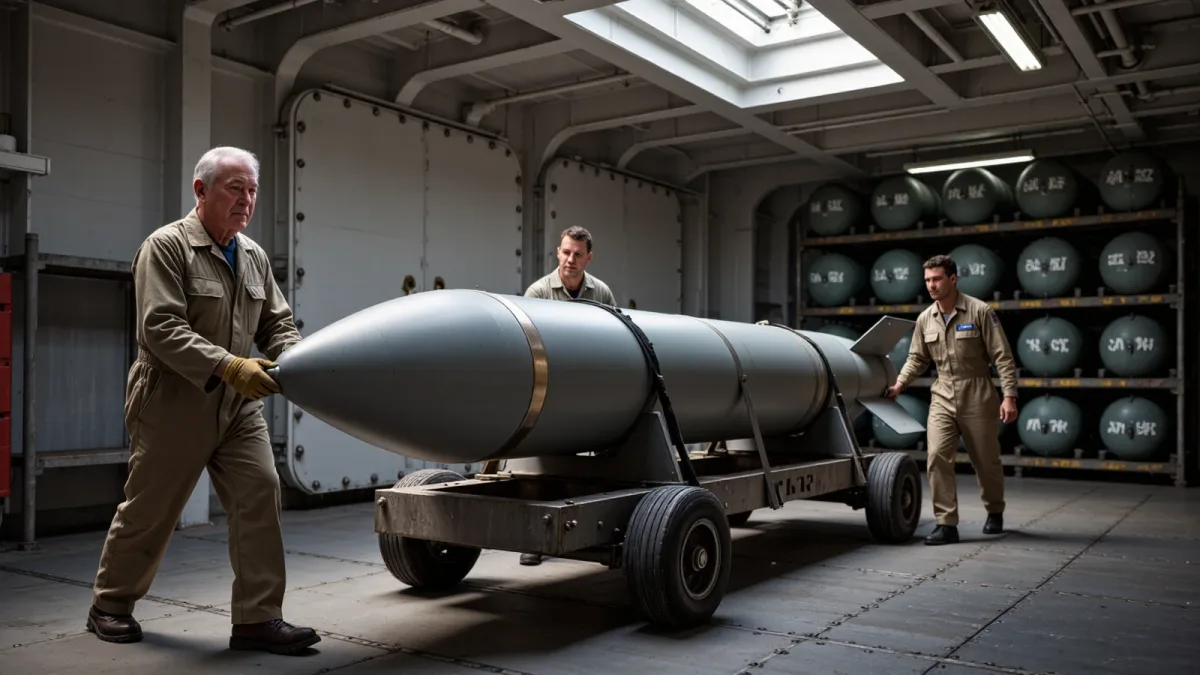
Tomahawk is a jet-powered missile about 18 feet long without booster, launched from vertical launch system cells, submarine torpedo tubes, and dedicated submarine payload tubes. It cruises at subsonic speed at low altitude, using terrain contours to mask its approach on the classic land-attack profile. Per Navy fact file descriptions, a Tomahawk carries a 1,000-pound-class conventional warhead, and its range in current variants is cited at roughly 900 nautical miles and greater depending on configuration.
Navigation evolved across generations. Early blocks relied on terrain contour matching, comparing radar altimeter readings against stored terrain maps, refreshed by satellite navigation updates. Block IV, introduced into the fleet in the mid-2000s per Navy program history, added a two-way datalink that lets commanders retarget the missile in flight and have the missile loiter over an area until assigned a new aim point or to transmit battle-damage imagery from its onboard camera.
What are the Tomahawk variants?
The family divides into nuclear-era legacy blocks and the conventional fleet in service today.
- Block II and III, the Gulf War generation, delivered the terrain-matching land-attack mission and, in one subvariant, a clustered submunitions payload. These have been retired as Block IV replaced them.
- Block IV, or Tactical Tomahawk, added in-flight retargeting, loiter, and the damage-assessment camera. It remains the numerical backbone of the stockpile, per CRS reporting.
- Block V, first delivered to the fleet in 2021 per Navy statements, is a recertification and upgrade of Block IV rounds with modernized navigation and communications. Two announced follow-on flavors extend it: Block Va, the Maritime Strike Tomahawk with a new seeker for moving ships, and a Block Vb with the joint multi-effects warhead system.
The nuclear land-attack variant was withdrawn under the 2010 Nuclear Posture Review, per Department of Defense reporting, and was effectively retired by 2013.
What carries Tomahawk?
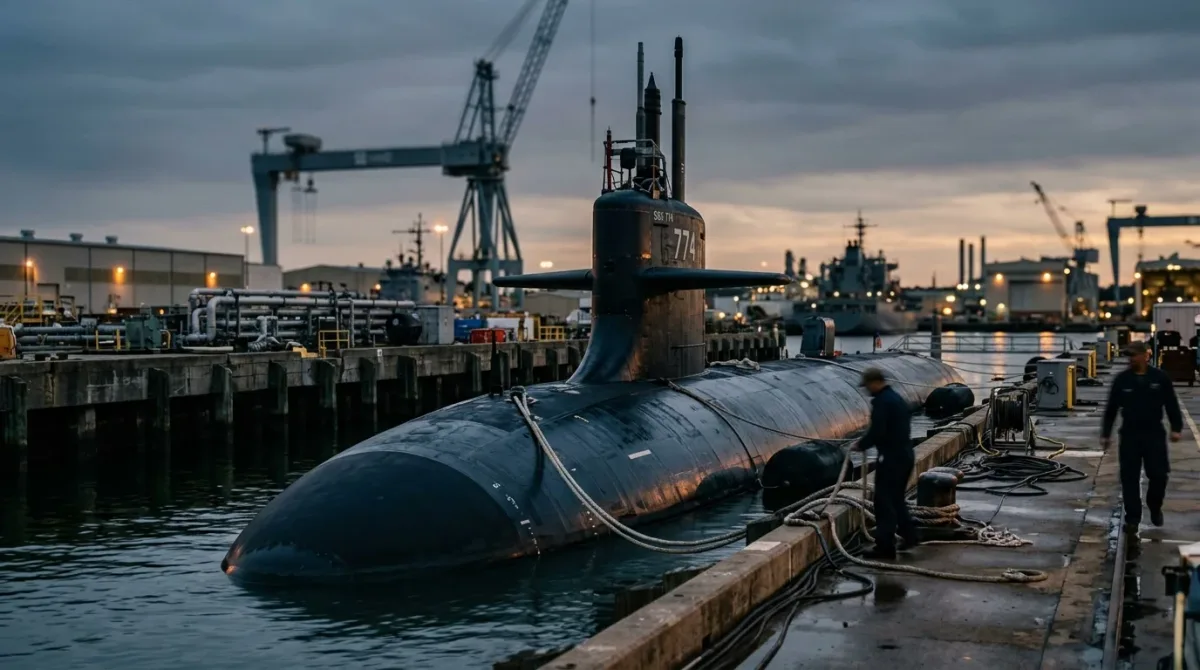
At sea, the standard launcher is the Mk 41 vertical launch system fitted to Ticonderoga-class cruisers and Arleigh Burke-class destroyers, and the Mk 70 payload module adapted for other hulls. Submarines launch from torpedo tubes and, on Virginia-class attack submarines, from the Virginia Payload Tubes, per Navy descriptions. The type has also migrated ashore and onto vehicles: the U.S. Army fields the Typhon ground-launched system firing Tomahawk rounds, per Army announcements beginning in 2023, and allied navies have integrated the missile into national surface combatants.
Export interest has widened the footprint. Per State Department notification reporting from 2023, Australia's planned purchase for its Hobart-class destroyers made it the first non-U.S. Navy customer announced for the Maritime Strike variant, and Japan moved to procure Tomahawk for its own surface fleet under programs announced in 2023 and 2024.
How has Tomahawk been used in combat?
Tomahawk opened the air campaign of Desert Storm in January 1991, and subsequent U.S. strikes through Bosnia, Sudan and Afghanistan in 1998, Iraq in 2003, Libya in 2011, and Syria in 2017 and 2018 kept it the standard opening move of U.S. cruise-missile strikes, per Navy and Department of Defense operational summaries. In October 2023 the Navy used Tomahawk in strikes against Houthi targets in Yemen, per U.S. Central Command statements from January and February 2024, marking the type's first combat employment of the Block V era.
The pattern of use reflects the missile's economics: it is expensive relative to an artillery shell but far cheaper than a manned strike package, and its accuracy and range allow strikes from areas where no aircraft need risk exposure.
What does Tomahawk cost and what comes next?
Per Navy budget justification documents from fiscal years 2023 through 2025, procurement unit cost for a Block V round has run in the range of roughly two million dollars, with annual buys sustaining production at Raytheon after the lines were restarted in the mid-2010s. The longer-term question is the follow-on. Per Navy budget documents through fiscal year 2025, the successor debate centers on the fielding schedule for the Maritime Strike Tomahawk and on hypersonic strike programs that remain in development, rather than on any announced replacement for the land-attack mission. As of March 2026, Tomahawk production continues, and the missile's combination of range, datalink, and growing launch-platform count keeps it central to naval strike planning.
How does a Tomahawk strike actually get planned?
A Tomahawk mission is planned days or hours before launch, not at the moment of firing. Per Navy strike planning doctrine descriptions, a mission planner routes the missile from its launch point to the aim point using terrain and threat databases, choosing waypoints that keep the round below radar horizons and away from known defenses, and setting the approach profile that its terrain-following radar will follow. The route, timing, and aim point are loaded into the missile's memory; onboard navigation then flies that plan, updated in Block IV and V rounds by satellite positioning and, where authorized, retasking over the datalink.
The planning burden explains part of the missile's operational history. Early blocks required lengthy route development that limited responsiveness; Block IV's in-flight retargeting and loiter compressed the cycle, allowing commanders to hold rounds airborne and redirect them as targets developed, per Navy program descriptions from the 2000s. Afloat, the weapons department maintains the rounds in vertical launch cells with periodic maintenance, and a destroyer or submarine shooter executes launches on tasking passed through the force commander, with the ship's role confined to preparing, aiming, and firing a missile whose mission was largely decided elsewhere. That separation between planner and shooter remains one of the type's defining operational characteristics as of March 2026.