The large amphibious ships of the U.S. Navy — the America-class LHAs and the San Antonio-class LPDs — are built at one yard: Huntington Ingalls Industries' Ingalls Shipbuilding in Pascagoula, Mississippi. According to Navy and industry statements published through 2025, Ingalls held contracts for multiple hulls of both classes, with the San Antonio-class Flight II line continuing through LPD-30, LPD-31, and LPD-32, and the America-class LHA-8 Bougainville in construction alongside. Understanding how this production line works — and how its schedule has slipped and recovered over the past decade — explains most of what is knowable about the amphibious fleet's future.
What ships does Ingalls build?
Two amphibious classes run through the Pascagoula yard, per Navy acquisition documents through 2025. The America class, designated LHA, is a 45,000-ton large-deck amphibious assault ship that embarks Marines and their aviation package; LHA-6 America and LHA-7 Tripoli were delivered in the 2010s and early 2020s, and LHA-8 Bougainville adds a well deck for landing craft. The San Antonio class, designated LPD, is the amphibious transport dock that carries Marines, landing craft, and aircraft together; the class has been in production since the early 2000s, with Flight II hulls — LPD-29 onward — representing the current build standard. Ingalls is the sole builder of both types. The yard also builds Arleigh Burke-class destroyers and National Security Cutters for the Coast Guard, so the amphibious work shares plate shops, outfitting halls, and workforce with those lines.
How is an amphibious ship actually built?
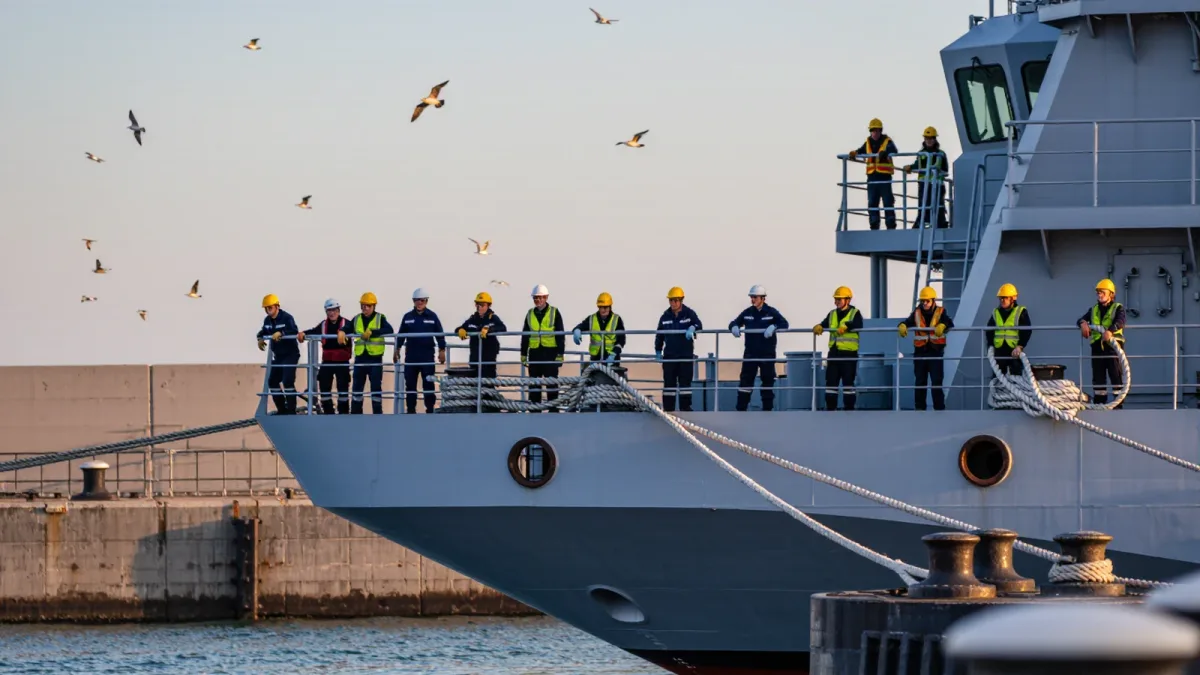
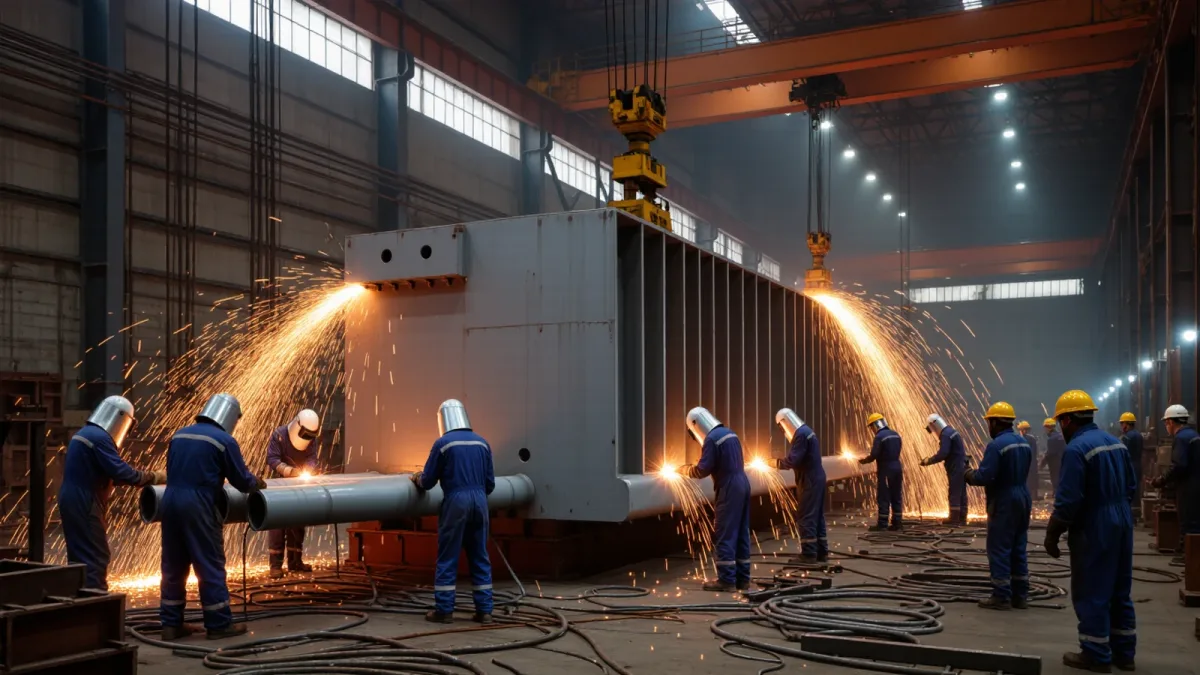
Construction at Ingalls follows the modular method the yard describes in its own published materials and that Navy delivery statements echo. The ship is divided into dozens of large building blocks — hundreds of tons each — fabricated in climate-controlled shops where piping, cabling, and equipment are installed before the blocks are joined. The completed blocks are moved by transporter to the building way, joined into larger assemblies, and eventually floated out for final outfitting at the yard's outfitting piers. After launch, each ship enters an installation and test period: systems brought online, crew certification support, and progressively more demanding at-sea trials. Delivery to the Navy follows acceptance trials, and commissioning — the ceremony that brings a ship into the fleet as a USS vessel — typically follows months later, sometimes at the ship's future homeport. From contract award to delivery, a large amphibious ship takes roughly five to seven years, according to the shipbuilding schedules in Navy budget documents published through 2025.
What happened to LPD-29 and where is the line now?
The Flight II line's most recent benchmark is LPD-29, named Richard M. McCool Jr. According to Navy delivery announcements, Ingalls delivered the ship to the Navy in 2024, and the ship was commissioned in September 2024. The hull experienced schedule pressure earlier in its build — a pattern Navy and Government Accountability Office reporting attributed in part to the pandemic-era disruption of supply chains and yard staffing. Behind LPD-29, the Navy's budget materials through fiscal 2025 carried LPD-30, LPD-31, and LPD-32 in various stages: LPD-30 in outfitting and test at Pascagoula, and the later hulls in fabrication under awarded contracts. Navy testimony in 2023 and 2024 described block fabrication for successive hulls beginning years before delivery as a matter of routine, which is why contract awards and deliveries run several years apart in the public record.
How many amphibious ships does the Navy want?
The requirement debate frames every Ingalls schedule. The Marine Corps and Navy of the mid-2020s co-signed a force design requirement of 31 amphibious ships — about 10 large-deck LHA and LHD hulls and roughly 21 LPDs — as the minimum to lift the equipment of a Marine expeditionary force, a figure cited repeatedly in testimony through 2024. The battle force carrying that mission counted fewer than that in the mid-2020s, with older LSD-class dock landing ships and older LPDs retiring faster than replacements arrived. Navy 30-year shipbuilding plans published through 2025 carried continuing LPD Flight II procurement and the follow-on amphibious study — a next-generation replacement for the LSD class — but near-term annual production settled at one or two amphibious hulls per year across both classes, according to the budget submissions of that period.
What are the yard's main challenges?
Navy and GAO reporting through 2024-2025 named recurring pressures on the amphibious line. Labor: Pascagoula's workforce, in the tens of thousands across the yard, expanded significantly in the early 2020s, and hiring, training, and retention became program risks cited in testimony. Supply chain: pandemic-era delays in major equipment — including propulsion components and shipbuilding steel — rippled into hull schedules, with GAO reporting documenting multi-year slips on specific LPD and LHA hulls. Cost: amphibious construction is bought on contract structures that oversight reports have criticized for transferring risk unevenly, and cost growth on early Flight II hulls drew sustained congressional attention. The yard's public statements through 2025 emphasized process investment — digital design tools, expanded facilities, and block outfitting improvements — as the countermeasures.
How do amphibious ships compare with other Ingalls products?
The yard's three concurrent lines compete for the same resources, and Navy budgeting balances them. A large-deck LHA is a mid-sized flattop: bigger than a frigate or destroyer, smaller than a nuclear carrier, and built with commercial-standards-inspired practices that differ from warship construction elsewhere. The LPD is the workhorse hull, produced in larger numbers over a longer run — the San Antonio class has been in continuous construction for two decades, making it one of the longest-running surface ship lines in the modern Navy. Burke destroyers, by contrast, are built at higher tempo with more mature design. Testimony and industry statements through 2025 described the yard's challenge as running all three lines simultaneously without letting any slip — a balance reflected in each year's budget request shaping production slots years ahead.
What comes next?
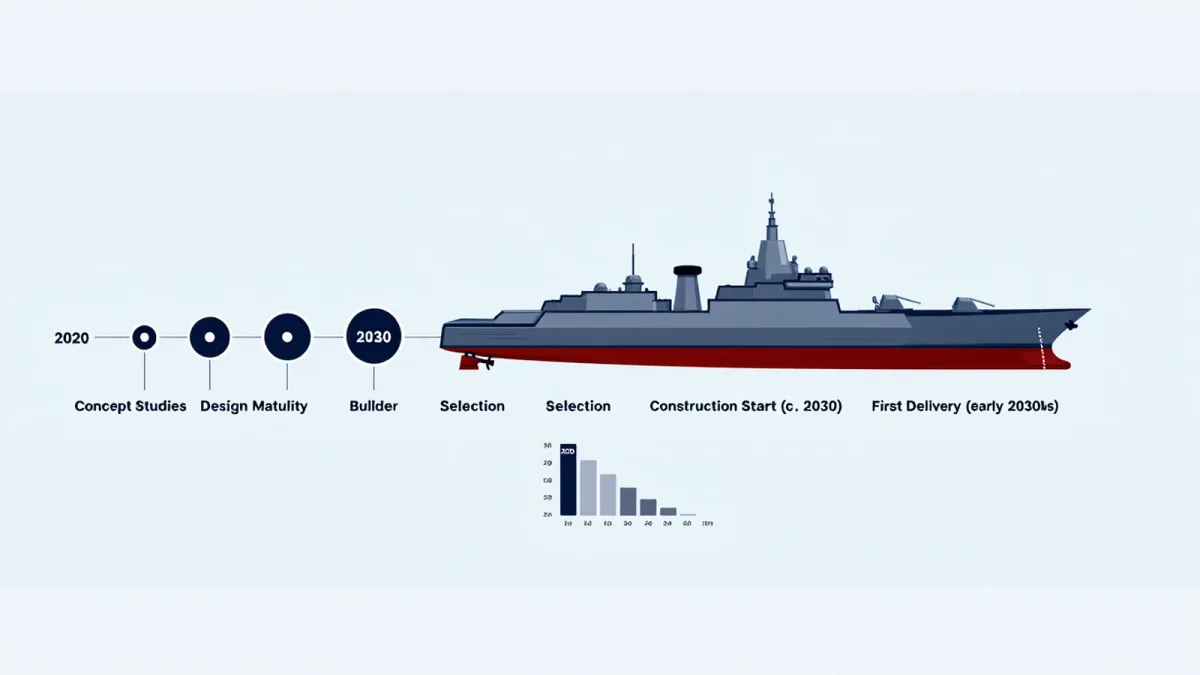
As of Navy materials published in 2025, the near-term schedule carried LHA-8 Bougainville toward delivery later in the decade, the LPD Flight II line advancing through LPD-30 and into fabrication of LPD-31 and LPD-32, and design work continuing on the next-generation amphibious ship intended to replace the LSD class. For readers tracking the program, three dated indicators matter: delivery announcements from Ingalls and the Navy, each year's budget submission amphibious procurement lines, and the force-structure counting in Navy and Marine Corps testimony that states whether the 31-ship requirement is closing or widening. Everything else in the amphibious debate — quantities, hull numbering, and follow-on class decisions — ultimately resolves through those three channels.