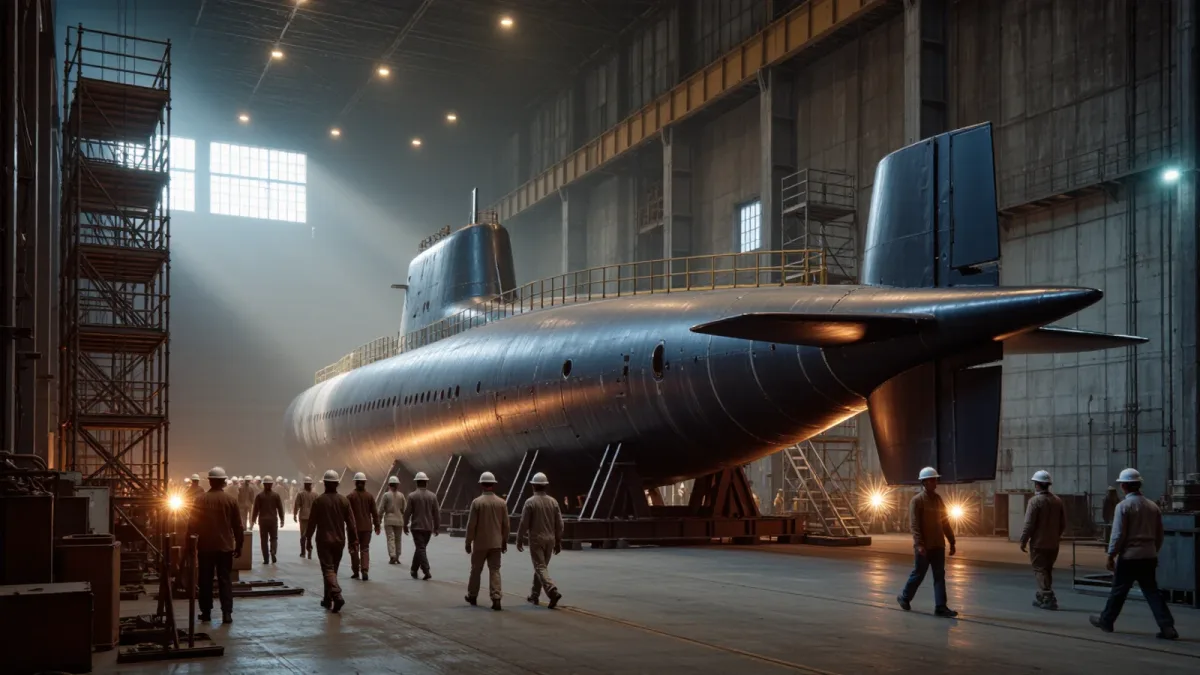
DDG(X) is the U.S. Navy's next-generation large surface combatant program: a new-hull destroyer intended to replace the retiring Ticonderoga-class cruisers and, over time, the earliest Arleigh Burke-class destroyers. As of Navy statements and budget materials published through 2025, no construction contract had been awarded, design work remained in the concept and requirements phase, and the first ship was targeted for delivery in the early 2030s. The program office sits within the Naval Sea Systems Command, and the Navy has described DDG(X) as its principal surface combatant investment for the second half of the century.
Why does the Navy need a new destroyer hull?
The need traces to the flight path of the existing fleet. The Ticonderoga-class cruisers are retiring; Navy plans published in the mid-2020s scheduled the last hulls to leave service around the end of the decade. The Arleigh Burke class, designed in the 1980s around a hull that has been stretched and re-engined through multiple flights, is still in production as the Flight III variant, but the Navy's stated assessment is that the Burke's weight, cooling, and electrical margins will run out as future sensors and directed-energy weapons demand more power. According to Navy testimony to Congress in 2023 and 2024, DDG(X) exists to provide those margins: a hull sized for growth, an integrated power system able to feed high-energy sensors and weapons, and survivability and range improvements that the service says cannot be fitted into the Burke hull.
What will DDG(X) actually look like?
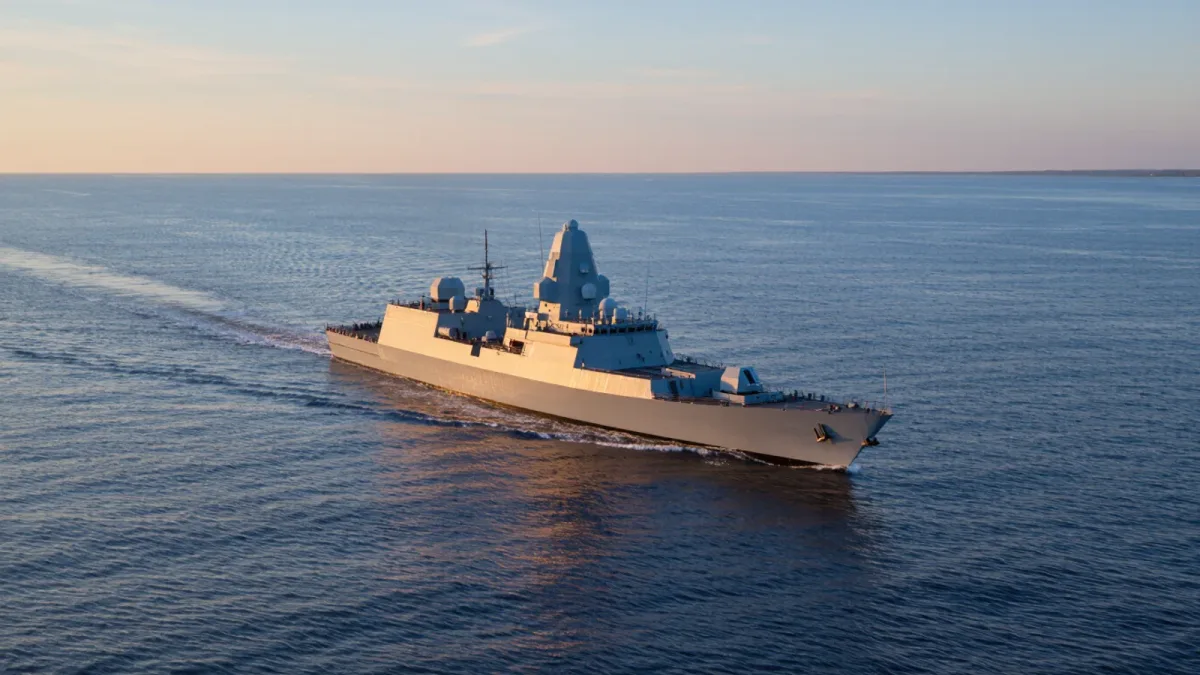
Details remain conceptual, and the Navy has been careful to describe requirements rather than a finished design. Statements from the program office through 2025 describe a ship larger than a Flight III destroyer, with an integrated electric propulsion architecture derived in part from the Columbia-class submarine's electric drive work, a combat system evolving from Aegis, and provisions for directed-energy weapons and future missiles. The Navy has said the design will incorporate technologies proven on existing platforms — the SPY-6 radar family, Aegis baselines, and propulsion elements tested elsewhere — rather than inventing every system at once, a lesson drawn from past programs that tried to mature too many technologies on a single new hull. Concept renderings released by the Navy in the early 2020s showed a ship visually reminiscent of the Zumwalt class, with a tapered superstructure and integrated mast, but officials have cautioned that such imagery represents design exploration, not a contracted configuration.
How many ships are planned?
The Navy has framed DDG(X) as a class it will build for decades. Congressional Research Service reports published through 2025 described fleet plans in which DDG(X) hulls would begin replacing cruisers and older destroyers in the 2030s and continue into the 2060s, with long-range fleet architecture documents pointing toward tens of large surface combatants across the period. No fixed class quantity has been set in the way the Columbia class set 12 boats; instead, each annual shipbuilding plan carries the near-term procurement assumption while the design matures. As of the fiscal 2025 budget submission, the near-term plan remained to complete design, award detail design and construction, and lay the first keel around the end of the decade, with production at low initial rates before any ramp-up.
What is the schedule?
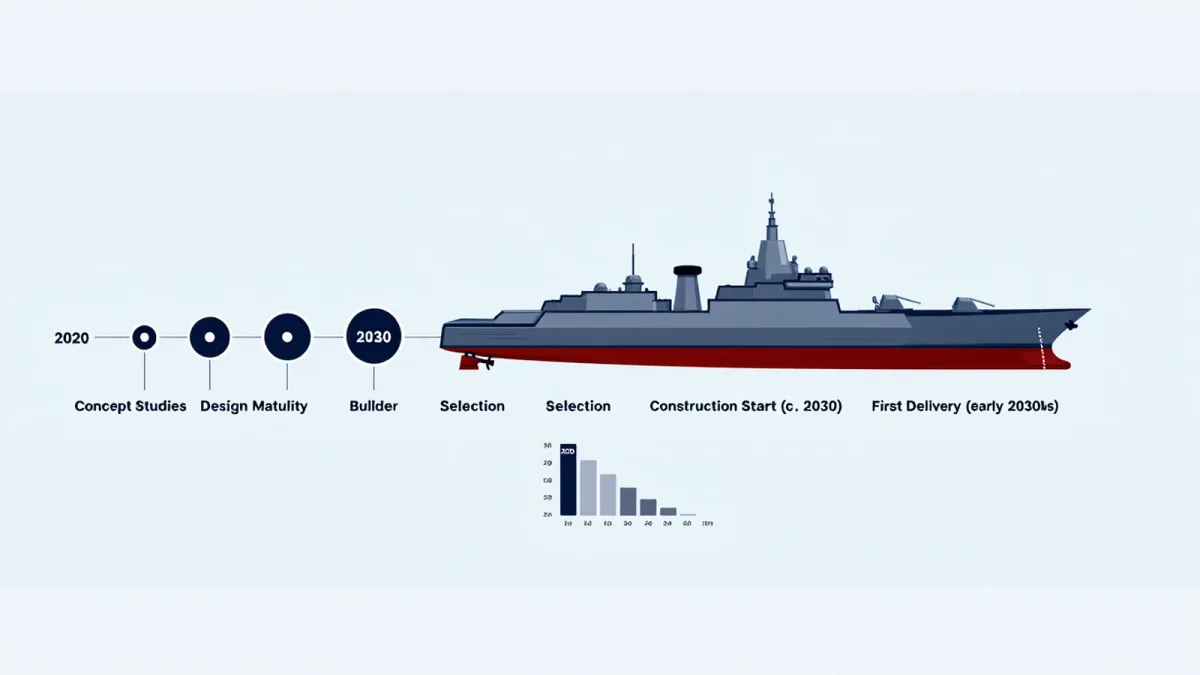
According to Navy budget materials through fiscal 2025, the sequence ran as follows. Design studies and early development contracts went to industry teams in the early 2020s, with General Dynamics Bath Iron Works, Huntington Ingalls Industries, and BAE Systems among the recipients of concept and technology work. The Navy then planned to select a detail design and construction builder in the mid-2020s, mature the design for several years, and begin construction around 2030, leading to first delivery in the early 2030s. That timeline has been presented repeatedly in congressional testimony from 2023 through 2025, and Navy officials acknowledged in those hearings that schedule pressure would grow if the design phase slipped. As of 2025, the detail design and construction award had not been announced in Navy acquisition documents.
What have oversight bodies said?
Oversight attention has focused on design maturity. The Government Accountability Office's annual weapons system assessments, including the report published in 2024, found that the Navy planned to begin DDG(X) construction with an immature design and significant technological headroom still to prove, and recommended that the service demonstrate key technologies before construction starts. The GAO drew explicit comparisons to earlier programs in which construction began before design completion, producing cost growth and rework. Navy officials responded in testimony that DDG(X) would deliberately reuse proven systems, and that the integrated power system — the largest new technology — was being land-tested before installation. The Congressional Budget Office's periodic shipbuilding analyses through 2025 also carried cost estimates for DDG(X) well above a Flight III destroyer, reflecting the new hull and power architecture, though exact figures varied with each edition.
Who are the likely builders?
Two yards build large U.S. surface combatants: General Dynamics Bath Iron Works in Maine and Huntington Ingalls Industries' Ingalls Shipbuilding in Mississippi. Both performed early design work, and both have publicly positioned for the construction award. The Navy has stated that DDG(X) design will account for construction in either yard. Industry statements through 2025 emphasized workforce and facility investments at both yards as relevant to the program. As of 2025, no selection had been made public, and the eventual award decision — including whether one yard or both share construction — remained a pending acquisition decision described in Navy budget documents rather than an accomplished fact.
How does DDG(X) relate to the rest of the surface fleet?
The Navy's surface force plan, as described in documents through 2025, pairs three overlapping programs. Flight III Arleigh Burkes remain in production into the 2020s and will form the bulk of the large combatant force for decades. The Constellation-class frigate program, approved for construction in the early 2020s, adds a smaller hull for lower-end missions. DDG(X) is the third track, intended to enter service as cruisers retire and to carry the fleet's most demanding air-defense missions from the 2030s onward. The Navy has also connected DDG(X) to its distributed maritime operations concept: the ship's power margin and sensor growth are described as enabling long-range air and missile defense for carrier groups and for logistics corridors that smaller combatants cannot cover.
What should observers watch next?
Three dated indicators will show whether the program stays on the path described in the fiscal 2025 budget materials. First, the detail design and construction award: Navy acquisition announcements, when they come, will name the builder and the contracted design baseline. Second, the results of land-based integrated power system testing, which the Navy has identified as the program's principal technology risk gate. Third, each year's long-range shipbuilding plan, which will show whether the first construction start holds near the end of the 2020s or moves. Until those milestones appear, most public claims about DDG(X) specifics — beyond the requirements the Navy has stated — remain design exploration rather than contracted fact.