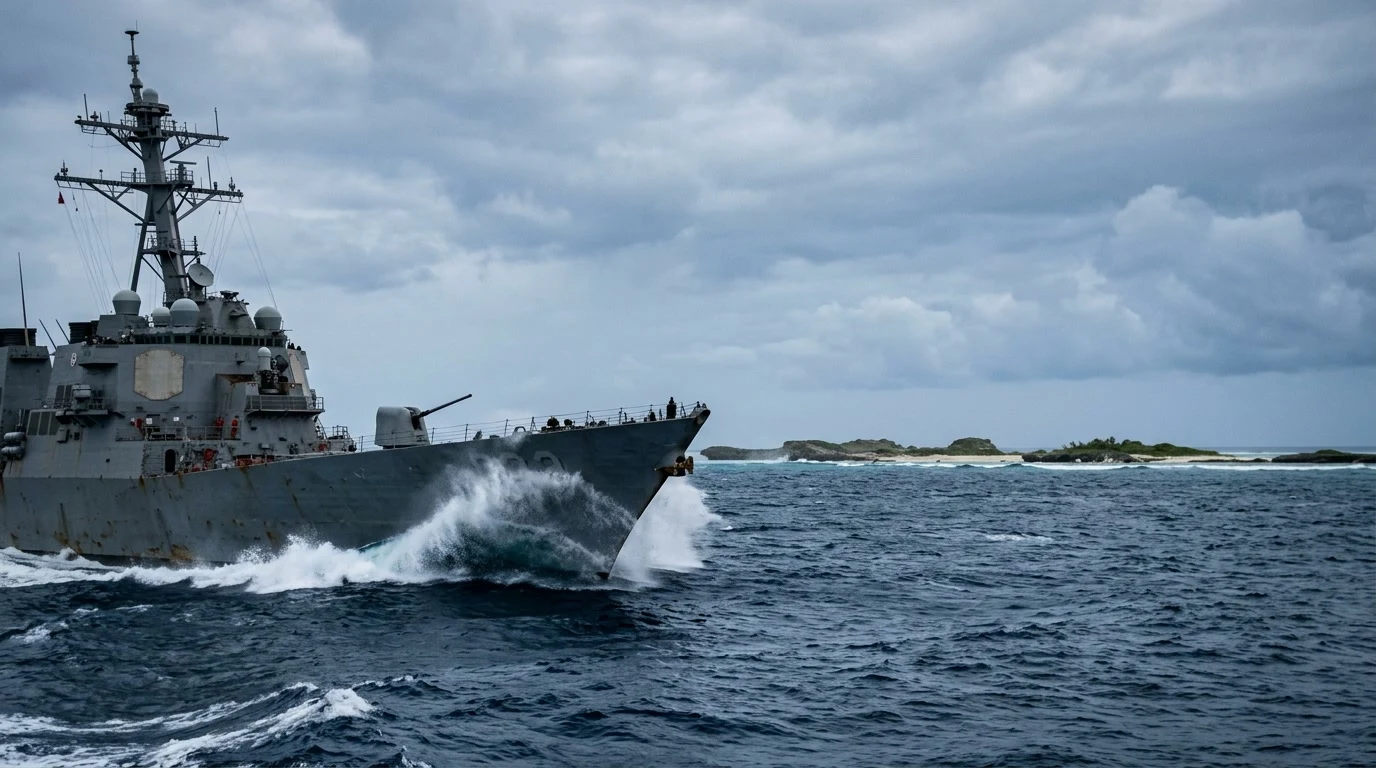
When a U.S. Navy ship is involved in a collision, accountability decisions follow the investigations rather than the headlines: commanding officers are relieved for the condition of their ships regardless of fault findings, operational commanders answer for the readiness environment they created, and individual sailors face nonjudicial punishment or administrative action based on investigation evidence. The 2017 Pacific Fleet collisions fixed this pattern in public view. Commander Bryce Benson, commanding officer of USS Fitzgerald (DDG-62), an Arleigh Burke-class destroyer, was relieved on August 18, 2017, a month after the collision that killed seven sailors; Commander Alfredo Sanchez of USS John S. McCain (DDG-56) and Vice Admiral Joseph Aucoin, commander of the U.S. Seventh Fleet, were both relieved on August 23, 2017, after the McCain collision killed ten sailors. All dates and actions are a matter of public Navy record.
Accountability here is a personnel and policy process, not a trial; naval-pages.com publishes information, not legal advice.
Who can relieve a commanding officer, and on what standard?
Relief for cause is an administrative decision, not a punishment. The officer with appointment authority over the command, in the 2017 cases the Seventh Fleet commander or the Pacific Fleet chain, removes an individual from command because confidence in the ability to lead has been lost, without waiting for a court or disciplinary finding. The standard is explicitly not proof of negligence: Navy doctrine holds that commanding officers answer for their ships' material condition and crew readiness, so a CO can be relieved even where the investigation finds contributory factors across the fleet. A relief for cause ends a command early, generates a flag-level endorsement in the officer's record, and typically ends an officer's promotion prospects, though the individual continues to serve or separates. In the 2017 cases, the reliefs were announced in Navy press releases within days of each collision, a pace designed to signal command accountability while investigations continued.
What happened in the 2017 cases specifically?
The sequence of August 2017 remains the clearest public record of the system at work.
- August 18, 2017: Commander Bryce Benson relieved as commanding officer of USS Fitzgerald; the executive officer and command master chief were also reassigned.
- August 23, 2017: Commander Alfredo Sanchez relieved as commanding officer of USS John S. McCain. The same day, Admiral Scott Swift, commander of the U.S. Pacific Fleet, relieved Vice Admiral Joseph Aucoin as Seventh Fleet commander, citing loss of confidence after four major incidents in the region in 2017, and Aucoin retired from the Navy earlier than planned.
- August 28, 2017: Rear Admiral Charles Williams, commander of Task Force 70, and Captain Jeffrey Bennett, commander of Destroyer Squadron 15, were relieved by Swift for the operational command climate that connected the incidents.
In the months that followed, dozens of crew members from both ships faced discipline, largely through nonjudicial punishment, the process known as admiral's mast, along with administrative action; the disciplined personnel ranged from junior watch standers to senior officers, according to Navy statements in 2017 and 2018. No courts-martial resulted from either collision in public record.
What is nonjudicial punishment, and why was it used?
Nonjudicial punishment under Article 15 of the Uniform Code of Military Justice allows a commanding or flag officer to impose discipline, such as reduction in rank, pay forfeiture, restriction, or a punitive letter of reprimand, without a court-martial. The sailor may refuse NJP and demand court-martial in many cases, though refusal carries obvious risk. In the Fitzgerald and McCain cases, commanders used NJP and administrative measures for watch team errors while investigations attributed systemic causes elsewhere: the Chief of Naval Operations' November 2017 summary briefings and the Strategic Readiness Review led by Admiral Philip Davidson described fleet-wide shortfalls in training, certification, and operational tempo that no single watch team created. That division shaped outcomes, and later commentary, including congressional oversight in 2017 and 2018 hearings, debated whether the junior personnel absorbed more accountability than the system that trained them.
How did the investigations shape the accountability decisions?
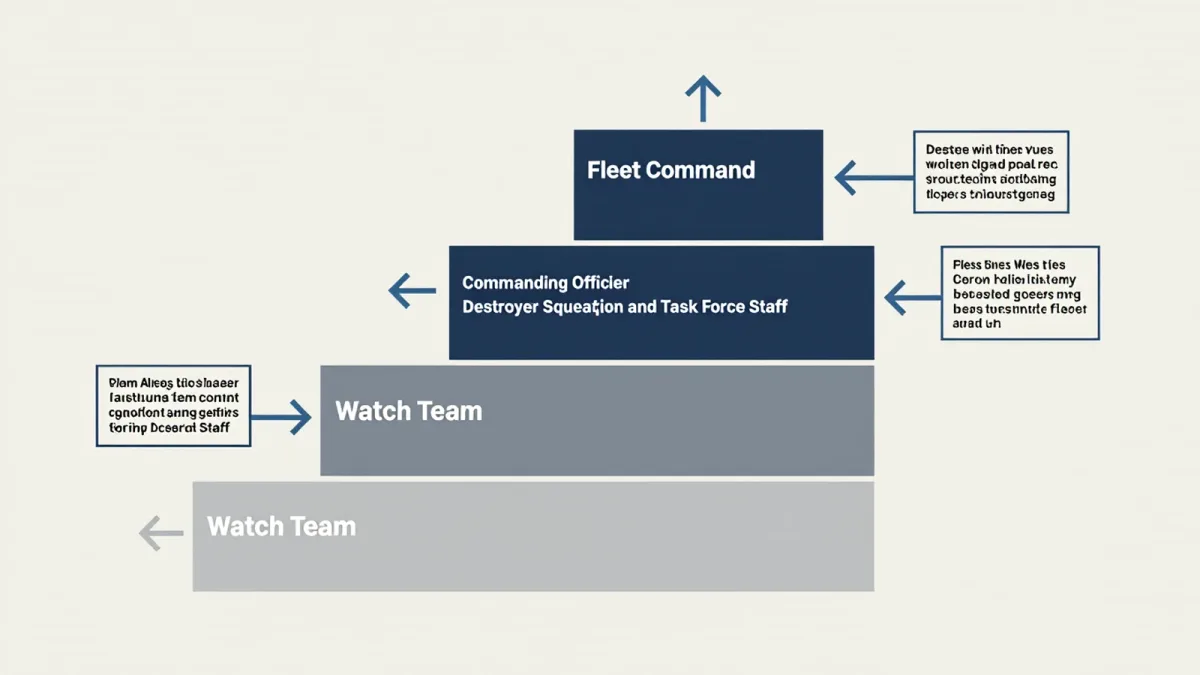
The investigation record separated individual performance from systemic condition. The Navy's administrative investigations into both collisions, released in redacted form after the Chief of Naval Operations' summary briefings on November 1, 2017, found watch team failures on both destroyers while the Strategic Readiness Review found the Seventh Fleet's operational readiness degraded by compressed training schedules and certification practices that had drifted toward compliance exercises. The National Transportation Safety Board's 2018 reports added independent findings, particularly on the McCain's loss of steering control after a console transfer. Officials emphasized that accountability followed each layer: watch standers answered for their stations, commanding officers for their ships, senior commanders for the readiness environment, and the Navy as an institution for the training pipeline, which was rebuilt with restored seamanship instruction and revised qualification standards announced through 2018.
Did the institutional leadership face consequences?
Beyond the August 2017 reliefs, senior careers were affected. Admiral Scott Swift was not selected to lead the Indo-Pacific Command structure when it was established in 2018 and retired that year, a sequencing widely reported as connected to the 2017 events, though retirement decisions of that rank are never formally attributed to a single cause. The Secretary of the Navy and Chief of Naval Operations retained their positions and directed the reform program, including the Surface Force's retraining initiatives ordered by the fleet commanders. Institutional accountability appeared mainly as directed change: the restored qualification standards, the reestablishment of the basic seamanship curriculum, and the fleet-wide readiness review actions tracked in Navy statements through 2018. The pattern scholars note is that the American system disciplines commanders administratively and fast, while institutional reform is slower, public, and measured in years.
What does the 2017 precedent mean for future incidents?
The precedent establishes expectations that hold across cases: commanding officers should expect relief within days of a major collision; the operational chain above them should expect scrutiny of the readiness climate; watch standers should expect nonjudicial or administrative discipline proportionate to the findings; and courts-martial remain rare for accidents absent evidence of criminal conduct such as intoxication or willful misconduct. The framework also imposes limits: investigations must precede final accountability, safety findings stay protected, and due process rights under the UCMJ apply at each step. Every subsequent major naval incident has been measured publicly against the 2017 timeline, making those summer months the de facto reference case for how the Navy converts a collision into consequences.