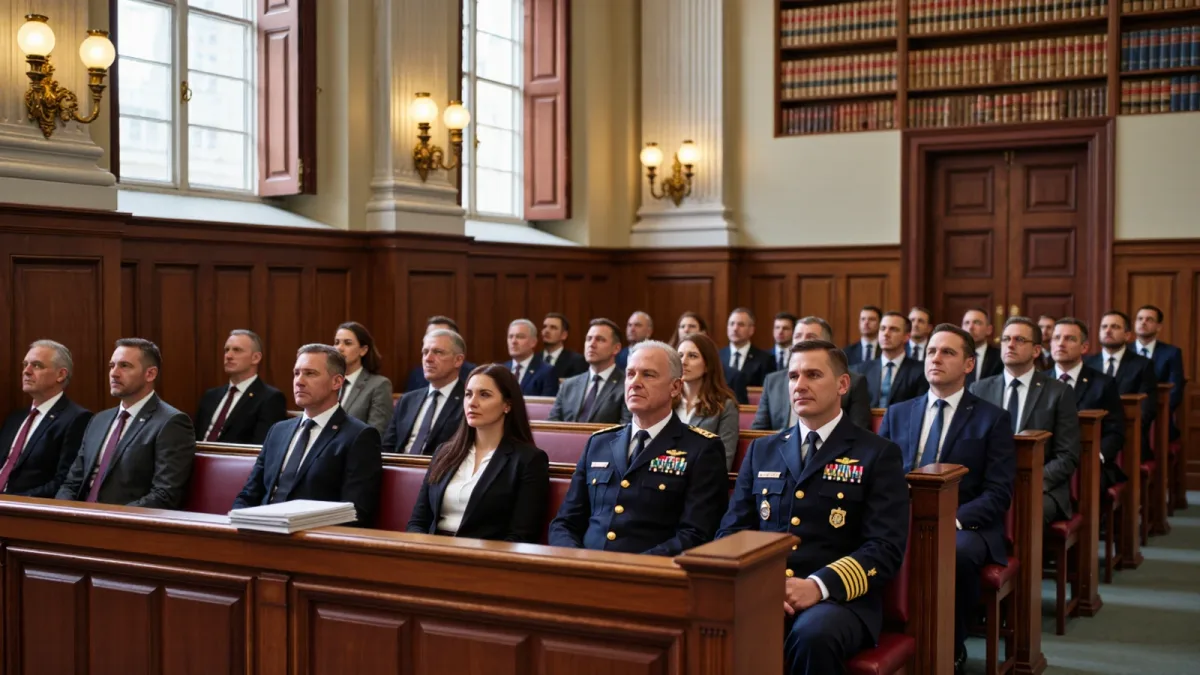
Prize law is the body of the law of naval warfare that governs a belligerent warship's capture of enemy merchant vessels and certain neutral shipping: a vessel captured as lawful prize must be brought before a prize court, which adjudicates whether the seizure was lawful and what happens to the ship and cargo. In the U.S. system, capture authority flows from Congress under the powers to declare war and to grant letters of marque and reprisal in Article I of the Constitution, and federal courts have adjudicated prize since the republic's first naval conflicts. Landmark Supreme Court decisions, including The Prize Cases in 1863 and The Paquete Habana in 1900, remain the classic statements of how capture at sea is tested in law.
Prize law is a legal subject, so a caveat: naval-pages.com publishes information, not legal advice, and nothing here is guidance for any situation.
What is a prize, and who decides if a capture is lawful?
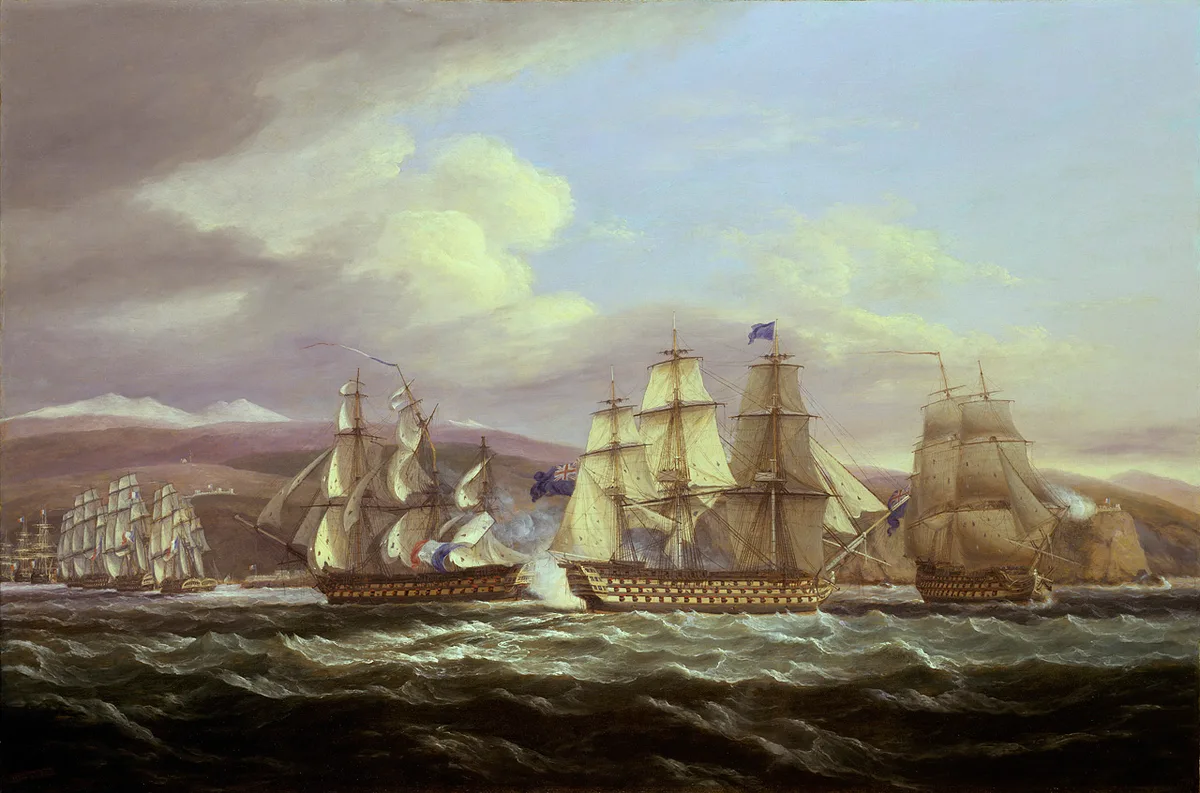
A prize is a vessel or cargo captured by a belligerent force at sea and claimed as lawful capture under the law of naval warfare. The defining principle, inherited from centuries of maritime custom, is that capture alone confers no title: the captor takes the ship into port, where a competent tribunal, in the U.S. system a federal court sitting in admiralty, decides whether the capture satisfied the conditions of war law. The proceedings examine the belligerent status of the seized vessel, the ownership of ship and cargo, and the treatment of neutral interests. This adjudication requirement is the legal spine of prize law; without it, capture at sea would be indistinguishable from plunder. Historical practice in the American system used formal prize courts during the Quasi-War with France, the War of 1812, the Civil War, and the Spanish-American War, and the Supreme Court's prize docket from those eras still anchors the doctrine.
Which vessels are immune from capture?
The law of naval warfare exempts defined categories regardless of the enemy's status. The most frequently cited exemptions appear in The Paquete Habana, the 1900 Supreme Court decision in which the Court held that enemy coastal fishing vessels pursuing their catch, and vessels on humanitarian or religious missions, are immune from capture as prize absent contrary instruction, citing a line of custom reaching back to the seventeenth century. Additional customary protections cover hospital ships, small coastal fishing boats, vessels engaged in local commerce under license, and cartels carrying prisoners for exchange. Neutral merchant vessels, by contrast, are presumptively free from capture, subject to exceptions: carrying contraband, breaching a lawful blockade, or providing direct military assistance such as carrying enemy dispatches. Determining which exception applies was the daily work of prize courts, and misapplication exposed captors to damages.
What is contraband, and what is a blockade's role?
Contraband is cargo destined for the enemy that war law permits a belligerent to capture: arms, ammunition, and, under the historical distinction between absolute and conditional contraband, goods with military as well as civilian use when destined for enemy forces. Enforcing contraband rules and blockades was the principal engine of prize litigation. A blockade, to be lawful under the customary rules summarized in the Declaration of Paris of 1856 and later codifications, must be declared, notified, and effective, meaning maintained by a force sufficient to make access genuinely dangerous. Neutral ships violating a lawful blockade were capturable with their cargoes. The Civil War generated the largest body of American prize law on these questions; the Union blockade of Confederate ports produced thousands of prize proceedings, and The Prize Cases, decided by the Supreme Court on March 10, 1863, upheld the blockade and the captures under it, holding that a de facto state of war authorized the measures even before formal legislative declaration processes had run their course.
What about letters of marque and privateers?
The U.S. Constitution grants Congress the power to grant letters of marque and reprisal, commissions authorizing private vessels to capture enemy shipping. American privateers operated under that authority in the Revolution and the War of 1812, capturing hundreds of British merchantmen whose prizes were adjudicated in U.S. prize courts. The Declaration of Paris of 1856 abolished privateering among its adherents; the United States declined to sign the declaration, preserving its constitutional position, but has not issued letters of marque since, and the modern practice among maritime powers is to confine capture at sea to state forces. The constitutional clause remains in force, which is why scholars revisit it whenever unconventional warfare proposals circulate, but the operating assumption of contemporary naval policy is that prize activity, if ever resumed, would be conducted by the Navy under a congressional authorization, not by private cruisers.
What happened to prize money and prize courts in the United States?
American law historically provided prize money: proceeds from adjudicated prizes were distributed among the captor crews under statutory schemes, creating the fortunes remembered in naval history. Congress codified prize procedures and distribution in Title 10 of the U.S. Code for decades, but the machinery has been dormant since the Second World War era, when the last prize proceedings arose, and Congress removed the codified prize provisions from Title 10 in the 2016-2017 reorganization of the title, effectively leaving the United States without a standing prize statute. Any future prize regime would require new legislation defining courts, procedures, and distribution. Scholars of naval warfare, including the Naval War College's international law program, which publishes its blue-bound International Law Studies series on its website, treat the historical corpus as the precedent base that Congress and the courts would draw upon.
Could prize law apply in a future naval conflict?
The doctrinal answer is yes, with heavy qualifications. Customary law of naval warfare, reflected in the San Remo Manual of 1994, a non-binding expert restatement widely cited by navies, continues to recognize capture of enemy and certain neutral merchant vessels as a permissible means of warfare subject to the exemptions, blockade rules, and adjudication requirements described above. A conflict with an enemy merchant fleet would revive questions the last century left dormant: whether capture is feasible against modern, fast, satellite-tracked shipping, how prize courts would be constituted, and how allied coalitions would align differing national prize practices. Naval warfare instructors teach the framework today because the exemption rules also define what warships may not touch in any conflict at sea, a constraint that operates regardless of whether prize proceedings are ever convened.