The United Nations Convention on the Law of the Sea is the treaty that divides the ocean into legal zones and states what a country may do in each one. It sets the width of a coastal state's territorial waters, defines the exclusive economic zone, and protects passage through international straits. It is the single most cited legal reference in naval operations, and it is often discussed without being read.
This explainer covers what the Convention actually says about those zones, in plain terms. It also covers where the treaty is silent and where states disagree. For the separate question of why the United States has signed but not ratified the treaty, see the site's guide to UNCLOS and U.S. Navy operations. This connects to our earlier piece, UNCLOS and U.S. Navy Operations: Why Washington Has Not Ratified the Law of the Sea Convention.
What is the law of the sea, and where did UNCLOS come from?
The law of the sea is the body of international rules governing how states use the ocean. Before the twentieth century, most of it rested on custom: a narrow band of water near the coast belonged to the coastal state, and the rest was open to all. Customs varied, and disputes followed.
The United Nations led three diplomatic conferences to codify these rules. The third, which concluded with the final text of the Convention, produced the document now known as UNCLOS. The United Nations, founded in 1945 to maintain international peace and security, counts 193 member states, and most of them have joined the Convention. The treaty's provisions on navigation, resources, and dispute settlement are the product of that negotiation, not of any single government's preference.
The Convention entered into force after enough states ratified it, and it now functions as the baseline document that navies, coast guards, and courts cite when a maritime dispute reaches a lawyer. According to the United Nations, upholding international law is one of the organization's stated purposes, and the Convention is its principal instrument for the oceans.
What are territorial waters, and how far do they extend?
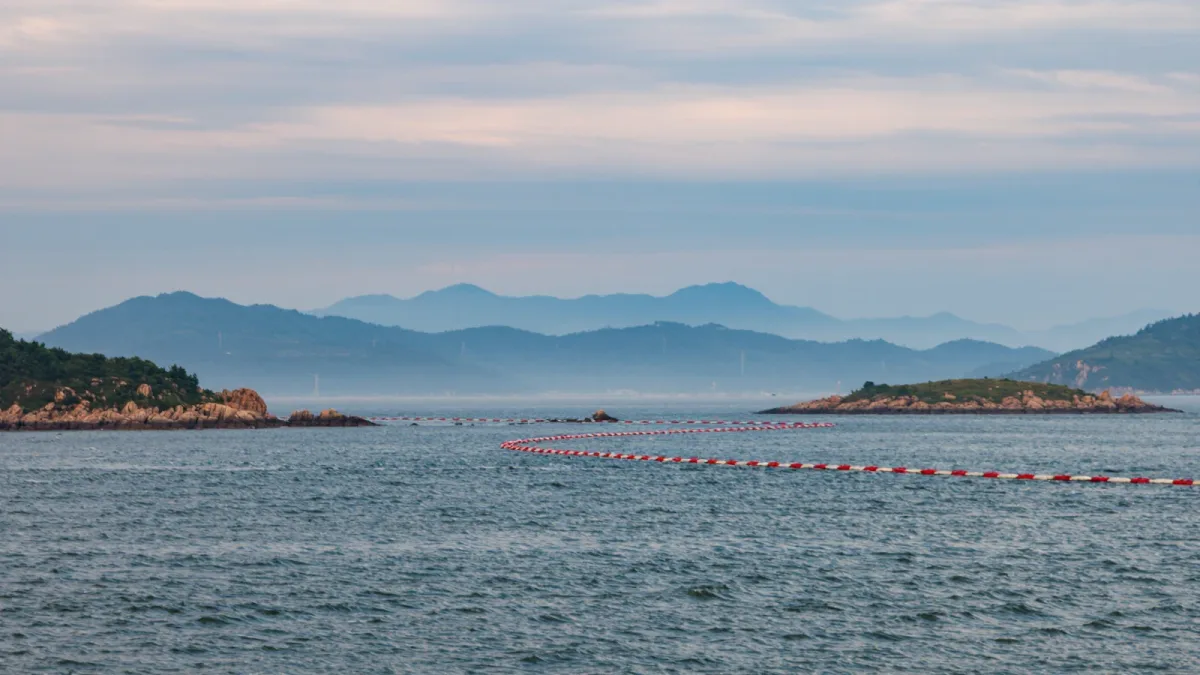
Territorial waters are the zone closest to shore, where the coastal state's sovereignty applies much as it does on land. Under the Convention, a state may claim a territorial sea extending up to 12 nautical miles from its baselines, which are the low-water lines marked on officially recognized charts. Within that belt, foreign ships have a right of innocent passage, meaning they may cross so long as they do nothing prejudicial to the peace, good order, or security of the coastal state.
Innocent passage is the treaty's central compromise. The coastal state gets sovereignty over the water; the maritime world gets transit. Submarines are expected to surface and show their flag while passing through another state's territorial sea, a requirement that shapes how navies operate near coasts.
The Convention also lets coastal states claim a contiguous zone beyond the territorial sea, in which they may enforce customs, fiscal, immigration, and sanitary rules. This zone is narrower in purpose than the territorial sea. It exists so a state can act against smuggling or illegal entry just outside its sovereign waters.
What is the exclusive economic zone?
The exclusive economic zone, usually shortened to EEZ, is the zone in which a coastal state holds rights over resources rather than sovereignty over the water itself. The Convention allows an EEZ extending up to 200 nautical miles from the same baselines. Within it, the coastal state has sovereign rights to explore and exploit natural resources in the water column and on the seabed, and jurisdiction over marine science and environmental protection.
Everything else in the EEZ remains open to all states. Foreign warships may operate there. Foreign vessels may fish only with the coastal state's consent, subject to the state's duty to manage stocks sustainably, but they may navigate and fly over the zone freely. This distinction, sovereignty over resources but not over the water, is the point most often missed in public discussion.
Where coasts sit close together, the Convention directs states to divide overlapping zones by agreement, and to settle disputes peacefully when agreement fails. Many of the maritime disputes that appear in the news are, at bottom, arguments about where one EEZ ends and another begins.
What does UNCLOS say about international straits?
Straits are the Convention's answer to a geographic problem. Many critical waterways, such as the straits used to pass between major seas, lie within the territorial waters of one or more coastal states. If innocent passage were the only rule, a coastal state could obstruct transit through waters the whole world needs to use.
The Convention therefore created transit passage. In straits used for international navigation, all ships and aircraft enjoy passage for continuous and expeditious transit, and this right cannot be suspended. Coastal states may designate sea lanes and regulate safety and pollution matters, but they may not block transit. Naval aviation depends on this provision, because transit passage covers aircraft overflight in a way innocent passage does not.
How these provisions are applied in practice is a standing source of friction. The site's guide to how U.S. freedom of navigation operations work covers one navy's method for challenging what it regards as excessive maritime claims, conducted under the legal framework the Convention supplies even by states that have not joined it.
What lies beyond national jurisdiction?
Waters beyond any EEZ are the high seas, open to all states for navigation, overflight, fishing, and other lawful uses. The seabed beneath them is treated by the Convention as the common heritage of humankind, with resource activities governed by an international body established under the treaty. No single state owns this area, and no state may appropriate it.
This is where the Convention's architecture becomes visible. It is not a document about naval power. It is a bargain among shipping states, coastal states, fishing states, and states with no coastline, each of which gave something to get something. Navies operate inside that bargain, and most of the time they enforce or defend it rather than contest it.
What this means for navies and readers
Our analysis of the Convention's structure points to a simple conclusion: nearly every naval operation has a legal zone attached to it. A warship's conduct 5 nautical miles from a hostile coast is governed by different rules than its conduct 50 miles out, and the difference is the Convention's zoning. Commanders, planners, and lawyers all work from the same text, which is why the treaty matters operationally and not just diplomatically.
What the Convention does not settle is as important as what it does. It does not resolve every boundary dispute. It does not remove the political questions that follow from overlapping claims. And it does not bind every state, since accession is a sovereign choice. Readers who want the enforcement side of maritime law, including when a navy may take a vessel in wartime, will find the site's primer on prize law a useful companion. Broader coverage of budgets, legislation, and treaties sits in the site's policy section. For related coverage, see Prize Law Explained: When and How a Navy May Seize Ships at Sea in War.
The evidence for these provisions rests on the treaty text itself and on the practice of the states party to it. Where a dispute turns on interpretation, the record is contested, and this explainer states the rules rather than adjudicating the arguments.