Few tools of sea power are as blunt as a blockade. Few are as bound by rules. Cutting a country off from the sea can starve its war economy in months. Doing so legally, without making enemies of neutral states, has challenged navies for centuries.
This guide walks through what a blockade is and how the practice evolved. It also covers what the law expects of a blockading power, and when blockades have worked. Descriptions follow standard open references.
What a Blockade Is
A blockade is the use of military force to prevent food, supplies, weapons, communications, and sometimes people from entering or leaving a country or region. Wikipedia distinguishes it from sanctions and embargoes, which are legal barriers to trade. A blockade is physical. It is also distinct from a siege. A blockade is usually aimed at a whole country or region, not a single fort or city. Its goal is not always conquest.
The instrument has limits written into its nature. Blockades restrict the trading rights of neutral parties. Their ships must submit to inspection for contraband. The blockading power may define that term narrowly or broadly. In the 20th century, air power extended the idea by halting air traffic. Modern blockades have also included jamming radio signals and severing undersea cables.
How the Practice Evolved
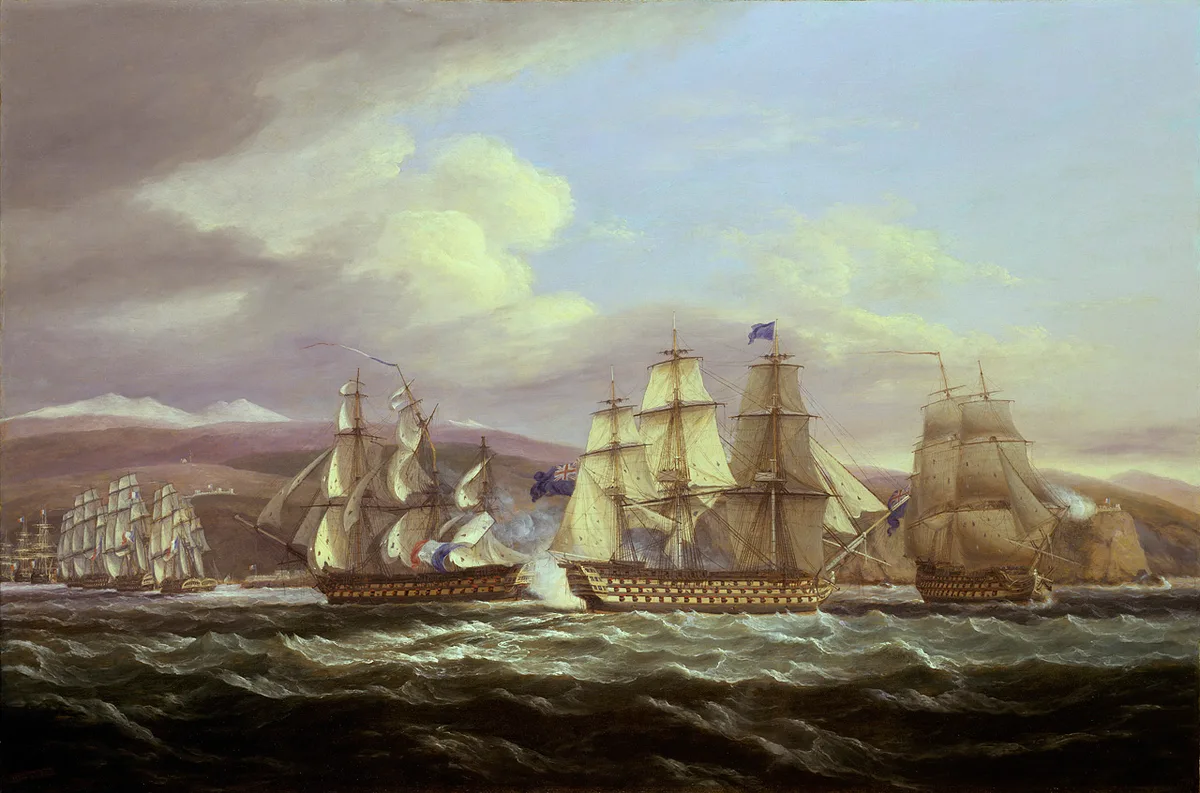
Primitive naval blockades are ancient. Early attempts were limited by how long ships could stay at sea. Wikipedia credits the Royal Navy with the first successful full naval blockade. It was set against France during the Seven Years' War. After the British victory at Quiberon Bay in 1759, the threat of invasion was gone. The fleet imposed a close blockade on the French coast. It starved French ports of commerce and weakened the economy. Admiral Edward Hawke extended the patrol along the entire French Atlantic coast. We covered a connected angle in Prize Law Explained: When and How a Navy May Seize Ships at Sea in War.
The pattern matured through the French Revolutionary and Napoleonic Wars. The Royal Navy again blockaded France, again with major economic effect. The Union blockade of southern ports became a major factor in the American Civil War. During the World Wars, the Allies blockaded the Central Powers. They deprived them of food and key materials. Germany's attempted U-boat blockade of Britain in the First World War caused shortages but ultimately failed.
Forms and Legality
Wikipedia separates the main forms by distance. A close blockade places warships within sight of the blockaded coast to intercept shipping immediately. It is the most effective and the most difficult form. The blockading ships must stay at sea in all weather, open to storms and sudden attack, while the blocked side waits safely in harbor. Distant and loose blockades trade speed for safety.
Legally, a blockade binds third parties as well as the warring sides. That is why neutrality law grew around it. What counts as contraband has always been contested. At times it has included food and medicine. The strategic thinkers Sir Julian Corbett and Alfred Thayer Mahan wrote that naval conflicts were decided not only by battle. Blockade mattered just as much, a point Wikipedia highlights.
The human cost shadows the legal debate. Wikipedia notes that blockades often result in the starvation of civilian populations. It cites the blockade of Germany in the First World War and of Biafra in the Nigerian Civil War.
What Makes a Blockade Effective
- Time. Blockades act slowly, through shortages and economic decay rather than a single battle.
- Persistence. A close blockade demands ships on station in all weather, month after month.
- Neutral cooperation. Sealing every neutral loophole is politically as hard as the patrol itself.
- Alternatives for the target. A country with land supply routes can blunt much of the effect.
Conclusion
A naval blockade is where force, law, and patience meet at sea. History's successful blockades shared patience above all: years of patrol, inspection, and diplomacy. The failures usually failed on shore, in courts, or in neutral capitals, not on the water. Any navy planning one today inherits the same equation its predecessors faced, from Quiberon Bay onward. Readers following this should also see UNCLOS and U.S. Navy Operations: Why Washington Has Not Ratified the Law of the Sea Convention.