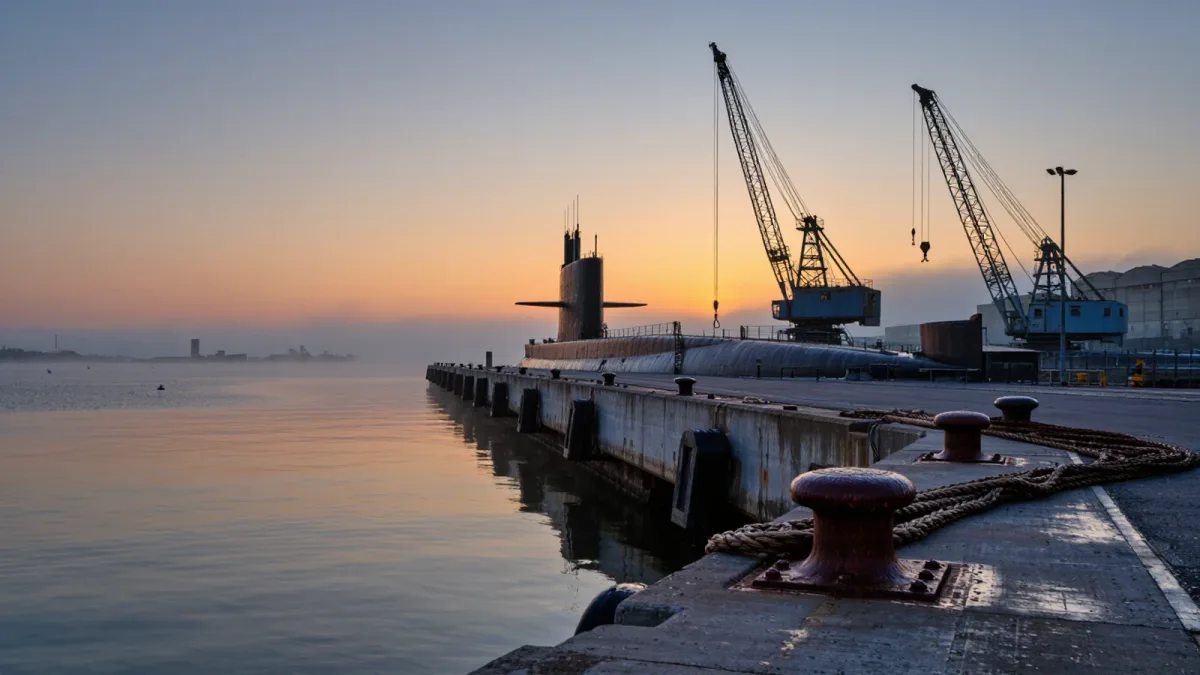
Submarine Rotational Force–West, or SRF-West, is the AUKUS arrangement under which U.S. Virginia-class attack submarines begin rotating through HMAS Stirling at Garden Island, Western Australia, starting in 2027, according to the pathway announced by the three AUKUS governments in March 2023. The rotational force is paired with an Australian infrastructure program — investment of up to 8 billion Australian dollars in HMAS Stirling expansion announced in 2023 — and with the longer-term establishment of Australian submarine construction and maintenance capability at Osborne in South Australia. Together these elements form the first phase of Australia's acquisition of nuclear-powered submarines, and each carries its own construction schedule that can be tracked in Australian and American budget documents published through 2025.
What is SRF-West, exactly?
SRF-West is a rotational presence, not a basing arrangement. Under the optimal pathway announced in San Diego in March 2023, U.S. Navy Virginia-class submarines will conduct rotations — scheduled visits with maintenance and crew activity — through HMAS Stirling, the Royal Australian Navy base on Garden Island south of Perth, beginning in 2027. Australian and U.S. statements described the planned scale as up to seven submarine visits per year once the rotation is running. The purpose, as stated in the same documents, is to build Australian and combined submarine maintenance capability, familiarize forces with sustained nuclear submarine operations in the region, and prepare the conditions for the sale of three to five Virginia-class boats to Australia planned for the 2030s. The submarines remain U.S. Navy vessels with U.S. crews; Australia contributes infrastructure, logistics, and, over time, trained personnel embedded in maintenance activity.
What is being built at HMAS Stirling?
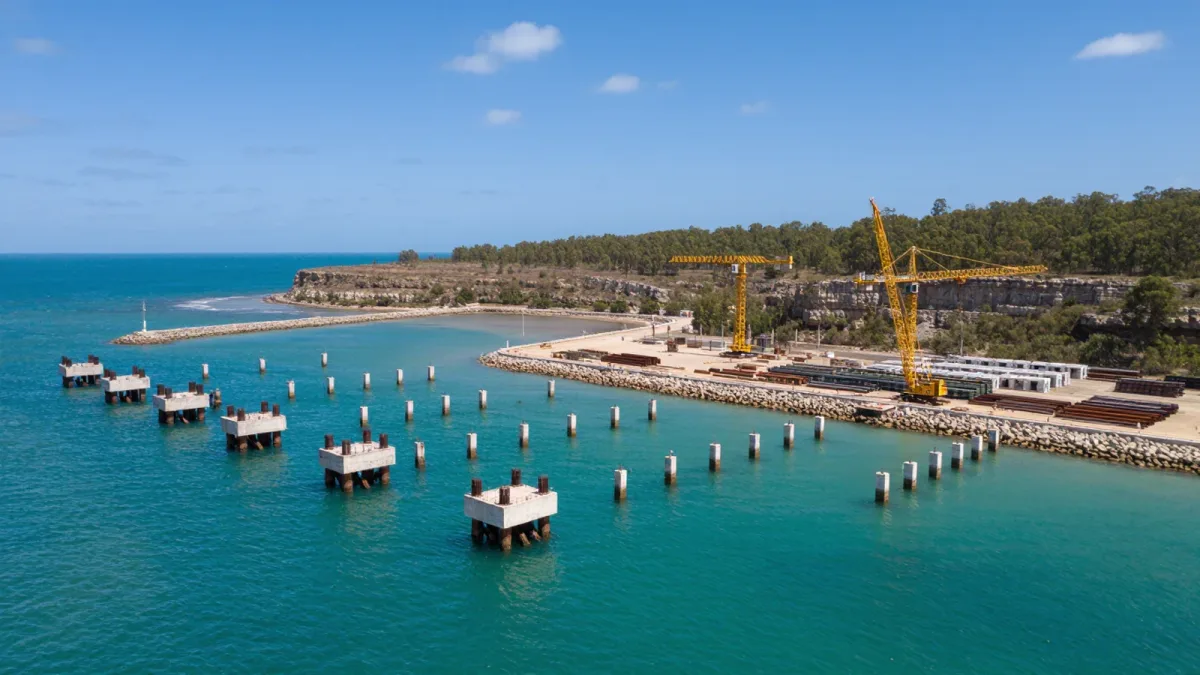
The Australian government announced in 2023 that it would invest up to 8 billion Australian dollars over the following decades to expand HMAS Stirling, per Australian defence statements published through 2025. The works described in those documents include a new submarine wharf to accommodate nuclear-powered submarines, upgraded maintenance and support facilities, warehousing and munitions infrastructure, improved waterfront services, and base accommodation for the increased uniformed and civilian population. Early works — site surveys, enabling infrastructure, and initial construction packages — were underway or contracted in the period through 2025, with the major wharf construction sequenced to be ready for the 2027 rotation start. Australian statements also described workforce growth at the base and investment in local services on Garden Island and in the surrounding Rockingham area.
Who runs the program?
Australia established the Australian Submarine Agency in 2023 to lead the nuclear-powered submarine program, replacing the earlier task force, per Australian government announcements of that year. The agency coordinates with Australia's defence capability organization on infrastructure, with the Royal Australian Navy on workforce, and with two counterpart organizations abroad: the U.S. Navy's own AUKUS-related offices and the United Kingdom's Submarine Delivery Agency. For SRF-West specifically, the U.S. Navy retains command of its submarines, while Australia provides the infrastructure and the growing Australian submarine workforce. Australian and U.S. statements through 2025 also described American and British submariners embedding with Australian units and Australian personnel training at U.S. and UK submarine schools — the human pipeline running alongside the construction pipeline.
What is the connection to Australian shipbuilding?
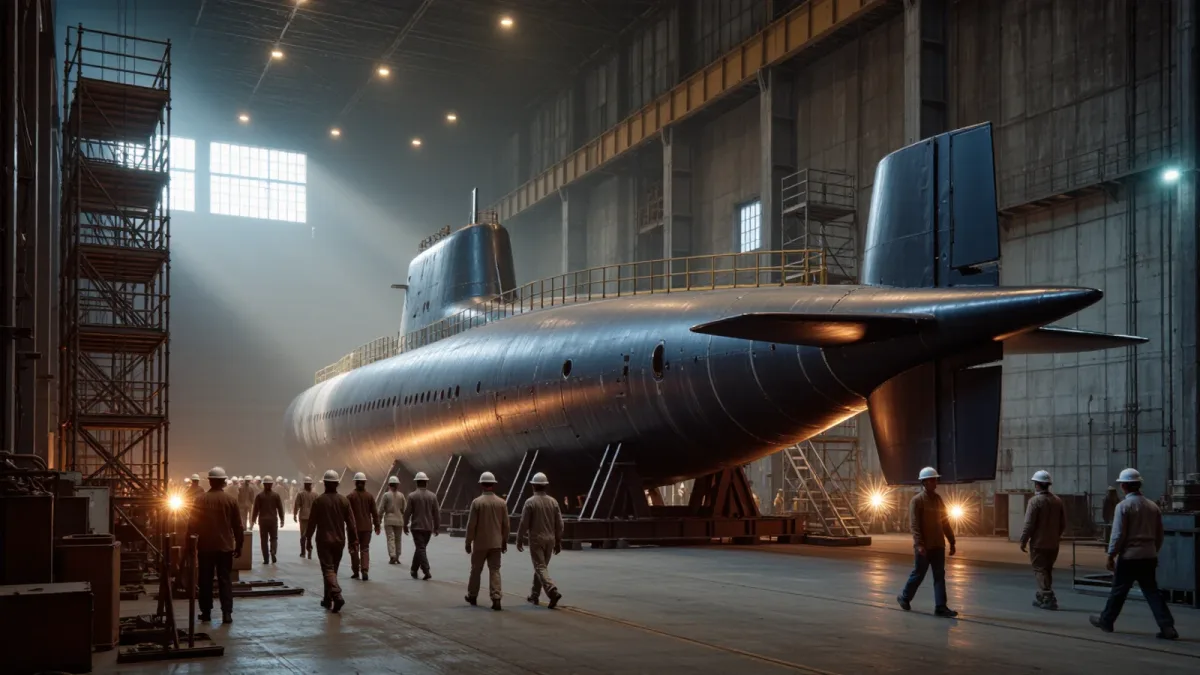
SRF-West is the maintenance and rotation half of the pathway; the shipbuilding half sits at Osborne, South Australia. Per the March 2023 announcement and Australian statements through 2025, Australia plans to build SSN-AUKUS submarines domestically from the early 2030s, with the first Australian-built boats delivered in the early 2040s, while also acquiring Virginia-class boats from the United States in the 2030s. Before Australian construction begins, the pathway calls for Australian workers and companies to participate in U.S. and UK submarine maintenance and construction — including rotations through SRF-West from 2027 and Australian workers embedded at Electric Boat, Newport News, and UK yards. Australia has also committed to building the SSN-AUKUS launching yard and related facilities at Osborne, with site works funded in Australian budgets of the mid-2020s.
What about the UK role?
The United Kingdom anchors the second half of the rotation plan. Per the March 2023 announcement, UK Astute-class submarines begin rotational visits to HMAS Stirling from the early 2030s, overlapping with the transition toward Australian acquisition milestones. The UK also leads the SSN-AUKUS design — an evolution of its next-generation submarine design — with first UK boats planned for construction in the late 2030s. For Western Australia, that means the infrastructure built for SRF-West is sized for both navies' boats: the wharf, maintenance facilities, and support systems described in Australian documents through 2025 are designed to serve U.S. Navy, Royal Navy, and eventually Royal Australian Navy nuclear submarines at the same base.
What are the program's challenges?
Oversight and government reviews published through 2025 named consistent pressures. Workforce: Australia must train thousands of submariners, technicians, and nuclear-qualified maintainers from a standing start, and Australian statements set targets for recruitment that independent commentary described as ambitious. Schedule: the 2027 rotation start and the 2030s Virginia-class sale both assume U.S. production rates recover to and hold two boats per year, a point U.S. oversight reports of 2024 and 2025 tied directly to the American submarine industrial base. Nuclear stewardship: Australia has enacted its own regulatory framework for naval nuclear propulsion, and both governments described building safety, environmental, and waste arrangements as work underway through the 2020s. None of these challenges is unique to SRF-West, but all of them converge on the same 2027-2030s window.
What should observers watch?
Four dated indicators mark the program's progress. Construction milestones at HMAS Stirling announced by the Australian Submarine Agency, particularly the submarine wharf ahead of the planned 2027 rotation start. The first announced U.S. Navy submarine rotations themselves, which will confirm the schedule in practice. U.S. Virginia-class production performance reported annually, which underwrites the 2030s boat sale. And Australian workforce numbers — recruitment and training figures published by the Australian Submarine Agency — which measure the country's readiness to operate and maintain the boats it plans to receive. As of the documents published through 2025, all four remained on the pathway but ahead of execution.