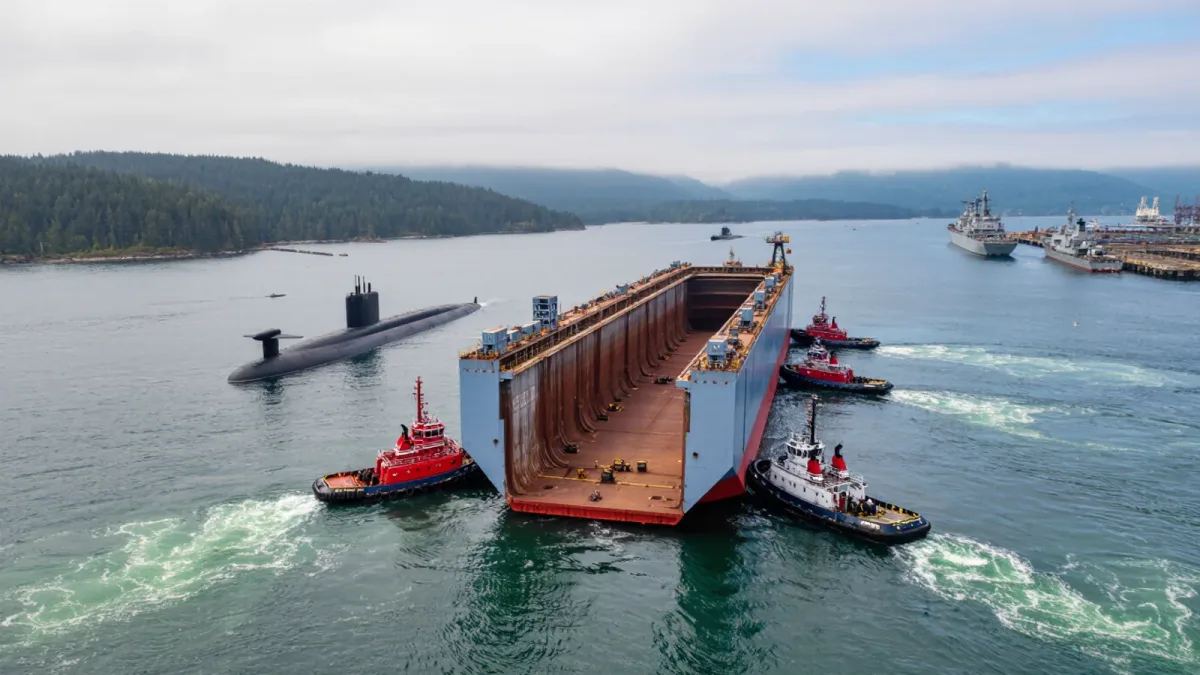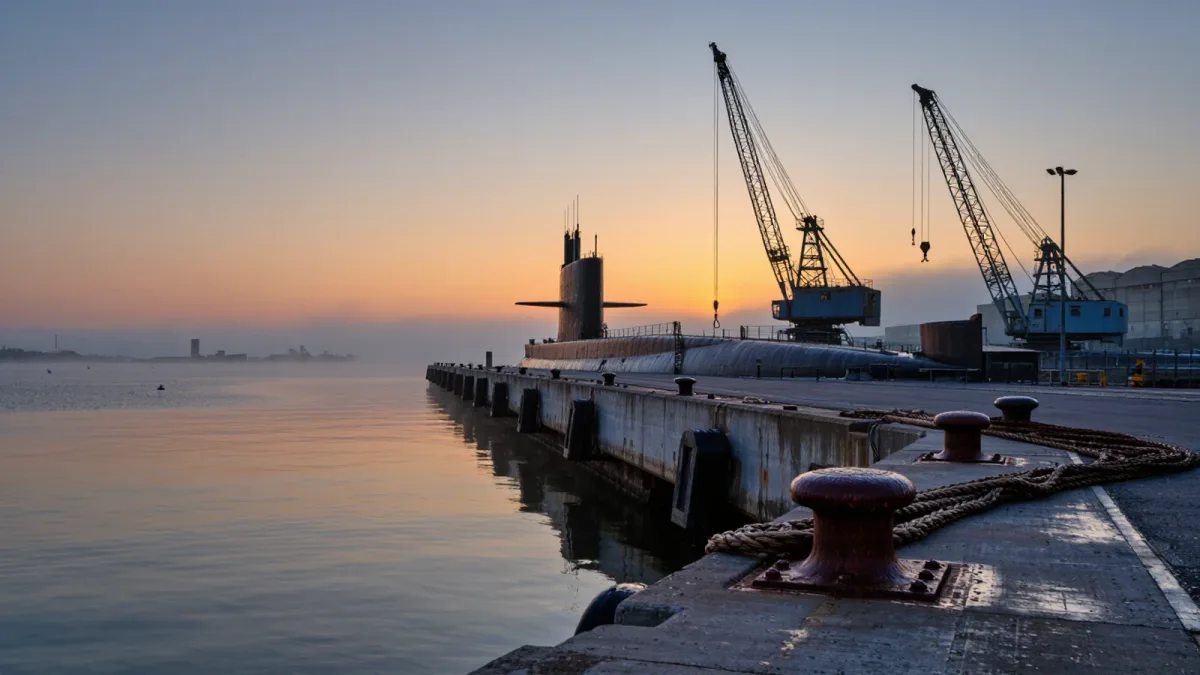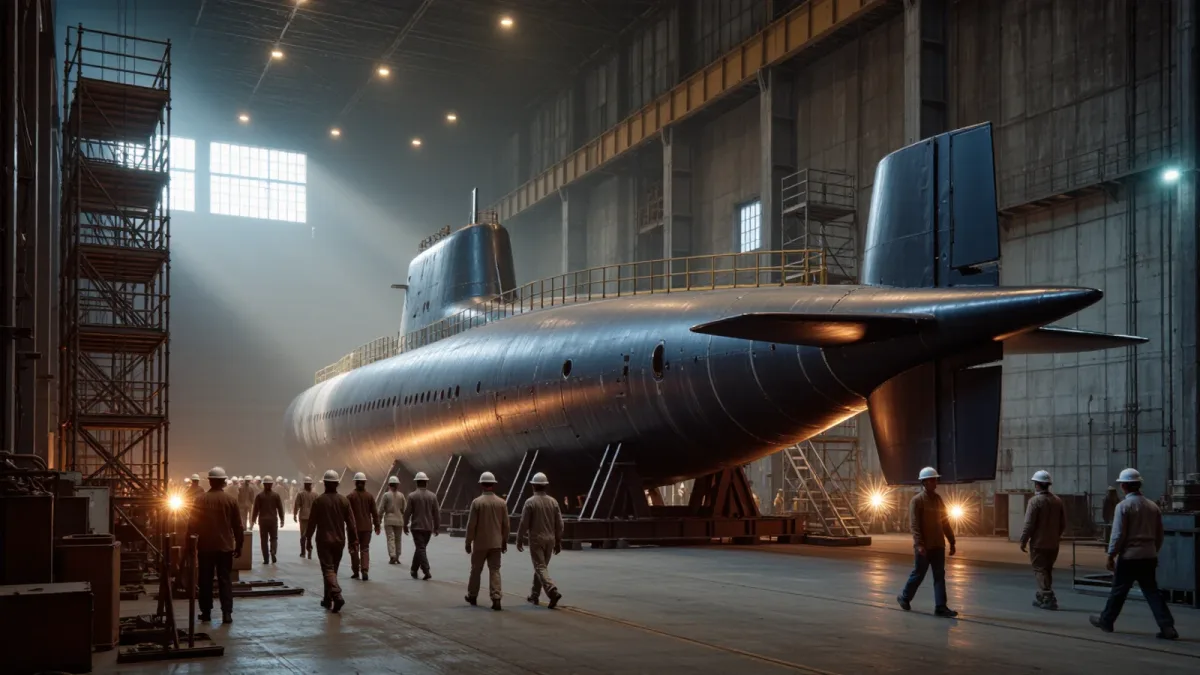
The Columbia class is a fleet ballistic missile submarine program of record for 12 boats that will replace the Ohio-class SSBNs as they retire, beginning around the end of the 2020s. The lead boat, USS District of Columbia (SSBN-826), is under construction at General Dynamics Electric Boat, with Huntington Ingalls Industries' Newport News Shipbuilding serving as major subcontractor. According to Navy budget materials published through 2025, the program is the department's top acquisition priority, ahead of every other shipbuilding line.
Why does the Navy need a new ballistic missile submarine?
The answer follows from the age of the Ohio class. Fourteen Ohio-class SSBNs, built in the late 1970s and 1980s, carry the Trident II D5 missile and provide continuous at-sea nuclear deterrence. The first Ohio-class boats began retiring in the early 2000s as four hulls were converted to guided-missile submarines, and the remaining SSBNs will reach the ends of their service lives in the late 2020s and 2030s. Navy testimony to Congress, delivered in 2023 and repeated in subsequent budget cycles, stated that the first Columbia-class boats must deploy on patrol without an availability gap, because the sea-based leg of the nuclear triad cannot pause. That requirement drives the program's fixed schedule: construction of the first boat began in the early 2020s, and each hull takes roughly seven years from start of construction to delivery.
How many boats are planned, and who builds them?
According to the program of record described in Navy budget documents as of 2025, the fleet will comprise 12 boats. Twelve hulls, each with a 42-year service life and a life-of-the-ship nuclear core, are sized to keep the same number of missiles continuously on patrol as the 14-boat Ohio force, because the new class is expected to spend more of its life at sea. General Dynamics Electric Boat is the lead design yard and prime contractor, with yards in Groton, Connecticut, and Quonset Point, Rhode Island. Newport News Shipbuilding in Virginia builds major subsystems and hull sections, an arrangement the two yards have used on the Virginia class as well. Navy and industry statements published in 2024 and 2025 described supplier work spread across hundreds of companies in dozens of states.
What is new in the design?
Columbia departs from the Ohio class in several structural ways, according to Navy fact sheets and testimony delivered through 2025. The class uses an electric drive propulsion plant: a turbine generator produces electricity that drives a motor, rather than gearing steam turbines to a shaft. Electric drive was previously fitted on limited U.S. types decades ago, and the Navy has described it as contributing to acoustic quieting and to flexibility in arranging machinery spaces. The boat carries 16 missile tubes for the Trident II D5, against the Ohio's 24 tubes, a reduction made possible by the new class's expected patrol tempo. The nuclear reactor core is designed for the life of the ship, removing the mid-life refueling overhaul that the Ohio class requires. Navy officials have also described common components shared with the Virginia class, including certain weapons-handling and electronic systems, as a way to hold down cost and simplify maintenance.
What is the schedule?
Construction of the lead boat began in the early 2020s, and the Navy laid the boat's keel in a June 2022 ceremony at Electric Boat in Groton. According to Navy budget materials and statements from 2024 and 2025, delivery of the lead boat was planned for fiscal year 2028, and the first strategic deterrence patrol was planned for fiscal year 2031, dates the Navy repeated in testimony supporting its fiscal 2024 and 2025 budget submissions. The Navy had earlier planned lead-boat delivery for fiscal 2027; the shift to fiscal 2028 was acknowledged in government reporting in 2024, including an assessment by the U.S. Government Accountability Office that described compression in the construction schedule for follow-on boats. Follow-on construction is planned at a sustained rate of one boat per year, a pace Navy officials have repeatedly tied to the retirement schedule of the Ohio class and to the industrial base's demonstrated capacity.
What does the program cost?
The Columbia class is, by the Navy's own accounting, the most expensive submarine program ever attempted. Because of its size and its priority, the program is subject to cost caps set in law for the lead boat and for the class as a whole, a structure the Navy requested to protect the schedule from cost-driven delays. Congressional Research Service reports published through 2025 described lead-boat costs in the range of roughly $15 billion in then-year dollars before the cap provisions, with follow-on boats expected to cost substantially less. Program costs in the tens of billions across the class have appeared repeatedly in Navy budget justification materials, and the Congressional Budget Office's periodic shipbuilding analyses through 2025 carried Columbia as the largest single line in planned submarine spending. The exact figures change with each budget cycle, and this guide states only the ranges that appear consistently across those dated documents.
What are the program's main risks?
Government oversight bodies have named three recurring risks. First, schedule: the GAO's April 2024 assessment of the program reported that the Navy had compressed the construction schedule for the second and third boats and that first-boat delivery had moved from fiscal 2027 to fiscal 2028, narrowing the margin before the first Ohio-class retirement. Second, industrial capacity: delivering one Columbia per year while also sustaining the Virginia-class attack submarine program, supporting AUKUS-related demand, and performing submarine maintenance places simultaneous demands on the same yards and suppliers, a problem Navy and GAO statements through 2025 addressed under the heading of submarine industrial base investment. Third, cost: the fixed-price caps leave the government bearing overruns, and both GAO and the Congressional Research Service have noted that any relaxation of the schedule or scope would ripple into the deterrent patrol timeline.
How does Columbia relate to AUKUS?
Columbia is a U.S.-only program; Australia is not acquiring the class. The connection is industrial. The AUKUS pathway announced in March 2023 commits Australia to financial contributions toward U.S. submarine production capacity, and Navy statements in 2024 and 2025 described that money flowing into the same yards and suppliers that build Columbia. A stronger industrial base, in the Navy's framing, serves both the Columbia construction rate and the Virginia-class production rate that underpins the AUKUS schedule. As of 2025, the Navy had not linked any change in the Columbia build rate directly to AUKUS funding, and congressional oversight of how those contributions are spent continued through the fiscal 2025 appropriations cycle.
What happens next?
As of the Navy's 2025 budget materials, the program continued lead-boat construction toward the fiscal 2028 delivery date, advanced modules for the second boat, SSBN-827, at Electric Boat, and funded long-lead materials for follow-on hulls. Each subsequent budget submission through the 2020s is expected to carry the program's central test: whether the industrial base can hold the one-boat-per-year pace that keeps the sea-based deterrent continuous as the Ohio class retires. Readers tracking the program should watch three dated indicators in future budget documents: the stated delivery date for the lead boat, the construction start dates for boats five and beyond, and the Navy's reported progress against its Virginia-class production goals, which compete for the same capacity.