Naval ranks organize every sailor from the first day of enlistment to the final year of a career. The system rests on pay grades: enlisted grades E-1 through E-9, warrant grades W-1 through W-5, and officer grades O-1 through O-10. According to the Department of Defense’s published rank insignia guide, as archived in September 2025, rank is a badge of leadership, while pay grades standardize compensation across the services.
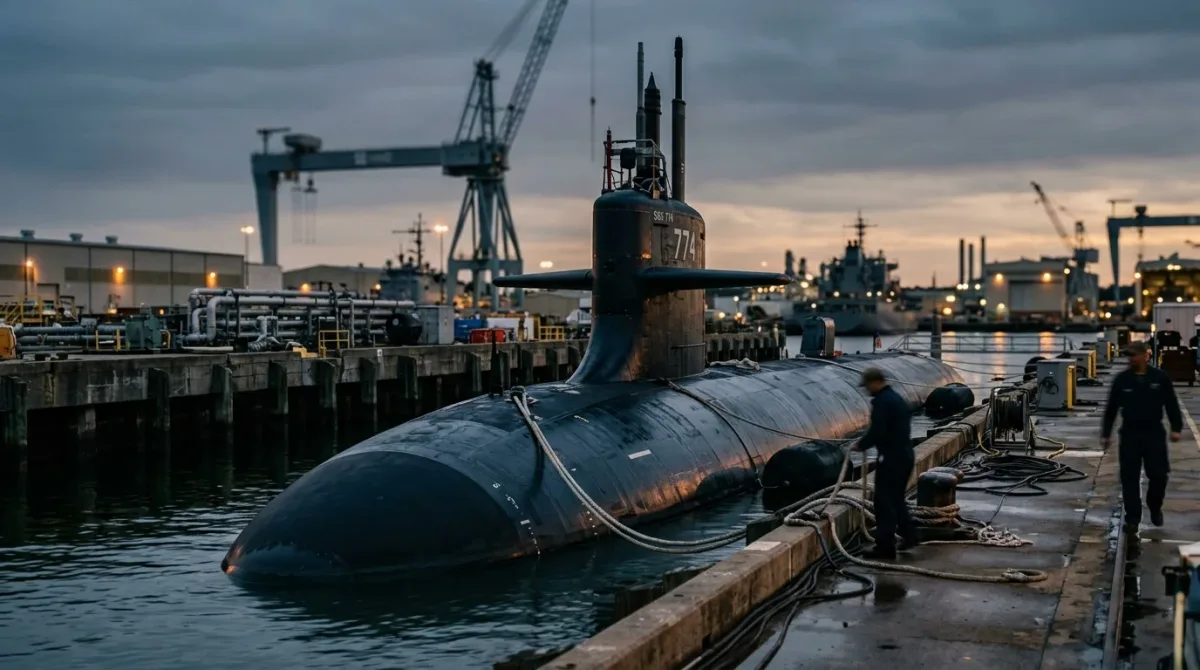
The ladder shapes daily life on every hull. Watch rotation, berthing, and mess arrangements all follow it, and the same order governs crews aboard the Virginia-class attack submarines covered in a recent fleet profile. Rank decides who leads a boarding team and who signs a maintenance card.
This guide walks through the tiers in order, from the newest seaman recruit to a four-star admiral. A wider set of explainers on ships, crews, and doctrine sits in the Naval section, which keeps the same documentary approach.
What do the letters E, W, and O stand for?
The letters mark three separate career tracks. E stands for enlisted, the sailors who operate and maintain the fleet. W stands for warrant officer, the technical specialist tier. O stands for commissioned officer, the leaders who hold presidential commissions confirmed by the Senate.
The Pentagon guide draws a careful line between rank and pay grade, according to the department’s insignia reference. It notes that the E in E-1 stands for enlisted, while the number sets the pay level. Some enlisted pay grades carry two ranks at once. The guide states plainly that responsibility for personnel, equipment, and mission grows with each advancement.
How do enlisted ranks rise from seaman recruit to master chief?
The Navy starts its sailors at seaman recruit, pay grade E-1, then moves them through seaman apprentice and seaman. At E-4 the rating changes in kind: petty officer third class. The department’s guide calls the petty officer the Navy’s noncommissioned officer equivalent, the point where formal leadership begins in an enlisted career.
The senior tiers carry distinct titles. E-5 is petty officer second class and E-6 is petty officer first class. E-7 brings chief petty officer, followed by senior chief at E-8 and master chief petty officer at E-9. The guide also names the master chief petty officer of the Navy, the top enlisted advisor, and describes the post as a spokesperson role for the enlisted force.
How does an officer climb from ensign to admiral?
The commissioned track begins at O-1, the rank of ensign. The pay-grade breakdown recorded in Wikipedia’s entry on Navy officer rank insignia sorts the ladder into three bands: junior officers from ensign through lieutenant commander, senior officers at commander and captain, and flag officers from O-7 to O-10. The flag tiers run rear admiral, rear admiral, vice admiral, and admiral, marked by one through four stars.
Warrant officers occupy their own lane. The Navy appoints a warrant officer 1 by warrant from the Secretary of the Navy, then commissions chief warrant officers from W-2 upward. One rank rests above the active ladder. Fleet admiral, five stars, went to four officers during the Second World War and has not been authorized since. The last holder, Chester W. Nimitz, died in 1966. Readers following this should also see Naval Laser Weapon Systems Explained: How Shipboard Directed Energy Works and What the Navy Has Fielded.
How do Navy rank groupings differ from the other services?
The Pentagon guide places Army, Air Force, and Marine Corps officers in three groups: company grade at O-1 to O-3, field grade at O-4 to O-6, and general officers at O-7 and higher. The Navy names its equivalent bands junior grade, mid-grade, and flag. The pay grades match across services, which keeps joint commands simple.
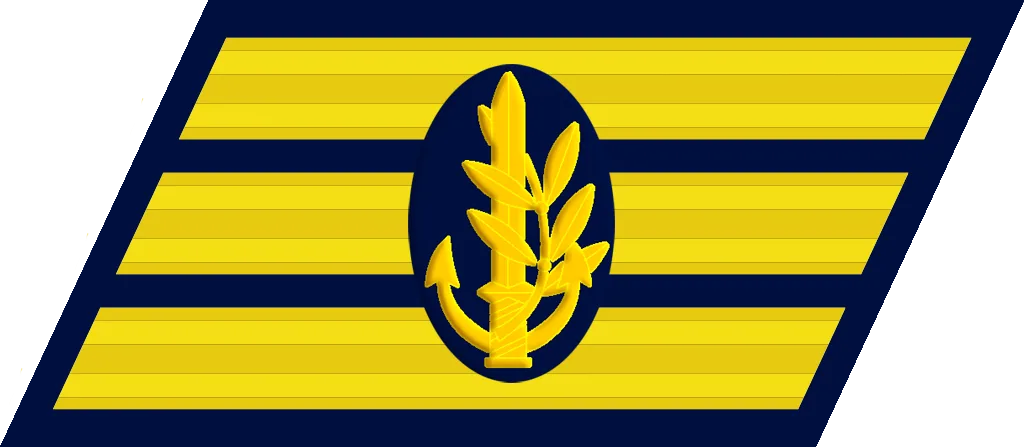
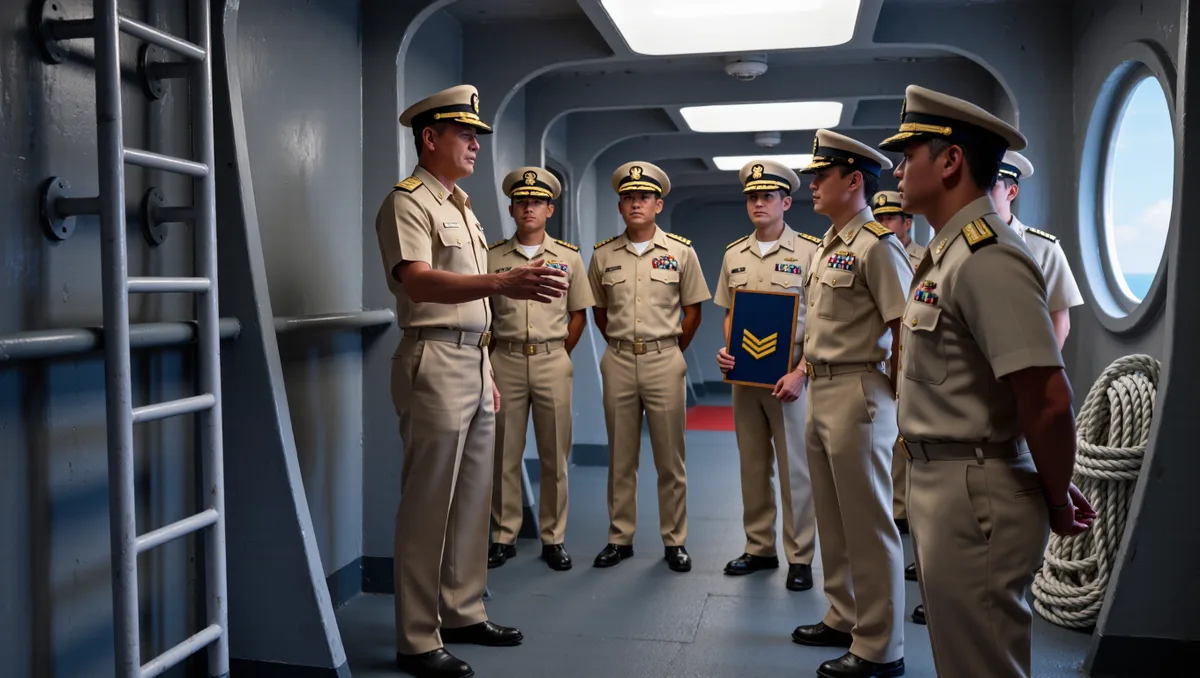
Insignia placement follows service custom. Naval officers wear collar pins on khakis, stripes on shoulder boards with whites, and stripes sewn on the lower coat sleeves with blues, according to the department’s guide.
Conclusion: A documented ladder of accountability
The ranking system endures because every stripe ties a sailor to a defined level of authority and pay. The documented frame holds from the smallest crew to the largest staff: nine enlisted grades, five warrant grades, and ten officer grades, each named in the department’s published reference. The names at each rung have changed little over the decades, and the paperwork behind them stays open for review.