Shipbuilding jobs cover the trades that design, build and repair ships: welders, pipefitters, electricians, shipfitters, painters, machinists, crane operators, engineers and program managers. The work happens at naval yards, commercial yards and repair yards, and most people enter through an apprenticeship or a trade school rather than a four-year degree. This guide explains the main job families, the training paths, and where the work is concentrated, as of the most recent published figures cited below.
The scale of the industry is easier to grasp with numbers. According to Marine Insight, the United States has 154 private shipyards classed as active builders across 29 states and the U.S. Virgin Islands, plus more than 300 yards doing repair work. A 2021 Maritime Administration report, cited by Marine Insight, counted 107,180 direct jobs in U.S. private shipbuilding and repair in 2019, with $9.9 billion in labour income. Those figures predate current hiring pushes, so they should be read as a baseline, not a ceiling.
The career ladder in a yard runs from helper to journeyman to foreman to program or production management, and it is climbable without a degree. Readers who want the context behind the work can follow how a ship moves from keel laying to commissioning in the site's Primer: How a Navy Ship Moves From Keel to Commissioning, and the broader shipbuilding coverage collects program and industrial-base reporting.
What kinds of shipbuilding jobs exist?
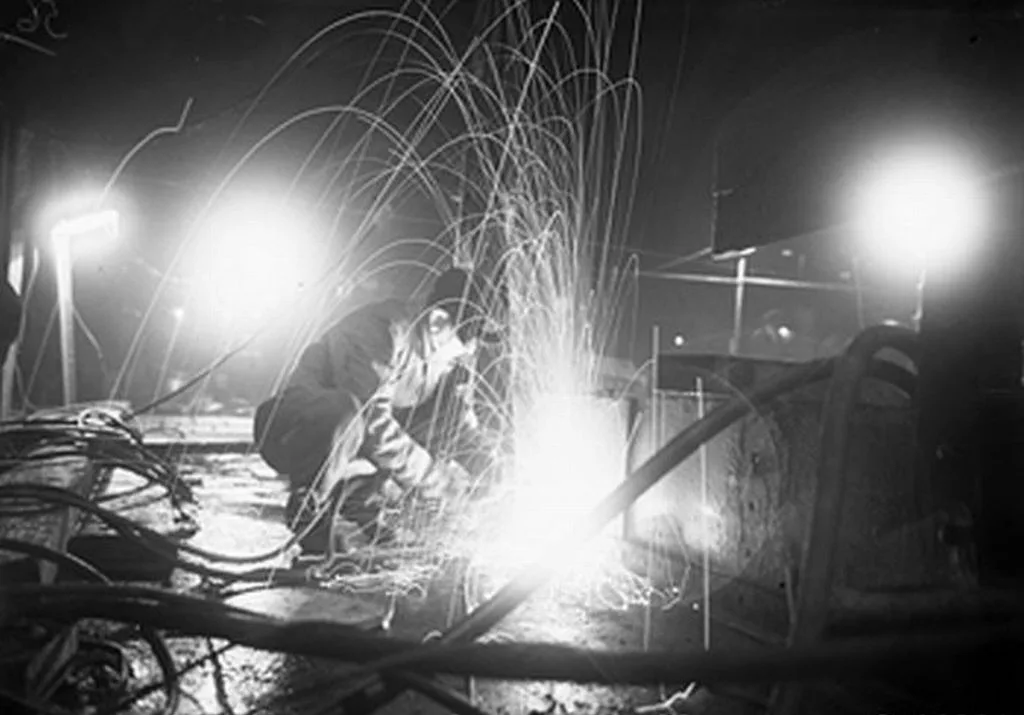
Shipyard work splits into three broad families: the hull trades, the systems trades, and the engineering and support staff. The hull trades shape the ship. Shipfitters cut and fit steel plates, welders join them, and painters and blasters protect the hull against saltwater corrosion. These trades dominate headcount during new construction.
The systems trades outfit the hull once it exists. Pipefitters run fuel, water, hydraulic and steam lines. Electricians pull cable and connect switchboards. Machinists fabricate and repair components. Sheet-metal workers, insulators and carpenters finish compartments. Outfitting continues long after the hull leaves the building way, which is why these trades stay busy across both new construction and repair.
The third family designs, plans and administers. Naval architects and marine engineers produce the drawings. Production planners sequence thousands of work packages. Quality assurance inspectors verify welds and systems against specification. Cost and contract specialists track change orders, which in naval programs can run for years. A large yard also employs crane operators, riggers, safety officers and logistics staff.
How do people train for shipyard trades?
Most shipbuilding jobs are entered through apprenticeships, and this is the defining feature of the industry's labor pipeline. A registered apprenticeship pairs paid on-the-job work with classroom instruction, typically over several years, and ends in journeyman status in the trade. The apprentice earns while learning, which distinguishes the path from most university routes.
Trade and community colleges offer a second entry route, with programs in welding, marine technology and electrical work that shorten the learning curve before hiring. Some yards run their own training academies for welders and shipfitters because the specific skills, such as fitting heavy plate to tolerance, differ from general fabrication work.
A third route is military service. Veterans with Navy or Coast Guard hull, maintenance or engineering ratings transition into civilian yards with skills that map directly onto commercial work. This matters at public naval shipyards, where the workforce maintains and overhauls the fleet; the site's guide to the Navy's four public shipyards covers those locations and workloads.
Where are the shipbuilding jobs concentrated?
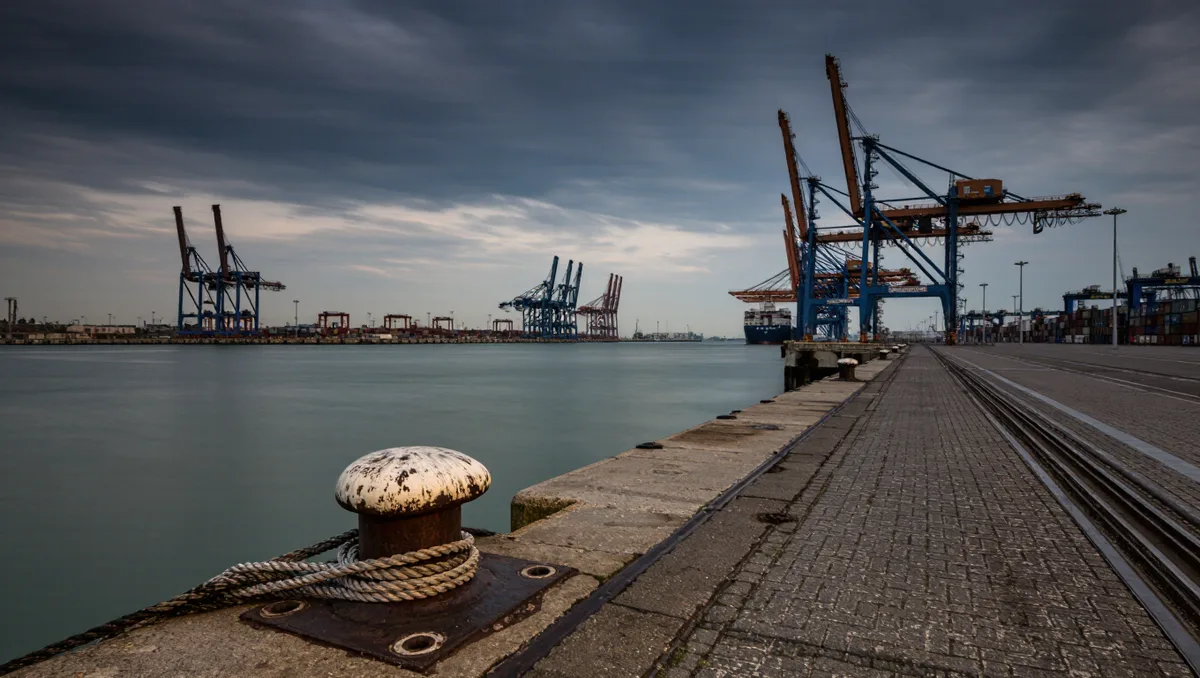
Geography matters more in shipbuilding than in most industries, because the work cannot relocate. As noted above, Marine Insight counts 154 active U.S. private builder yards across 29 states, with most yards on coasts and some on inland waterways such as the Great Lakes, the Ohio River and the Mississippi.
Several yards anchor regional job markets. Newport News Shipbuilding in Virginia, founded in 1886, builds nuclear-powered aircraft carriers and submarines and is a major employer across the Virginia Peninsula and parts of North Carolina, according to Marine Insight. Bath Iron Works in Maine has delivered more than 425 vessels since 1884 and leads the country in surface combatant construction. General Dynamics NASSCO in San Diego builds Navy support ships and commercial tankers, and Austal USA in Mobile, Alabama, constructs aluminium and steel vessels including littoral combat ships.
Repair work spreads the map further. More than 300 additional U.S. yards perform repairs, and repair demand is steady because every ship in service needs periodic availability. The mechanics of that maintenance cycle, and why it falls behind, are explained in the site's coverage of the Navy's repair backlog. Internationally, Wikipedia's shipyard overview lists large shipbuilding industries in China, South Korea, Japan, Germany, Finland, Italy, Turkey and elsewhere, with the industry more fragmented in Europe than in Asia. This connects to our earlier piece, The Navy's Repair Backlog: How Ship Availabilities Work and Why They Fall Behind.
How do naval and commercial yards differ as employers?
Naval yards build to military specifications, which means more inspection, more documentation and more specialized systems such as combat and nuclear propulsion equipment. Commercial yards build tankers, container ships and ferries to class-society rules, generally with more repetitive series production. For a welder or pipefitter, the hand skills transfer; the paperwork and quality regime differ.
Government-owned naval shipyards are a separate case. They do not build new ships; they overhaul and modernize the existing fleet, including nuclear refueling work on carriers. That work is steady, security-clearance-dependent and central to fleet readiness. The submarine industrial base, where much of the current investment and hiring pressure sits, is examined in the site's piece on submarine industrial base investment.
Commercial demand sets a different rhythm. Commercial orders rise and fall with freight rates and regulation, so commercial yard employment can be cyclical. Naval construction programs run for decades, which gives naval yard workers longer program visibility, though program delays and budget cycles create their own uncertainty.
What this means for anyone considering the trade
The practical picture is this: shipbuilding jobs are skilled trades jobs with an unusual employer mix of private yards, government yards and defense primes. The entry path is usually an apprenticeship or a trade program, the career ladder runs to foreman and management without a degree, and the work is concentrated in specific coastal regions rather than spread evenly.
Two cautions apply. First, the headline hiring numbers cited here date to 2019, and current openings vary by yard, program and year, so anyone evaluating the field should check specific yards and their current apprenticeship intakes rather than industry averages. Second, the work is physically demanding and safety-regulated for good reason; yard environments involve heavy plate, confined spaces and overhead crane traffic, and training in safe practice is part of every genuine pathway.
What remains unknown is how quickly the pipeline expands. Public investment in naval construction and the industrial base is documented, but the pace at which yards convert that investment into apprentice seats and hires is a program-by-program question that this guide does not attempt to predict.