Marine salvage operations are the work of rescuing a ship, its cargo, or both from danger at sea, and of recovering property that has already sunk. The job runs on three things: heavy marine engineering, specialized tugs and lifting equipment, and a contract that decides who gets paid for the risk.
When a bulk carrier grounds on a shoal or a container ship lists after a fire, the owner faces a choice. Do nothing, and the hull, the cargo and often the fuel inside it are lost, along with whatever pollution liability follows. Call in salvors, and the wreck may still be saved, but the bill can be enormous. This guide explains how the operation itself works, who pays, and why the industry is built the way it is. We covered a connected angle in Houthi Attacks Sank Two Bulk Carriers in the Southern Red Sea in July 2025.
What exactly is marine salvage?
The term is older and broader than most readers assume. Cambridge Dictionary records "salvage" as both the act of saving property from danger and the property so saved, with the compensation paid to those who do the saving as a third meaning. In the maritime sense, the object is a vessel or its cargo in peril at sea.
That peril matters. Salvage law traditionally rewards voluntary service to property in danger. A tug that simply tows a healthy ship between ports earns a normal towage fee. A tug that pulls the same ship off a reef in weather, with fuel tanks at risk, is doing salvage, and salvage is paid differently. The distinction between the two jobs sits at the heart of every salvage contract.
How does a salvage contract get signed?
Salvage cases begin with urgency. A ship is aground, flooding, drifting, or burning, and the owner's first call is often to a salvage firm on standby contract in the region. Negotiating terms clause by clause while water rises in the engine room is not practical, so the industry relies on standardized agreements that can be agreed by radio in minutes.
The core idea across these contracts is "no cure, no pay": if the salvor fails, the salvor earns nothing. If the salvor succeeds, the reward is negotiated against the value of the property saved, the skill and equipment used, and the risk taken. Some agreements add a special compensation element for work that prevents environmental damage, even when the ship itself is a total loss, because saving the fuel is sometimes more valuable than saving the ship.
From the owner's side, the calculation is blunt, and it is one this writer recognizes from years spent around chartering desks. The owner compares the salvage award and any cargo claims against the value of ship and cargo saved. An insurer may decide a wreck is worth more as a paid-off loss than as a salvage project. The salvor's spreadsheet and the underwriter's spreadsheet rarely agree, which is why the negotiation after a successful operation can last years.
What equipment and engineering does a salvage job use?
The toolset depends on what went wrong. A grounding on soft sand calls for one approach; a capsized vessel in deep water calls for another.
- Tugs and surface support. Salvage tugs carry towing gear, firefighting capacity and pumps. They can hold a drifting hull off a lee shore, pull a grounded vessel free, or keep fires in check while other work proceeds.
- Pumping and damage control. Much salvage is plumbing. Divers and remotely operated vehicles patch hull breaches with cement, steel plates and inflatable seals, then pumps move the water out faster than it comes in.
- Cargo removal. Before a ship can be lightened, the cargo often has to come off. Cranes, barges and heavy-lift gear transfer containers, ore or fuel oil to reduce draft and weight.
- Refloating. With weight reduced and leaks controlled, tugs pull on the tide that gives the most water under the keel. Sometimes the seabed itself is dredged or the ship is moved by winches anchored ashore.
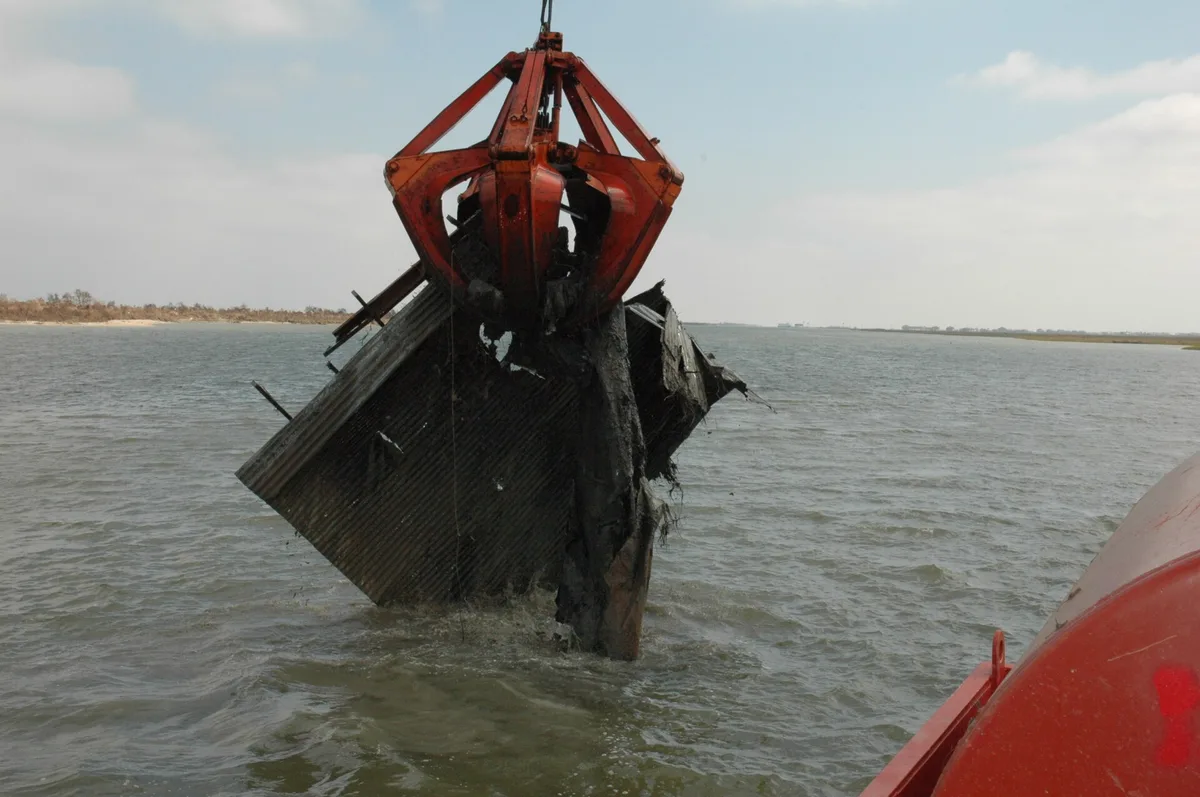
- Deep recovery. When the ship has already sunk, salvors use lift bags, cranes on sheerleg vessels, or heavy-lift winches to raise the hull in stages, often section by section if it broke up.
Weather windows, tide cycles and the structural state of the hull set the schedule. Salvage is one of the few industries where the deadline is set by the moon.
Who pays, and who profits?
The winners and losers in salvage are easy to name. Shipowners and their hull insurers pay the awards. Cargo owners pay their share through cargo insurance. Salvage firms and their crews take the upside when they succeed and absorb heavy costs when they fail, since equipment mobilization is expensive whether or not the ship comes off the rock.
Coastal states sit in a different position. A wreck blocking a fairway, or leaking fuel near a fishing ground, is a national problem. Governments can order salvage work done, can require the shipowner to arrange it, and in serious cases can step in themselves. The pollution threat often drives the timeline more than the value of the cargo does.
There is a fair counter-argument to the no-cure-no-pay model. Critics note that it can discourage salvors from taking on the hardest cases, where success is uncertain, and that environmental compensation exists precisely because the pure reward system does not value a clean sea. Defenders answer that the model keeps owners honest and keeps salvage a working market rather than a state bailout. The numbers, as ever, do not fully support either side in every case.
What does a salvage job look like step by step?
Every case differs, but the sequence of a typical refloating follows a recognizable path:
- Assessment. Salvors survey the hull, the damage, the cargo state and the immediate pollution risk, and agree a contract scope.
- Stabilization. The vessel is kept from getting worse: fires fought, flooding contained, the ship held against weather and current.
- Lightering. Fuel and cargo are removed to cut weight and draft, and the freed oil or goods are taken to safety.
- Refloating or lifting. Tugs, winches or lift equipment move the hull on the chosen tide or lift it from the seabed.
- Delivery and handover. The ship is towed to a port or repair yard, the salvor's service ends, and the accounting begins.
When the vessel is beyond saving, the same skills turn to wreck removal: cutting the hull up, lifting the sections, and clearing the seabed so navigation and the environment are restored.
Why salvage matters for security and trade
Salvage sits quietly under several stories this publication covers. Attacks that sink merchant ships, such as the Houthi strikes on bulk carriers in the southern Red Sea in July 2025, create immediate salvage and wreck-removal questions in a busy waterway. Readers can follow that episode in Houthi Attacks Sank Two Bulk Carriers in the Southern Red Sea in July 2025. Salvage capacity is also a quiet part of the merchant fleet's strategic value, a theme developed in The Merchant Marine's Role in National Security, Explained.
Our analysis: salvage is best understood as insurance infrastructure. It is invisible when it works and expensive when it is needed, and the contracts that govern it were designed for a world where minutes matter. That design has held for well over a century, which says something about how well the underlying incentives still fit the job.
What remains uncertain about salvage operations
The evidence base for any single salvage case is thin in public sources. Awards are usually confidential, casualty investigations take years, and the technical details of a refloating often surface only in industry papers. What the record does establish is the structure: the definitions of the trade, the contract logic, the equipment categories and the sequence of a typical operation. The specific economics of the next big casualty will depend on the ship, the cargo and the sea, and those are questions that can only be answered case by case.