Dry docking is the process of taking a ship out of the water so workers can reach the parts that normally sit below the waterline. The word itself is plain. Dictionary definitions of "dry" include the sense of being "not under water," as Dictionary.com puts it, and that is exactly the point of a dry dock: a basin that can be flooded, closed, and then pumped empty so the vessel rests on solid supports.
Why does it matter? A hull is out of sight for its whole working life. Fouling, corrosion, propellers, rudders, and sea valves can only be examined and repaired when the water is gone. Dry docking is therefore a scheduled event for nearly every commercial vessel and naval ship, and it is one of the largest recurring line items in maritime maintenance budgets.
How does a dry dock actually work?
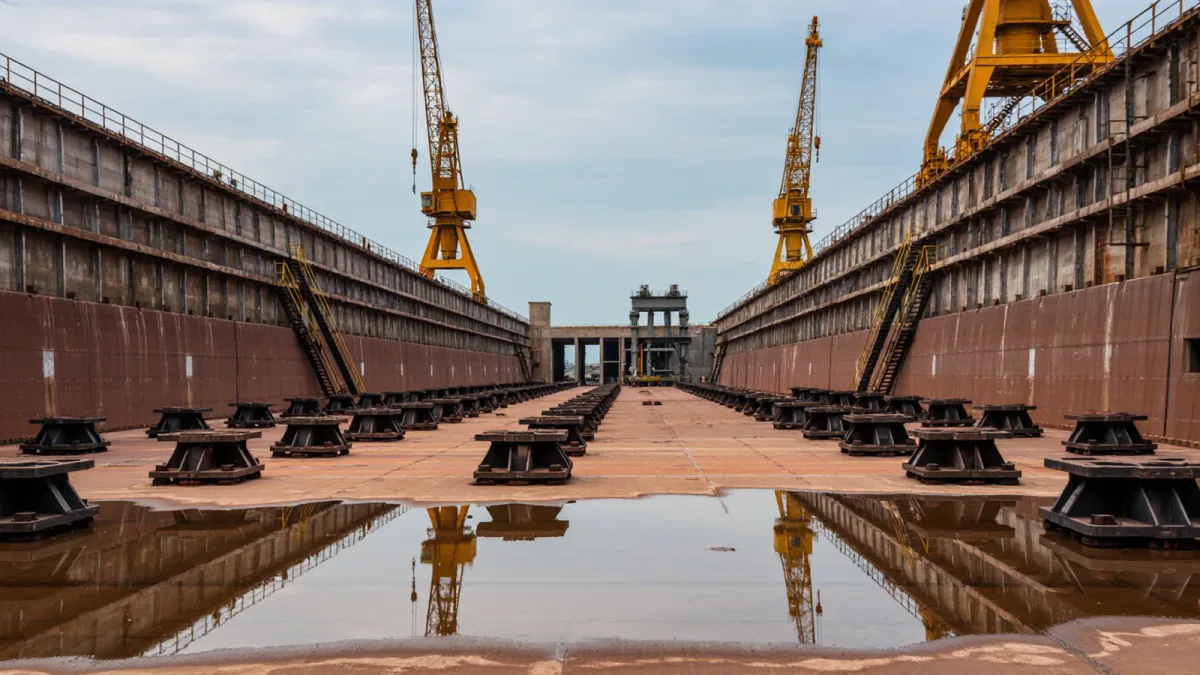
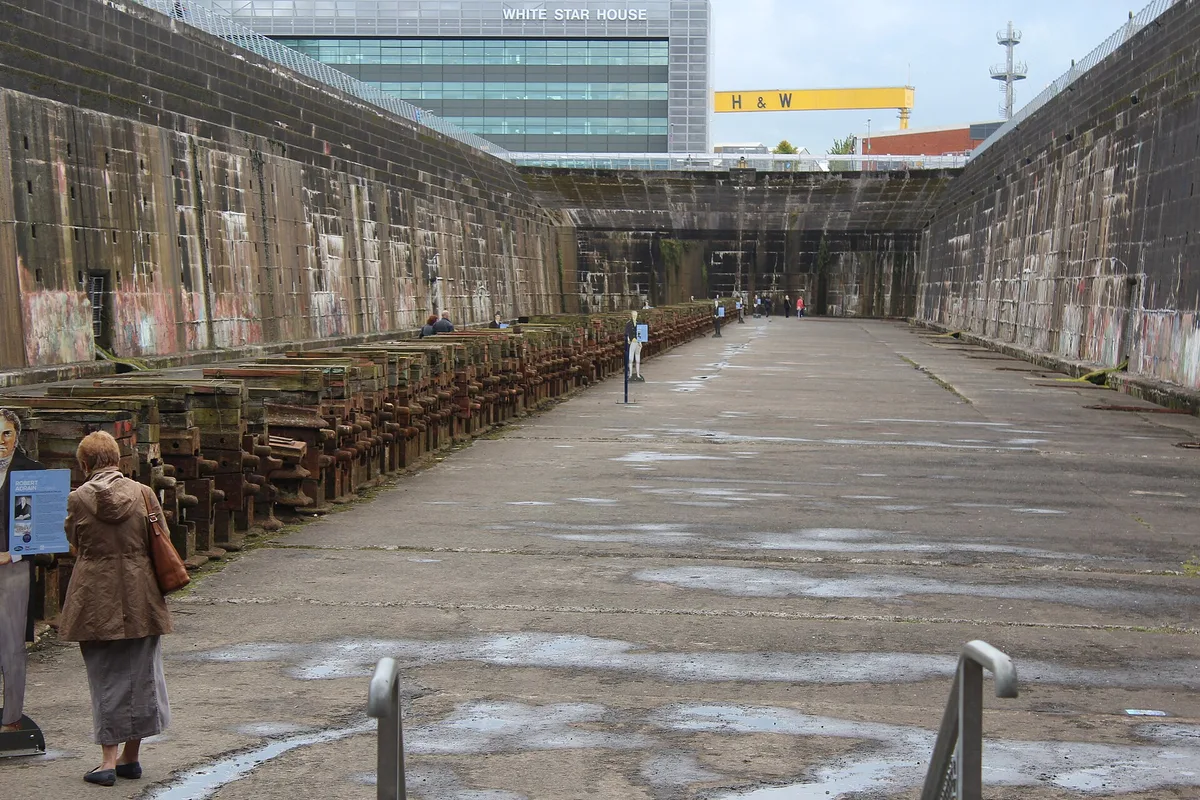
The most common type is the graving dock: a fixed basin, often built of concrete, connected to a harbor by a gate or caisson. The sequence is straightforward. The basin is flooded, the gate opens, the ship is moved in and positioned over a grid of keel blocks and side supports. The gate closes, pumps remove the water, and the ship settles slowly onto the blocks as the level drops.
Positioning is the delicate part. Dockmasters align the vessel over the blocks before dewatering begins, because once the hull touches the supports, it cannot easily be shifted. When the water is gone, workers can walk under the ship, and the entire underwater surface becomes a worksite.
A floating dock is the alternative. It is a hollow, U-shaped vessel that sinks by flooding its own tanks, lifts the ship, then pumps the tanks out to raise both. Floating docks can be moved to where they are needed, which makes them valuable in ports without a fixed basin or for handling damaged ships.
What happens inside the dock?
The work falls into a predictable set of categories, and the exact scope depends on the vessel's age, type, and class rules.
- Hull cleaning and coating. Marine growth such as barnacles and weed adds drag and burns fuel. Workers clean the hull and apply or touch up antifouling paint.
- Steel repair. Thinned plating, cracked welds, and corroded structure are cut out and replaced, then checked.
- Underwater fittings. Propellers are polished or repaired, shafts and bearings are inspected, rudders are examined, and sea valves, the openings that let water in for cooling and other systems, are overhauled.
- Tank and void inspections. Ballast tanks and other compartments are opened, cleaned, and surveyed for corrosion.
- Surveys and certifications. Classification societies and flag-state inspectors survey the hull while it is accessible, because many required checks can only be done out of the water.
For a naval vessel, the list grows. Docking periods at a naval shipyard often bundle structural work with system upgrades, combat-system maintenance, and modernization, which is why navy availabilities tend to run longer and cost more than a comparable commercial docking.
Why do docking intervals matter so much?
Class rules and flag-state requirements set the rhythm. In broad terms, commercial ships are surveyed on a multi-year cycle, with intermediate checks between the longer dockings, though the exact intervals depend on the vessel's class society, trade, and any approved alternatives such as in-water survey methods. The practical effect is the same everywhere: a ship's schedule, its insurance, and its legal right to trade all hinge on keeping the docking cycle current.
For a navy, the cycle is a planning problem at fleet scale. Each hull needs periodic docking, and the public shipyards that provide it are finite. When dockings slip, ships wait, maintenance backlogs grow, and availability of the fleet drops. That is why shipyard infrastructure, including dry docks themselves, has become a standing subject of government attention. As one example, the Navy's own facilities program has funded major dock work, including a contract to modernize Dry Dock 3 at Norfolk Naval Shipyard, as covered in NAVFAC Awards $442 Million Contract to Modernize Dry Dock 3 at Norfolk Naval Shipyard. Readers following this should also see NAVFAC Awards $442 Million Contract to Modernize Dry Dock 3 at Norfolk Naval Shipyard.
What does dry docking mean for shipyards and budgets?
What this means in practice is that a dry dock is a revenue-generating slot of time. Shipyards sell capacity: a docking occupies the basin, the workforce, and the trade skills for weeks or months. The docking cycle therefore shows up directly in a yard's order book, alongside new construction. Readers who want the mechanics can see how backlog and slot availability work in How to Read a Shipyard's Order Book: Backlog, Slots, and Signals.
On the government side, the same cycle drives appropriations. Docking availabilities are funded through maintenance accounts, and dock infrastructure through facilities accounts, which are different budget pipelines that must converge on the same basin. When either side is underfunded, the result is the same: a ship that cannot get into the dock it needs. The broader pattern of shipyard investment and its oversight is examined in GAO Finds Navy's Billions in Shipyard Investment Lack a Fully Developed Strategy. This connects to our earlier piece, GAO Finds Navy's Billions in Shipyard Investment Lack a Fully Developed Strategy.
How does a ship move from arrival to redelivery?
The docking evolution follows a documented sequence that varies in detail by yard but keeps the same shape.
- Pre-docking planning. The owner or navy program office defines the work package; the yard prepares the dock, blocks, and services.
- Entrance and positioning. The ship enters the flooded basin under tug or pilot control and is aligned over the block grid.
- Dewatering and landing. Pumps remove the water; the hull settles onto the blocks and is secured.
- The work period. Inspections, cleaning, steel renewal, coating, and machinery work proceed, with surveys conducted as access allows.
- Flooding and redelivery. The basin is refilled, the ship floats off the blocks, and trials or inspections confirm the vessel is ready to return to service.
Each step carries its own risks, which is why docking is treated as a formal evolution with defined procedures rather than routine mooring. Hull weight must be matched to the blocks, stability must be managed as the water leaves, and the dock itself must be certified for the vessel's size.
Our analysis: why the humble dock is a strategic asset
The evidence points to a simple conclusion. Dry docking looks like maintenance, but it functions as capacity. A nation with enough serviceable docks can keep its fleet inspected, certified, and available. A nation without them cannot, no matter how many new hulls it builds. That is why dock modernization projects, shipyard investment reviews, and docking schedules belong in the same conversation as new construction, and why this publication tracks them under shipbuilding coverage as well as fleet reporting.
What remains unknown for any specific ship is always the same: the condition found once the water is gone. Plans assume the best; the dock often reveals otherwise. A docking that uncovers extra corrosion or damage extends the stay, and that extension ripples through the yard's schedule, the owner's budget, and, for a warship, the fleet's deployment plans.